

















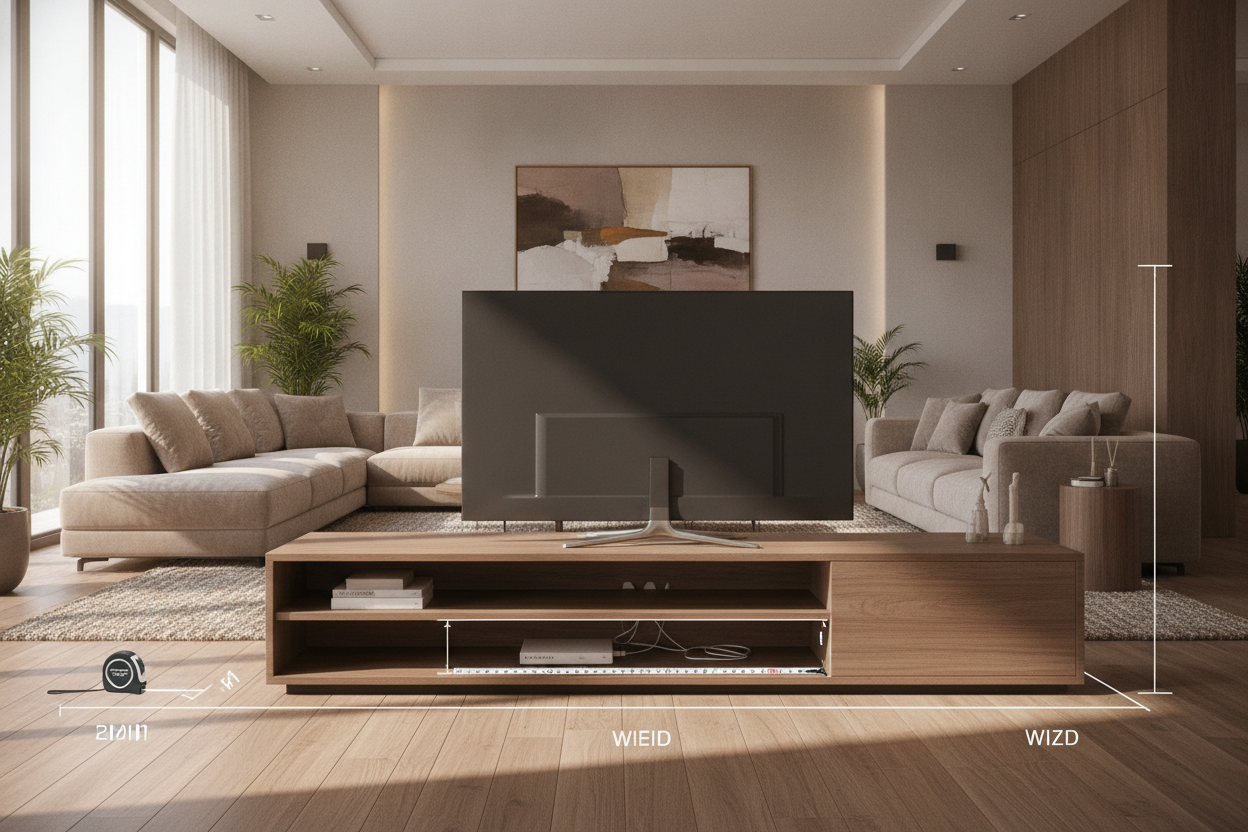
I have spent way too many Friday nights staring at a 65-inch screen that looked like a giant lollipop stuck on a toothpick. It is the classic 'I eyeballed it' mistake. When you are deep in the weeds of tv stand measurements, the math matters more than the aesthetic. I have seen stunning mid-century units ruined because the owner didn't realize their TV would literally hang off the edges. Honestly, shopping for tv stands is a headache if you do not have a tape measure and a dose of reality.
Quick Takeaways
- Your console should be at least 20% wider than the actual physical width of your TV.
- The center of the screen should be at eye level when seated; usually 42 inches from the floor.
- Measure your deepest piece of gear (usually a gaming console or receiver) before committing to a depth.
- Diagonal screen size is a lie—always measure the physical width of the frame.
The 'Top-Heavy' Living Room Epidemic
Walk into any suburban living room and you will likely see it: a massive, 75-inch flat screen precariously balanced on a tiny, 50-inch console. It looks unstable, cheap, and visually exhausting. We tend to focus on the screen size we want without considering the furniture that has to support it. The goal is a sense of visual weight. If the TV is wider than the stand, the room feels off-kilter. You want the console to anchor the space, not look like it's being crushed by the tech sitting on top of it.
Width: Why the 'Diagonal Screen' Trick is Lying to You
The biggest mistake people make is buying a 55-inch stand for a 55-inch TV. Remember, TVs are sold by diagonal measurement. A '55-inch' TV is actually only about 48 inches wide. If you put that on a 50-inch stand, you only have an inch of clearance on either side. It looks cramped. I follow a strict 20 percent rule: your console needs to be at least 20 percent wider than the physical width of the TV. For that 48-inch-wide screen, you want a stand that is at least 58 to 60 inches. This allows for a couple of decorative items—maybe a plant or a lamp—to frame the screen rather than compete with it.
Height: Please Stop Giving Your Guests a Stiff Neck
The standard entertainment center height is usually around 24 inches, but that is not a universal law. Your sofa’s seat height is the real boss here. If you are sitting on a low-slung, modern sofa, a tall dresser-style console will force you to look up, leading to 'tech neck.' You want the middle of the screen to hit right at eye level. For most of us, that means the stand should be between 18 and 22 inches tall. However, if you are decorating a bedroom or a space with bar-height seating, you might actually need a tall tv stand for 65 inch tv to clear the furniture in your line of sight.
Depth: Because Dangling Soundbars Look Terrible
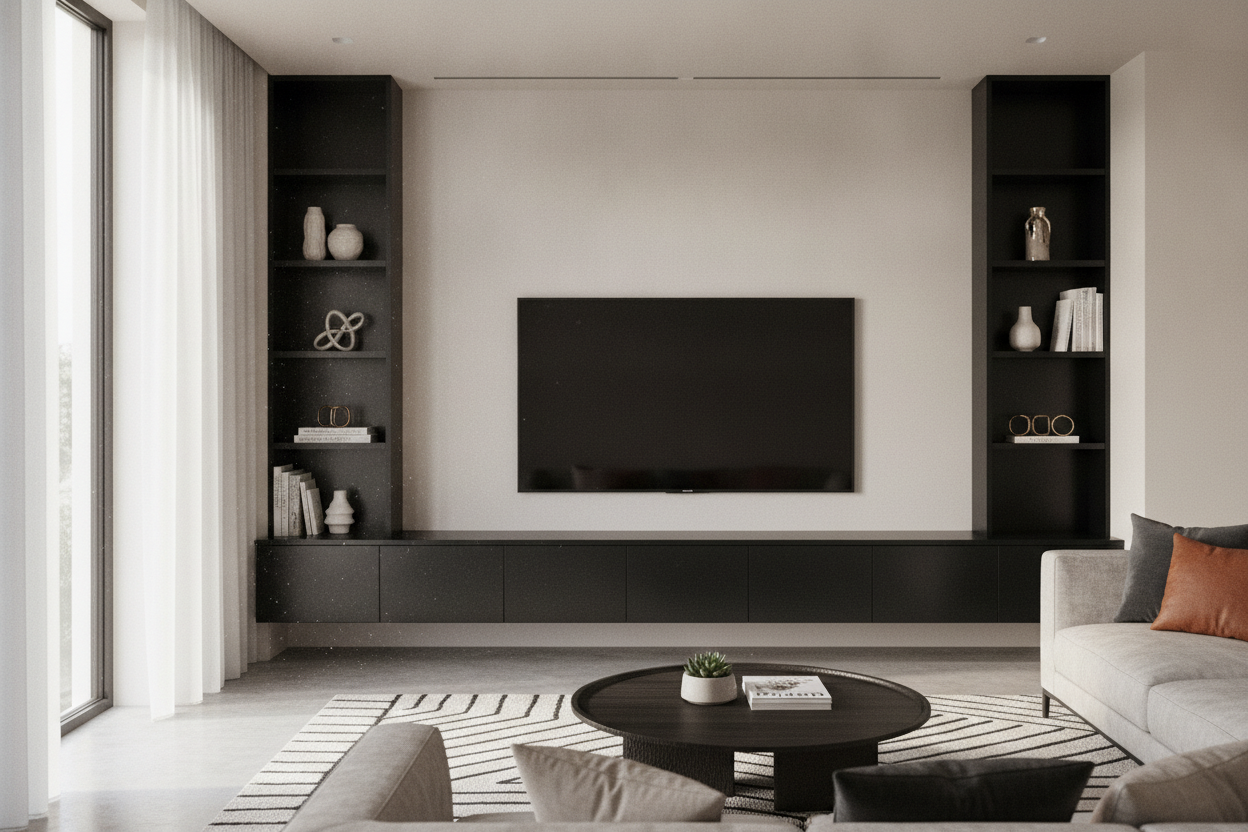
Depth is the forgotten dimension. I once bought a beautiful, slim console that was only 12 inches deep. I felt like a genius until I tried to plug in my receiver. The cables hit the back of the unit, and the front of the receiver stuck out two inches. It looked terrible. Most modern gear needs at least 16 to 18 inches of depth to breathe and hide the cable bird's nest. If you are tight on floor space, you can cheat this by looking into floating tv unit dimensions, which let you mount the unit at the perfect height while keeping the footprint slim and the floor visible.
The Cheat Sheet: Quick Math for 55 to 85-Inch Screens
If you just want the answers without doing the long division, here is my personal cheat sheet for what works in a real home:
- 55-inch TV: Physical width is ~48 inches. Buy a 60-inch stand.
- 65-inch TV: Physical width is ~57 inches. Buy a 70-inch stand.
- 75-inch TV: Physical width is ~65 inches. Buy an 80-inch stand.
- 85-inch TV: These are monsters. Physical width is ~74 inches. You need a massive unit, so research what size tv stand for 85 inch tv will actually support that weight without sagging in the middle.
I learned this the hard way after buying a 'standard' unit for an 85-inch screen and watching the center shelf slowly bow over six months. Don't be me. Buy the wider, sturdier unit first.
FAQ
What is the best height for a tv stand?
The best height is whatever puts the center of your TV at eye level. For most standard sofas, this means a stand height of 20 to 24 inches.
Should the tv console be bigger than the tv?
Yes, always. It should be at least 6 to 10 inches wider than the TV to provide visual balance and prevent the 'top-heavy' look.
How deep should a tv stand be?
Aim for 16 to 18 inches. This allows enough room for gaming consoles, soundbars, and the mess of cables that inevitably lives behind your tech.


Leave a comment
This site is protected by hCaptcha and the hCaptcha Privacy Policy and Terms of Service apply.