

















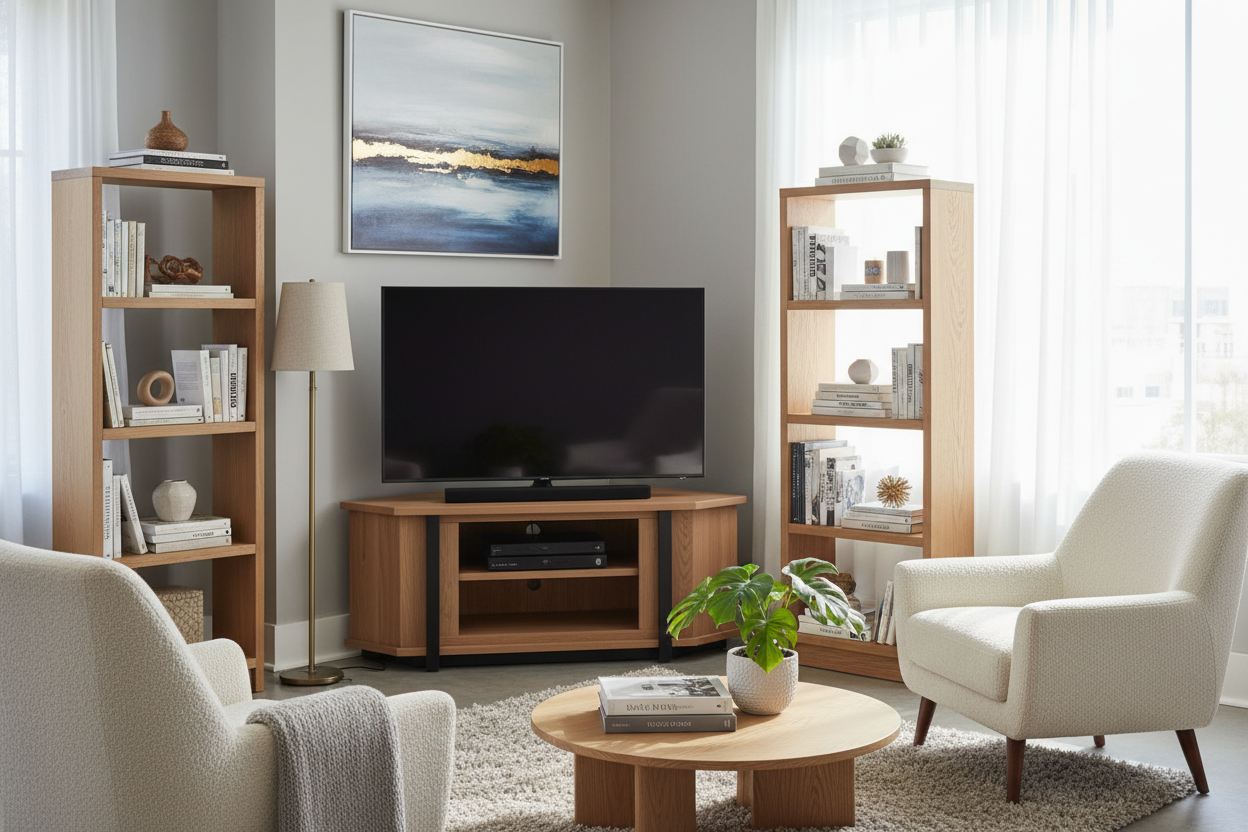
I spent three hours moving my sofa back and forth in my last apartment before I finally admitted defeat. The room had three doors, two windows, and exactly zero long, uninterrupted walls. That is when I learned the hard way that a corner tv stand 50 inch setup isn't a compromise—it is a strategic win for anyone living in a floor plan that feels like a game of Tetris.
We have all been there, staring at forty-seven browser tabs of furniture, trying to figure out if a 50-inch screen will look like a massive black hole in the corner of the room. I have tested the flimsy particle board units that sag after a month and the heavy solid oak monsters that require three people to move. Here is what actually works for your layout.
- Measure the width, not just the diagonal: A 50-inch TV is usually about 44 inches wide.
- Clipped corners are king: Look for units with angled backs to minimize the gap behind the stand.
- Eye level matters: If you are sitting on a standard 18-inch sofa, your screen center should be about 42 inches from the floor.
- Cable management is non-negotiable: Corner units show wires from the side if you are not careful.
Why the 50-Inch Screen is the Ultimate Corner Candidate
The geometry of a standard living room usually leaves us with corners that are essentially dead zones. A 50-inch television is the 'Goldilocks' size for these spots. It is large enough to feel like a real home theater experience but small enough that the unit doesn't have to stick out three feet into your walking path. Unlike standard flat-wall TV stands that demand a long stretch of prime real estate, a corner unit uses the space that was otherwise just gathering dust bunnies.
When you choose a 50 corner tv stand, you are playing with depth rather than width. A 50-inch screen creates a natural focal point that draws the eye diagonally across the room, which actually makes a small space feel significantly larger. I have found that putting the TV in the corner allows for a much more conversational seating arrangement than the typical 'stadium seating' look where everything faces one wall.
Rule 1: Mind the Depth (And the 'Dead Triangle')
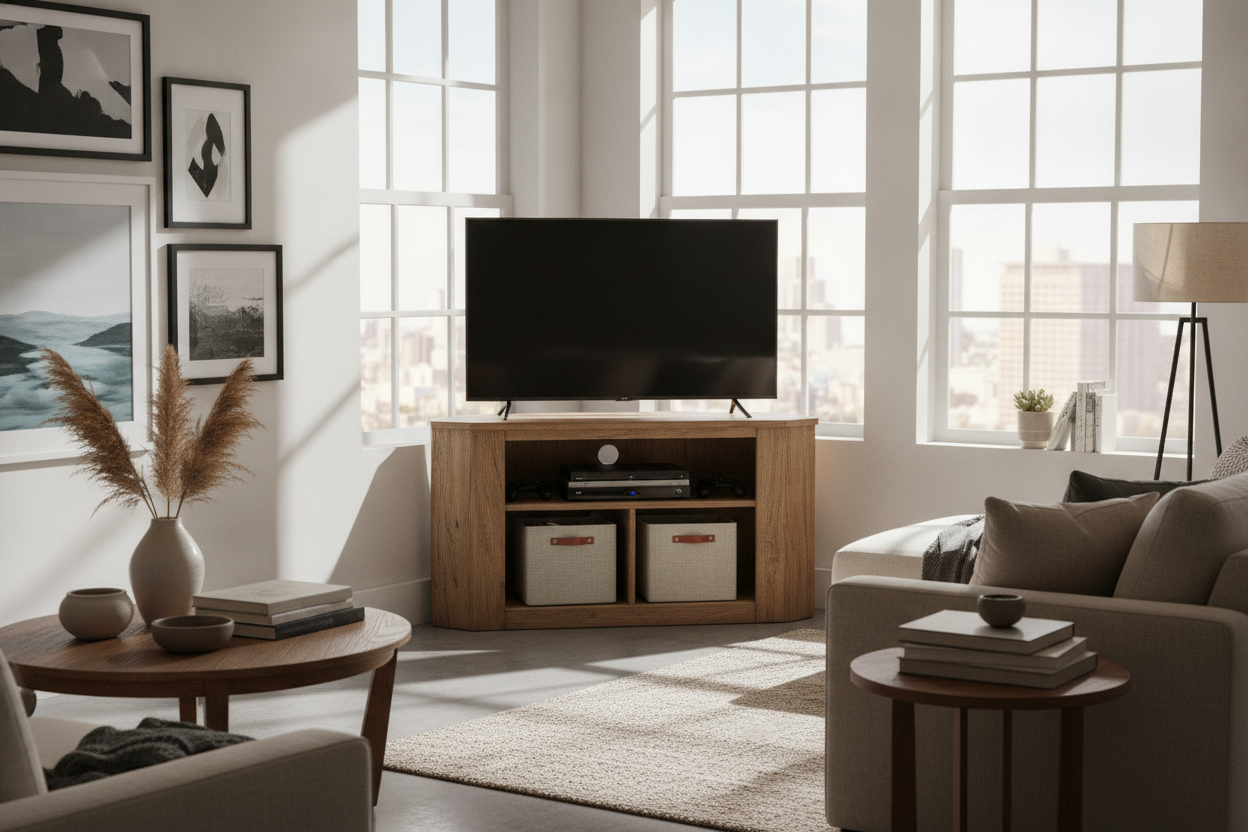
The biggest mistake I see people make with corner tv stands for 50 inch tv screens is ignoring the 'Dead Triangle'—that awkward empty space behind the stand where cables go to die. If you buy a stand that is too deep, you end up pushing your furniture further into the room, eating up your precious rug space. I always look for a corner tv stand for 50 inch flat screen that has a 'clipped' or 'mitered' back. This allows the unit to sit much closer to the walls.
I once bought a cheap 52 inch corner tv stand that was basically a giant rectangle with one corner cut off. It left a six-inch gap behind it that became a graveyard for my cat's toys and a literal mountain of dust. Now, I only recommend units with built-in cable routing holes. If you can see the tangle of HDMI cords from your armchair, the whole 'intentional' look is ruined. Tuck those wires tight or use a cord raceway painted the same color as your walls.
Rule 2: Don't Let It Dominate Your Decor
A tv corner unit 50 inch can easily look like a heavy, dark anchor that weighs down one side of the room. To fix this, you need to balance the visual weight. I like to flank the TV with something vertical. Think about a tall fiddle-leaf fig on one side and maybe a floor lamp with a soft glow on the other. This softens the harsh 90-degree angle of the TV screen and makes it feel like part of the room's design rather than an appliance we just shoved out of the way.
If you go too big, you run into the 'overpower' problem. While a rustic corner TV stand for 65 inch TV might work in a massive basement, a 50-inch setup is much more forgiving in a standard 12x15 living room. You want the furniture to support the screen, not swallow the entire corner. I personally prefer a tv stand for 50 inch tv corner units that feature open shelving or glass doors; it keeps the piece from looking like a giant wooden block.
When You Actually Need a Tall Corner TV Stand for 50 Inch TV
Most people default to low-profile stands, but a tall corner tv stand for 50 inch tv is a secret weapon for bedrooms. When you are lying in bed, your line of sight is naturally higher. A low stand means you are straining your neck or looking through your toes to see the screen. In a room with high ceilings, a taller unit also helps fill the vertical void, making the proportions of the room feel more balanced. I usually look for something around 30 to 35 inches high for bedroom setups.
Rule 3: Keep the Rest of Your Layout Flexible
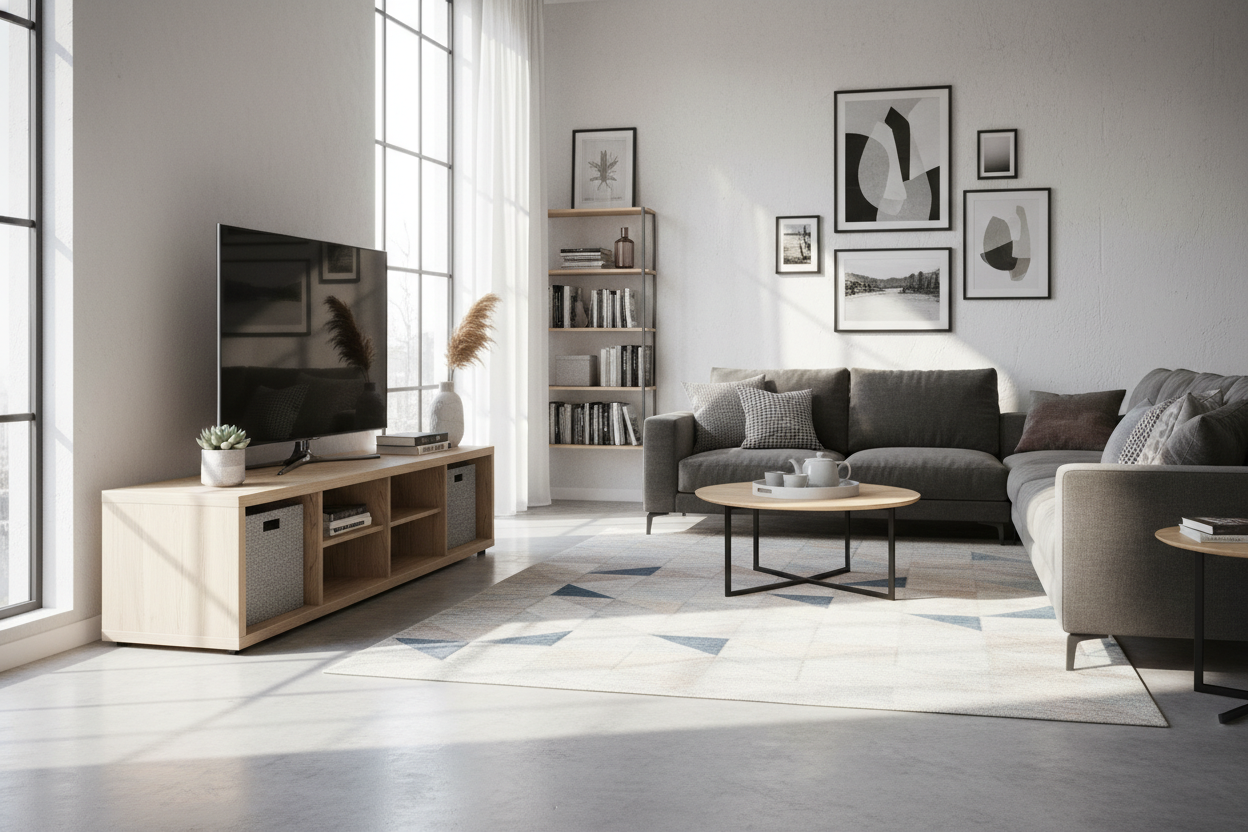
The best part about moving your screen to a corner tv cabinet for 50 inch tv is that it frees up your longest wall for something better—like a massive gallery wall or that oversized sectional you’ve been eyeing. Since the TV is at an angle, your seating doesn't have to be perfectly parallel to a wall. You can pull your chairs into a semi-circle or an L-shape that encourages people to actually talk to each other when the TV is off.
If you find that the corner still feels too cluttered, you might want to consider a lift TV cabinet hidden TV mechanism. While it is a different vibe than a dedicated corner stand, it is a great alternative if you decide you want to keep the TV at the foot of the bed or floating in the room. But for most of us, a solid, well-styled corner unit is the most practical way to reclaim our floor plan without sacrificing our Netflix time.
FAQ
Will a 50-inch TV fit on a 48-inch stand?
Yes, usually. A 50-inch TV refers to the diagonal screen size. The actual width is typically around 44 inches. As long as the base of the TV fits securely on the top surface and doesn't overhang the edges of the stand, you are good to go.
How far from the corner should the TV stand be?
Push it back until the edges of the stand touch both walls, but leave at least 2-3 inches of breathing room for heat dissipation and cable access. If your stand doesn't have clipped corners, you will naturally have a larger gap.
Is it better to wall mount in a corner or use a stand?
Stands are better for most people because they provide storage for gaming consoles and soundbars. Wall mounting in a corner requires a specific articulating arm and can look a bit 'floating' and messy without a piece of furniture underneath to ground it.

Leave a comment
This site is protected by hCaptcha and the hCaptcha Privacy Policy and Terms of Service apply.