

















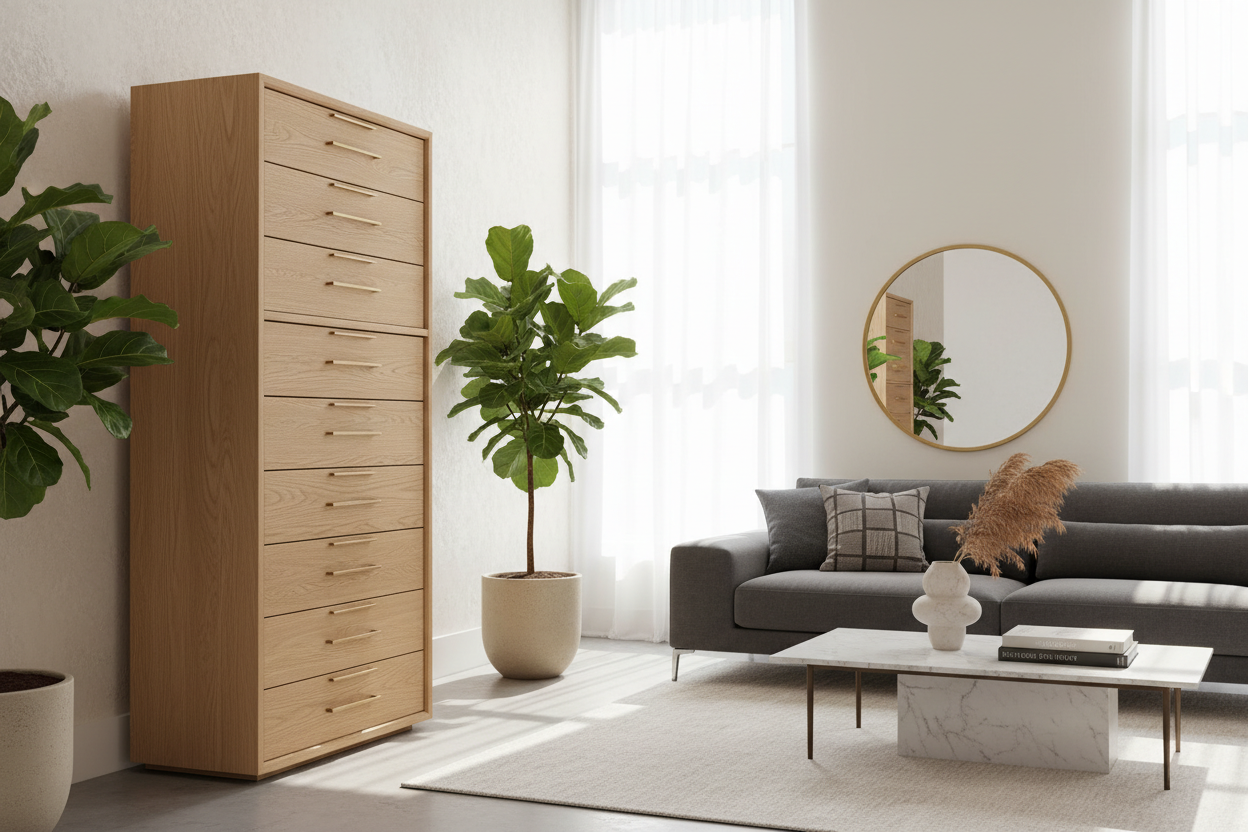
We all have that one awkward wall. It's too narrow for a credenza, but leaving it empty makes the room feel unfinished. When clients complain about overflowing clutter but insist they have zero floor space left, I introduce them to the tall cabinet with drawer. By the end of this read, you'll know exactly how to size, style, and position these vertical workhorses without making your room feel crowded.
Key Takeaways
- Measure your baseboards: Always account for baseboard depth so your cabinet can sit flush against the wall for safe anchoring.
- Eye-level styling: Keep open shelving light; store heavy, visually cluttered items in the bottom drawer.
- Watch the ceiling height: Leave at least 12 to 18 inches between the top of the cabinet and the ceiling to prevent the room from feeling cramped.
- Hardware matters: Soft-close, full-extension glides are non-negotiable for lower drawers holding heavy items.
Space Planning: Making Vertical Storage Work
The Footprint vs. Capacity Ratio
North American homes, even spacious suburban ones, often suffer from poor storage layouts. A tall drawer cabinet solves this by claiming vertical real estate. Typically measuring between 18 and 24 inches wide, these pieces offer the storage capacity of a wide dresser while taking up a fraction of the floor space.
Clearance Rules You Cannot Ignore
Don't just measure the footprint. You need to account for the drawer extension. If you're placing this in a narrow hallway or a small bathroom, ensure you have a minimum of 36 inches of clearance in front of the piece. This allows you to pull the drawer fully open and comfortably stand in front of it without hitting your knees on the opposite wall.
Styling Without the Bulk
Balancing Visual Weight
Tall furniture can easily dominate a room. To keep the silhouette from feeling oppressive, pay attention to the base. Pieces with tapered legs or a recessed toe-kick feel lighter than those that sit flat on the floor. If your room leans mid-century modern, an arched top or fluted wood details can soften the rigid vertical lines.
Layering Texture
When incorporating this piece into your living room or dining area, treat the upper section as a display opportunity. Mix materials—pair a solid walnut frame with glass upper doors or woven cane panels. This breaks up the monolithic look and adds much-needed texture to flat walls.
Lessons from My Own Projects
A few years ago, I sourced a stunning matte black oak cabinet for a client's narrow entryway. It looked incredible in the rendering. But in reality? The floors in their 1920s craftsman sloped ever so slightly. Because the cabinet was so tall and narrow, that tiny slope made the entire piece wobble precariously every time we opened the heavy bottom drawer.
I learned two hard lessons that day. First, adjustable leveling feet are an absolute must for tall, narrow furniture. Second, you must use anti-tip wall anchors. No exceptions. Even if you don't have kids or pets, the shift in center of gravity when a fully loaded drawer is pulled out is enough to bring a heavy piece crashing down. We ended up having to shim the legs and drill directly into the original plaster—a headache that could have been avoided with a better-designed base.
Frequently Asked Questions
Where is the best place to put a tall cabinet?
Awkward corners, narrow hallways, and the dead space next to a fireplace are ideal spots. They also work beautifully in bathrooms for linen storage or in home offices for hiding away printers and files.
How do I organize the drawer section?
Use the lower drawers for heavy, bulky items that you don't need daily access to. Think extra throw blankets, seasonal table linens, or heavy ceramic serveware. Keep everyday items at waist or eye level.
Are solid wood cabinets always better?
Not necessarily. While solid wood is durable, high-quality engineered wood with a real wood veneer is often more resistant to warping from humidity changes—especially important if you're placing the piece in a bathroom or near an exterior door.

Leave a comment
This site is protected by hCaptcha and the hCaptcha Privacy Policy and Terms of Service apply.