

















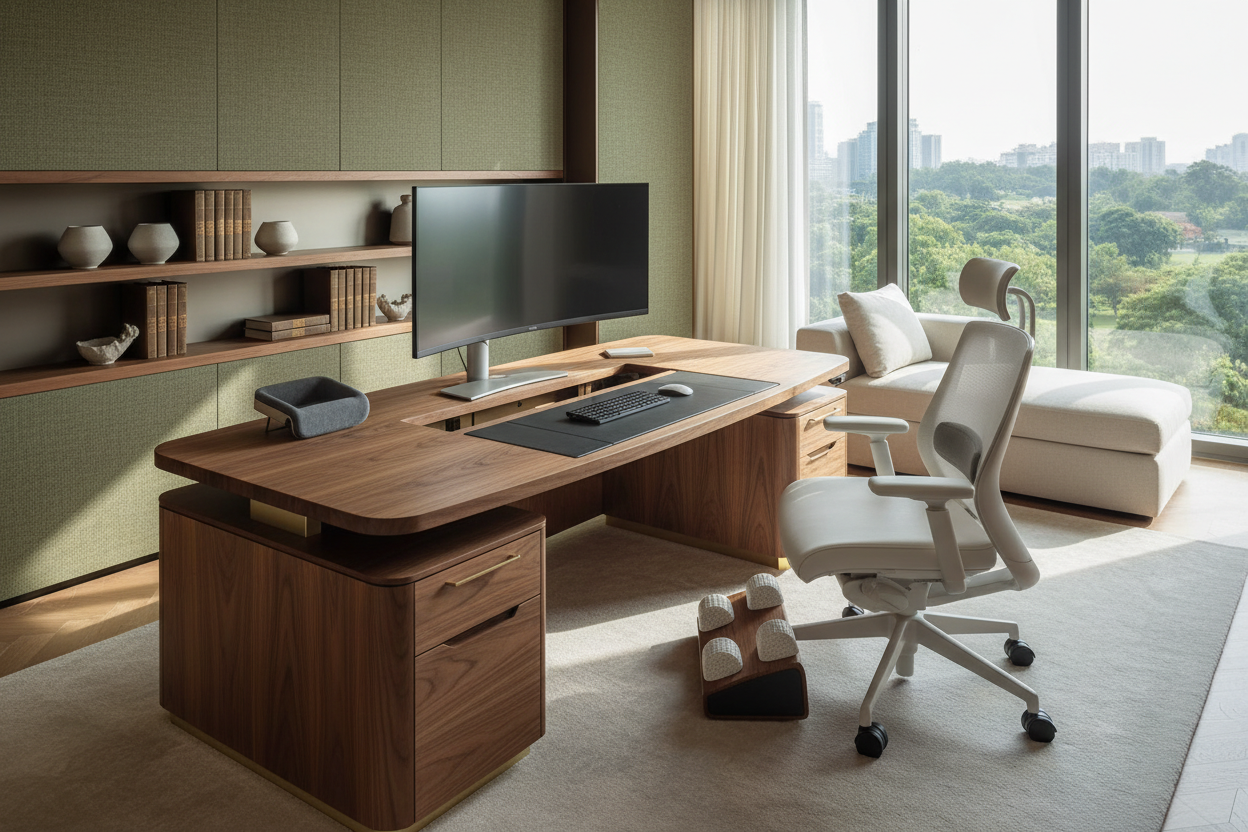
We have all been there: you buy a beautiful, sleek writing table that looked incredible on a showroom floor, only to realize a week later that your knees hit the drawer, your monitor is too close to your face, and your cables are a tangled mess. A poor workspace setup does not just look cluttered; it actively works against your focus and physical health.
Getting your study desk design right is about marrying human scale with your room's aesthetic. After designing countless home offices across North America, from sprawling suburban dens to tight urban alcoves, I can tell you that a desk is one of the most highly functional pieces of furniture you will ever buy. Here is exactly what you need to know before you make a purchase.
Quick Decision Guide
- Standard Height: Look for a desk height of 29 to 30 inches to ensure proper ergonomic seating for the average adult.
- Minimum Depth: If you use a laptop, 20 inches is the absolute minimum depth. For dual monitors, insist on 24 to 30 inches.
- Clearance Rules: Leave at least 36 inches of space behind the desk to comfortably push your chair back without hitting a wall.
- Material Matters: Solid wood offers longevity, but high-quality laminates resist scratches and coffee rings better in heavy-use scenarios.
Space Planning & Dimensions
Before you even look at finishes, you need to understand how a desk physically occupies your room. Visual weight plays a massive role here. A chunky, executive-style pedestal desk will swallow a small apartment bedroom whole, while a delicate glass desk might look lost in a large, dedicated office.
The 30-Inch Rule
Most standard desks sit between 29 and 30 inches high. However, if you are petite or particularly tall, this standard measurement might cause shoulder strain. Pay attention to the apron—the piece of wood dropping down just under the desktop. A thick apron can severely limit your legroom, making it impossible to cross your legs or slide a chair with armrests underneath.
Navigating Small Footprints
If you are squeezing a workspace into a living room corner or a guest room, opt for a desk with an open base. Hairpin legs or simple parsons-style silhouettes maintain negative space, making the room feel larger and less crowded.
Comfort & Ergonomics
A desk that hurts to sit at is useless, no matter how stunning the walnut grain is. Comfort in a study desk is primarily dictated by depth and knee clearance.
Why Depth Matters More Than Width
People often obsess over getting the widest desk possible, but depth is where the magic happens. A 24-inch depth is the sweet spot for a single monitor setup, allowing your screen to sit at arm's length. If you are running multiple large monitors or need space for open textbooks in front of your keyboard, you need to push into the 30-inch territory to avoid eye strain.
Material & Build Quality
Your desk takes a daily beating from hot mugs, heavy equipment, and constant friction. Choosing the right material dictates how well the piece will age over the next decade.
Solid Wood vs. Engineered Alternatives
Solid hardwoods like oak, walnut, and maple are heirloom-quality choices. They can be sanded and refinished down the line, but they are susceptible to humidity changes and require coasters. On the flip side, do not immediately dismiss engineered woods. A high-pressure laminate (HPL) over an MDF core is incredibly durable, cost-effective, and practically immune to water rings and pen scratches. Just avoid cheap particleboard, which tends to bow under the weight of heavy monitors.
Designer's Honest Take
Early in my career, I specified a gorgeous, minimalist tempered glass desk for my own home office. It had sleek polished chrome legs and looked incredibly chic. I hated it within a week.
Every single fingerprint showed. My optical mouse would not work without a bulky mousepad, ruining the clean aesthetic. Worse, there was nowhere to hide the power cords, so my sleek workspace looked like a server room explosion underneath. I learned the hard way that a desk must have integrated cable management or at least an opaque modesty panel to hide the inevitable wire clutter. I swapped it for a solid ash desk with a built-in cable tray a year later and never looked back.
Frequently Asked Questions
What is the ideal height for a study desk?
The industry standard is 29 to 30 inches from the floor to the top of the desk. This accommodates most adults when paired with an adjustable task chair, allowing your elbows to rest at a comfortable 90-degree angle.
How deep should a study desk be for dual monitors?
For a comfortable viewing distance that prevents eye strain, a desk for dual monitors should be at least 24 to 30 inches deep. Anything shallower will force the screens too close to your face and leave no room for your keyboard.
Does a study desk need drawers?
It depends entirely on your workflow. If you are entirely paperless, a minimalist flat-top desk works perfectly. If you deal with physical mail, pens, or notebooks, a shallow pencil drawer is essential to prevent desktop clutter from piling up.


Leave a comment
This site is protected by hCaptcha and the hCaptcha Privacy Policy and Terms of Service apply.