

















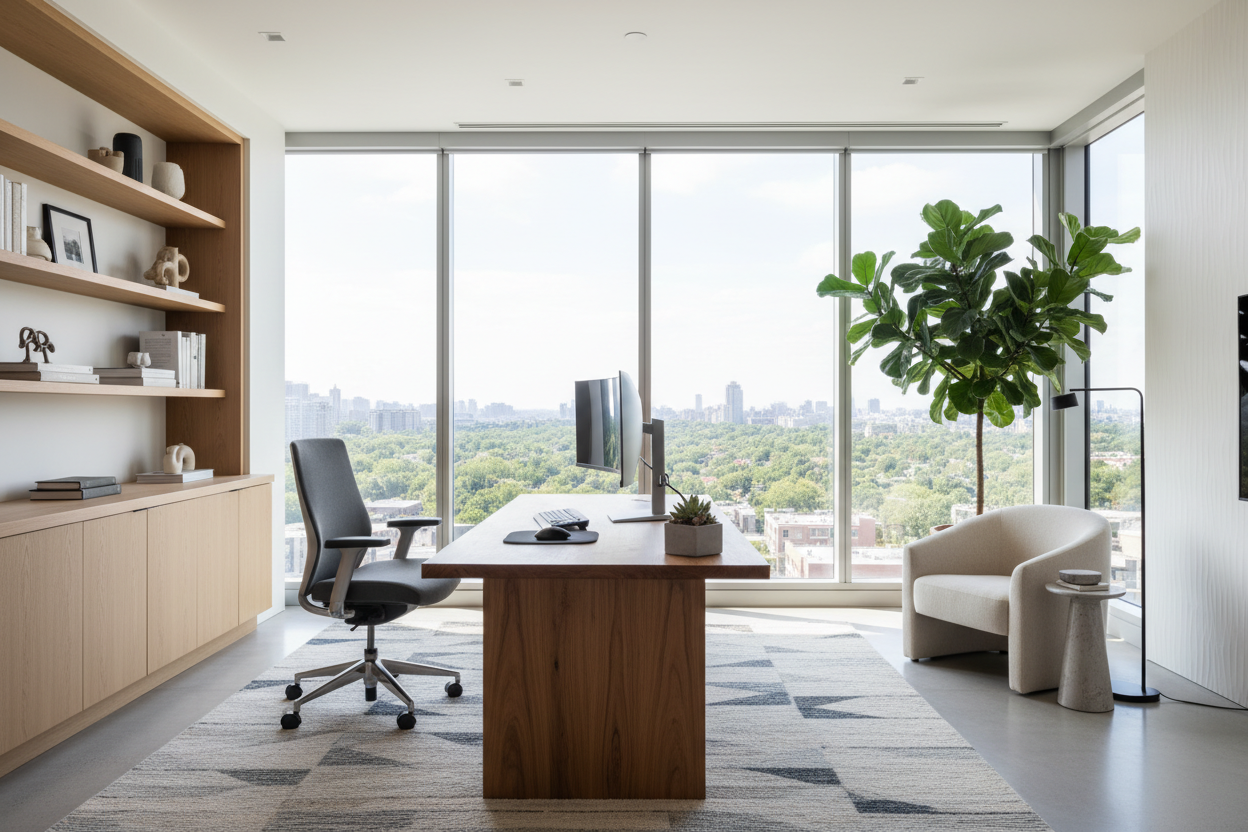
One of the most frequent dilemmas I encounter during residential consultations isn't selecting the desk itself, but determining where it should live. We often treat workspaces as afterthoughts, shoving a table into a spare corner without considering the psychological impact of the environment. However, the most successful home office locations are those that balance acoustic privacy with visual inspiration.
Quick Decision Guide: Evaluating Your Space
- Light Orientation: North-facing windows offer consistent, soft light; South-facing windows require solar shades to prevent afternoon glare.
- Traffic Patterns: Avoid placing seating directly in a main thoroughfare; aim for a 36-inch clearance behind your chair.
- Acoustics: Hard surfaces (tile, glass) amplify noise; look for carpeted areas or rooms where you can add heavy drapery.
- Power Access: Map out outlets before moving furniture to avoid tripping hazards or unsightly extension cords.
Analyzing Light and Sightlines
As a designer, my first step in space planning is always the "sun study." While a view is desirable, facing a window directly can create contrast fatigue for your eyes as they adjust between a bright exterior and a backlit screen. The ideal orientation places the window perpendicular to your desk. This setup washes your workspace in natural light without the harsh glare that renders monitors unreadable.
Consider the "Command Position." This isn't just Feng Shui; it is primal psychology. You should ideally have a view of the room's entry point. Facing a wall with your back to the door often creates a subconscious low-level anxiety that hinders deep focus.
Zoning and Material Considerations
When integrating an office into a multi-purpose room, such as a living area or bedroom, the materials you choose must bridge the gap between utility and luxury. If your location is a visible nook in the living room, avoid melamine or industrial laminates. Instead, opt for rich walnut veneers or solid oak that complements your existing cabinetry.
The "Alcove" Opportunity
Architectural recesses are often overlooked. A shallow closet or a recessed wall can be transformed with built-in millwork. The key here is verticality. Since floor space is at a premium in these locations, utilize floating shelves above the monitor line to draw the eye upward, making the station feel like an intentional design feature rather than a cramped necessity.
My Personal Take on Home Office Locations
I want to share a specific lesson learned from a project in a high-end loft renovation. We initially placed the client's desk on a stunning mezzanine overlooking the living area. It looked incredible in the renderings—very architectural and airy.
However, three months later, we had to move it. Why? The cooking smells. We hadn't accounted for the fact that heat (and the scent of garlic and onions) rises. My client couldn't focus on spreadsheets while the dinner prep wafted up to the workspace. Furthermore, the hard flooring of the loft meant that every time a family member dropped a spoon in the kitchen below, it sounded like a gunshot in the office above. It taught me that air circulation and acoustic isolation are just as critical as the visual aesthetic. Now, I always check HVAC returns and acoustic dampening before finalizing a floor plan.
Conclusion
Finding the right spot for your work is about more than just square footage; it is about respecting the rhythm of your daily life. By prioritizing light control, acoustics, and high-quality materials, you can carve out a space that invites productivity rather than forcing it. Look at your home with fresh eyes—the perfect location might be waiting in an unexpected corner.
Frequently Asked Questions
Can I put a home office in the bedroom?
Yes, but visual separation is mandatory for sleep hygiene. I recommend using a room divider, open shelving unit, or a desk that closes (like a secretary desk) to signal the end of the workday.
What is the minimum space needed for a functional desk setup?
At a minimum, you need a width of 48 inches for the desk and a depth of 30 inches behind it for the chair to slide back safely. Anything less will feel claustrophobic and restrict movement.
How do I handle lighting in a windowless location?
Layer your lighting. Start with an overhead ambient fixture (around 3000K temperature), add a dedicated task lamp for the surface, and consider LED strip lighting behind a monitor to reduce eye strain.

Leave a comment
This site is protected by hCaptcha and the hCaptcha Privacy Policy and Terms of Service apply.