

















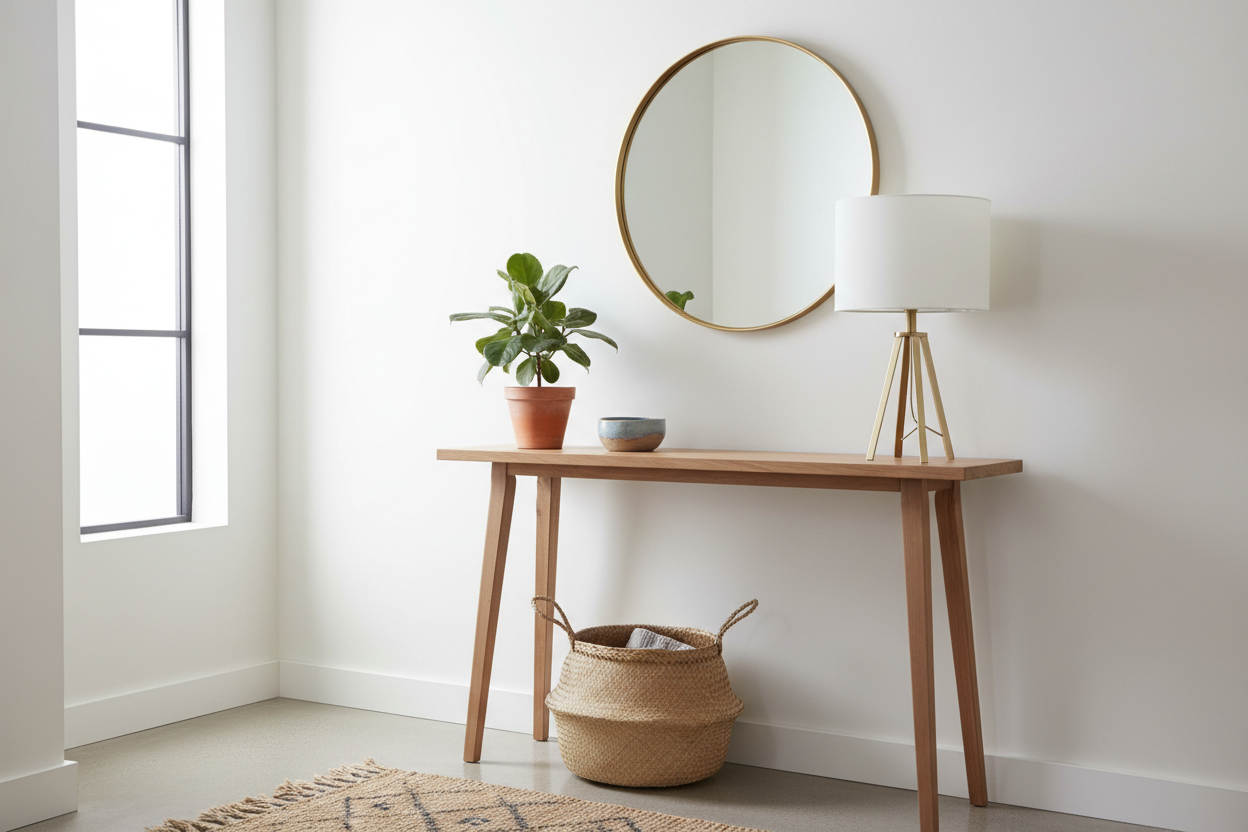
The narrow strip of floor connecting your front door to the living room is often the most neglected space in the house. It usually becomes a dumping ground for shoes or remains a barren, echoing corridor. The solution is simple but specific: a properly scaled surface that serves as both a landing pad and a design statement. A well-chosen walkway table immediately anchors the space, giving your eye a place to rest while providing a crucial function for the items you carry in and out of your home every day.
You shouldn't just shove any spare desk or shelf into this area. Because these transitional spaces are high-traffic zones, the furniture needs to be slim enough to prevent hip-bruising collisions but substantial enough to not look like a mistake. The goal is to create a moment of pause without impeding the flow of traffic.
Measuring for the Perfect Fit
Before looking at finishes or styles, get the tape measure out. The biggest error people make with hallway table furniture is misjudging the depth. In a standard corridor, you generally want to maintain at least 36 inches of clearance for walking. If your hall is 48 inches wide, your table cannot exceed 12 inches in depth. If you have a grander entrance, you can push this to 15 or 18 inches, but slimmer is almost always better in a pass-through area.
Length is more forgiving. A long, slender table can elongate the look of a hall, making it feel more spacious. However, ensure the table doesn't obstruct doorways or swing paths. Visually, the table should be about two-thirds the length of the wall it sits against or the sofa it sits behind. Anything smaller looks dinky; anything larger feels overwhelming.
A Lesson Learned the Hard Way
I learned the importance of "visual weight" versus actual measurements a few years ago in my first apartment. I found a stunning, heavy oak vintage desk that I was convinced would work as a hallways table. Technically, it fit the measurements—barely. I had exactly 30 inches of walking space left.
It was a disaster. Because the piece was solid wood with thick legs and drawers that went all the way to the floor, it made the hallway feel like a tunnel. I found myself turning sideways to walk past it, not because I didn't fit, but because the heavy furniture made the space feel claustrophobic. I eventually swapped it for a glass-top console with thin metal legs. Even though the depth was similar, the transparency opened up the room completely. The lesson? In tight spaces, what you can see through matters as much as what you can walk past.
Functionality: The Drop Zone
Once you have the dimensions dialed in, consider what happens when you walk through the door. A walkway table is the first line of defense against clutter migrating into the living room or kitchen. If you are prone to losing keys or leaving mail on the dining table, you need a piece with built-in utility.
Look for designs that incorporate shallow drawers. These are perfect for hiding unsightly necessities like dog leashes, sunglasses, and envelopes. If you prefer a minimalist look without drawers, you will need to add a catch-all tray or a woven bowl on top. The surface should never be 100% decorative; it has to work for you. If the table has a lower shelf, use it for baskets to store shoes or umbrellas, keeping the floor clear and the tripping hazards to a minimum.
Styling Without Crowding
Decorating a narrow surface requires restraint. You want to create a vignette, not a garage sale display. The most effective approach is to anchor the table with a large piece on the wall above it. A large round mirror is a classic choice for a reason; it reflects light, making the narrow hallway feel wider and brighter. Alternatively, a large piece of art can inject personality into an otherwise utilitarian space.
On the table surface itself, play with height. A tall, slender lamp on one side balances out a stack of books or a low tray on the other. This asymmetry keeps the eye moving. Since this is a walkway table, ensure nothing overhangs the edge where it could be snagged by a passing coat or handbag. Keep breakable items closer to the wall and sturdier items near the front.
Lighting the Corridor
Hallways are notoriously dark. While overhead lighting does the job, it often casts unflattering shadows. Adding a table lamp to your hallway table furniture setup introduces a warm, welcoming glow at eye level. If your table is too narrow for a lamp base, consider installing wall sconces directly above the table. This frees up precious surface area while still highlighting the decor and providing that essential ambient light.
Material Durability
This furniture lives in a high-contact zone. It will get bumped by grocery bags, kicked by muddy boots, and splashed with wet umbrellas. Delicate veneers or untreated softwoods might scratch or warp quickly in an active home. Metal, glass, and sealed hardwoods are generally the most forgiving choices for a hallways table.
If you have young children or pets, consider the stability of the piece. Lightweight, top-heavy tables can be tipping hazards in a narrow space where running might occur. In these cases, a table that can be anchored to the wall, or one with a weighted base, is a safer bet than a spindly antique.
Choosing the Right Aesthetic
Your entry table sets the tone for the rest of the home. It is a preview of your interior design style. If your home is modern, look for clean lines, chrome, or acrylic. For a farmhouse vibe, reclaimed wood or painted timber works best. The key is consistency. Because the hallway leads to other rooms, the style of the table should bridge the gap between the exterior world and your interior sanctuary.
Ultimately, the best table for your walkway is one that you don't notice when you're rushing, but admire when you pause. It clears the clutter, lights the way, and finishes the room.
Frequently Asked Questions
How tall should a hallway table be?
Standard height for these tables falls between 30 and 36 inches. This places the surface comfortably at hip level, making it easy to drop keys or mail without bending over, while aligning visually with the back of most sofas if used in a living area.
Can I use a shelf instead of a table in a very narrow hall?
Absolutely. If your walkway is too tight for legs, a floating shelf installed at console height (approx. 32-34 inches) serves the exact same function. This eliminates the footprint on the floor, making the space feel wider while still providing a surface for decor and storage.
What is the minimum width for a hallway to accommodate a table?
Ideally, your hallway should be at least 42 to 48 inches wide to comfortably fit a narrow table. If your hall is narrower than that, you might impede the flow of traffic, and a wall-mounted mirror or shallow picture ledge might be a better solution than a floor-standing table.

Leave a comment
This site is protected by hCaptcha and the hCaptcha Privacy Policy and Terms of Service apply.