

















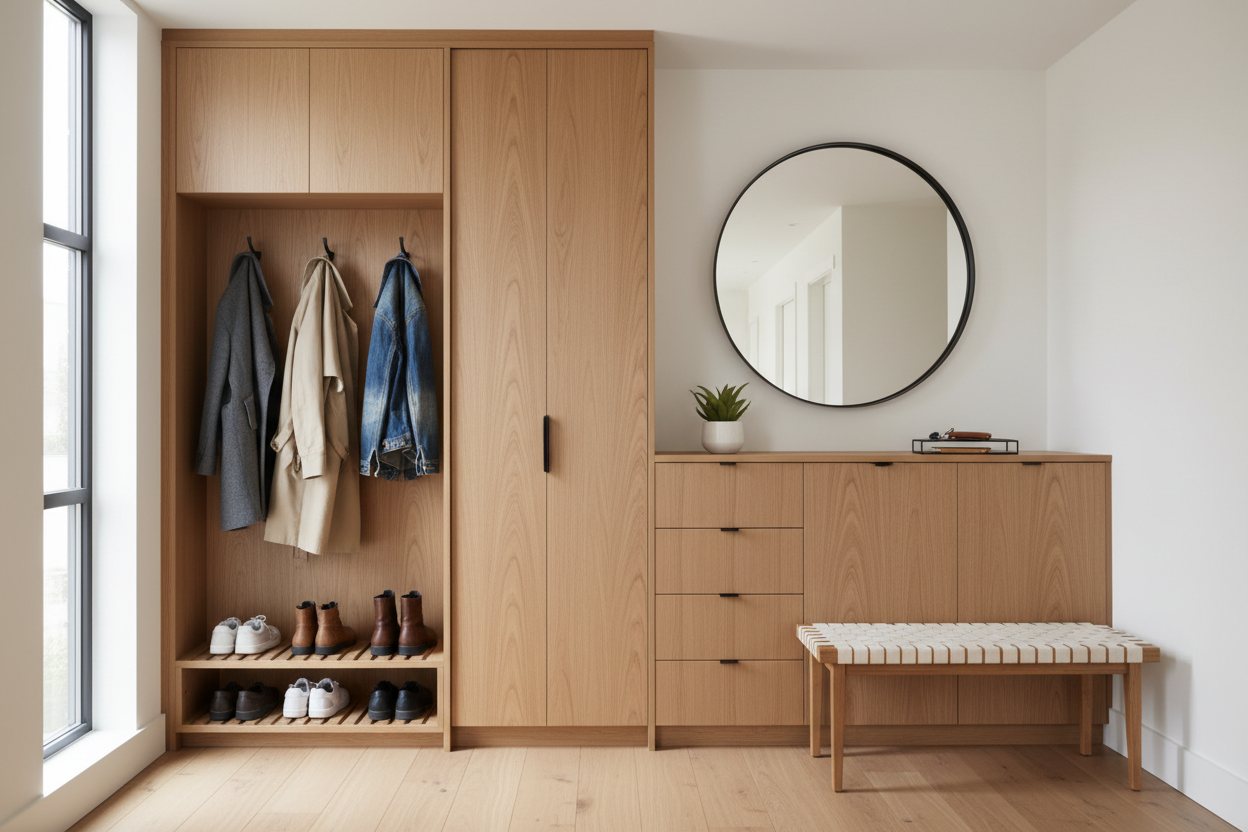
Walking through your front door should feel like a relief, not an obstacle course. Yet, for many of us, the foyer becomes a chaotic dumping ground for shoes, coats, mail, and backpacks. If you are tired of tripping over boots or seeing a mountain of jackets on a single hook, an entryway wardrobe is the most effective solution to reclaim your space. It serves as the anchor of your home’s entrance, providing a designated spot for everything that usually ends up on the floor.
I learned this lesson the hard way in my first proper house. The hallway was narrow, and I assumed a few wall hooks would suffice. Within a month, the wall was scuffed, the hooks were buried under heavy winter coats, and the floor was invisible beneath a layer of sneakers. I eventually invested in a proper cabinet, and the shift in atmosphere was instant. The visual noise vanished. That is the power of dedicated furniture; it transforms a "pass-through" area into a functional room.
Assessing Your Space and Needs
Before you start shopping or sketching designs, you have to look at the realistic footprint of your hall. A massive antique armoire might look stunning in a showroom, but if it blocks the flow of traffic in your corridor, it becomes a nuisance. The ideal wardrobe for entryway spaces is often shallower than a standard bedroom closet. You typically want something with a depth between 12 to 24 inches, depending on whether you plan to hang coats perpendicular to the back wall or on a standard rail.
Think about what you actually carry. Do you need vertical space for long trench coats, or are you mostly storing short jackets and dog leashes? If you have children, low-hanging hooks or cubbies are essential so they can hang up their own gear without asking for help. This initial assessment prevents buyer's remorse and ensures the piece serves your lifestyle rather than hindering it.
The Hidden Power of Closed Storage
Open racks have been trendy for a while, offering that casual, lived-in look. However, true organization usually requires hiding things away. An entryway wardrobe closet offers the distinct advantage of doors. Behind those doors, things can be slightly messy, but the hallway remains serene and polished. Closed storage also protects your garments from dust and cooking smells that might waft from the kitchen.
When selecting a closed unit, consider the door swing. In tight corridors, sliding doors are a lifesaver because they don't encroach on the walking path when open. If you prefer hinged doors, ensure there is enough clearance for the door to open fully without hitting the opposite wall or the front door itself. Mirrors on the door fronts serve a dual purpose: they allow you to check your outfit before leaving and bounce light around, making a cramped foyer feel significantly larger.
Combining Seating and Storage
One of the most versatile configurations available is the entryway wardrobe with bench. This hybrid design solves the awkward dance of trying to put on shoes while hopping on one foot. Having a dedicated place to sit encourages household members and guests to remove their shoes at the door, which keeps the rest of your home cleaner.
The space beneath the bench is prime real estate. It creates a natural home for shoe baskets or drawers. Above the bench, you usually have a row of hooks for grab-and-go items like scarves and hats, flanked by taller cabinets on the sides. This setup creates a "mudroom" feel even if you don't actually have a dedicated mudroom. It centers the activity of leaving and arriving in one organized zone.
Material Selection and Durability
Your foyer sees more traffic and abuse than almost any other part of the house. Wet umbrellas lean against cabinets, muddy boots get kicked into cubbies, and heavy bags are dropped onto surfaces. Durability is non-negotiable. While particle board is affordable, it swells quickly if it gets wet. Solid wood or high-quality plywood with a durable veneer are better choices for longevity.
If you are building a custom unit or modifying a stock piece, pay attention to the hardware. Hinges should be soft-close to prevent slamming, and drawer slides need to be rated for heavy weight—winter boots are not light. For the bench area, look for performance fabrics or wipe-able surfaces like leather or treated wood. You want to be able to wipe away mud splatters without worrying about staining.
Interior Organization Hacks
The outside of the unit matters for aesthetics, but the inside determines functionality. Don't settle for a single rod and a top shelf. You can maximize the utility of an entryway wardrobe by customizing the interior layout. Adjustable shelving is superior to fixed shelves because your storage needs will change with the seasons. In summer, you might need more height for beach bags; in winter, you need space for bulky boots.
Consider adding lighting inside the cabinet. A simple battery-operated motion sensor light can make a huge difference on dark winter mornings. It helps you distinguish the navy blue coat from the black one without turning on the bright overhead hallway lights. Additionally, using the inside of the doors for shallow storage—like mail sorters or key hooks—can keep small clutter off your entryway console table.
Style Integration
This piece of furniture is likely the first thing guests see, so it sets the tone for your entire home. It shouldn't look like an afterthought. If your home is modern, look for sleek lines, handleless push-to-open doors, and glossy finishes. For a farmhouse aesthetic, a painted timber finish with beadboard backing works beautifully.
You can also blend the wardrobe into the wall color to make it disappear visually. Painting a large unit the same color as the walls reduces its visual weight, preventing the hallway from feeling claustrophobic. Conversely, choosing a bold, contrasting color turns the wardrobe into a statement piece, acting as a focal point that draws the eye away from any architectural flaws in the entryway.
Ultimately, the goal is to create a system that makes leaving the house smoother and coming home more relaxing. When everything has a place, the stress of the transition from outside to inside evaporates.
Frequently Asked Questions
How deep should an entryway wardrobe be?
Standard wardrobes are usually 24 inches deep, but entryways often require slimmer profiles. A depth of 12 to 16 inches works well if you use front-facing clothing rails or hooks instead of a standard hanging rod. Always measure your hallway width and ensure you have at least 36 inches of clearance for walking.
Can I put a wardrobe in a small apartment entryway?
Absolutely, but you need to prioritize vertical space over floor space. Look for tall, narrow units that go all the way to the ceiling to maximize storage without crowding the floor. Mirror-fronted doors are particularly effective in small apartments as they create the illusion of a larger room.
Is it better to have open hooks or closed cabinets?
This depends on your tidiness level and the visual look you want. Closed cabinets (an entryway wardrobe closet) keep the area looking cleaner and reduce visual clutter, which is great for calming a busy space. Open hooks are more convenient for guests and quick access, but they can easily look messy if overloaded.

Leave a comment
This site is protected by hCaptcha and the hCaptcha Privacy Policy and Terms of Service apply.