

















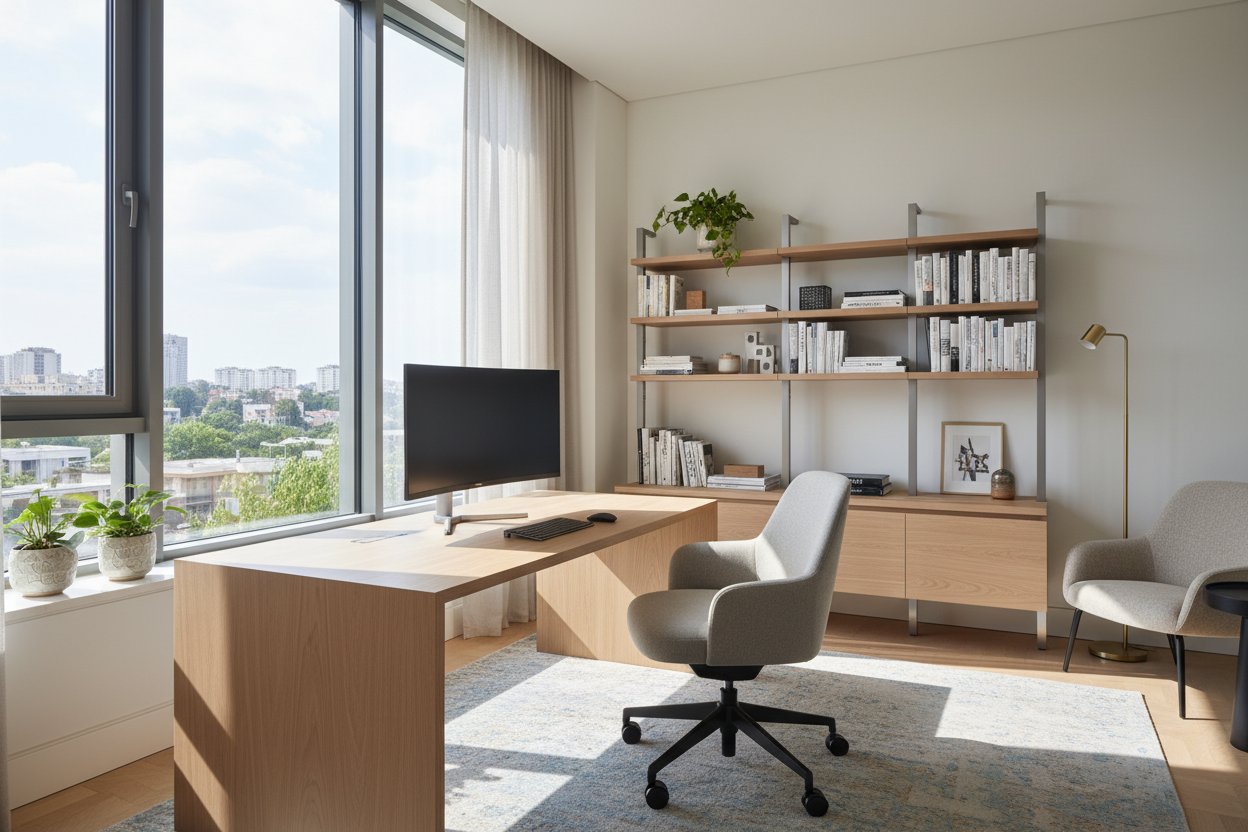
There is a distinct difference between a space where you simply check emails and a thoughtfully designed office room that actively supports deep work. Too often, I see homeowners treating their workspace as an afterthought, pushing a desk against a blank wall and wondering why they feel uninspired or fatigued by 2:00 PM. Designing a dedicated environment is about managing psychology through spatial planning, lighting, and materiality.
Key Features for a High-Performance Workspace
- Ergonomic Integrity: Prioritize chairs with adjustable lumbar support and seat depth over purely aesthetic mid-century modern replicas.
- Lighting Temperature: Aim for 3500K-4000K (cool white) for task lighting to maintain alertness, layered with warmer ambient light.
- Surface Material: Solid wood or high-pressure laminate offers better tactile warmth and durability than glass or cheap veneers.
- Acoustic Control: Incorporate soft furnishings (rugs, curtains) to dampen echo and create a focused audio environment.
Mastering the Layout and Flow
The placement of furniture dictates the energy of your working room. The most common error in a room office is facing the wall, which creates a subconscious feeling of confinement. Instead, position your desk in the "command position"—facing the door but not directly in line with it. This creates a sense of security and authority.
If you are fortunate enough to have a big office room, avoid the temptation to push all furniture to the perimeter. Float the desk in the center of the room, anchored by a substantial area rug. This allows for traffic flow around the workspace and elevates the room's visual weight.
Zoning for Multifunctionality
In a modern house office space, you often need distinct zones. Create a "focus zone" for the computer and a separate "analog zone"—perhaps a lounge chair or a standing height table—for reading or sketching. This physical separation helps reset your brain when switching tasks.
Materiality: Choosing Surfaces That Last
As a specialist, I cannot stress enough the importance of tactile experience in a room workspace. You will be touching these surfaces for eight hours a day. While glass desks look sleek in a showroom, they are often cold to the touch and act as magnets for fingerprints.
For a sophisticated, enduring look, opt for walnut or oak veneers with a matte finish. These materials age gracefully and hide minor scratches better than high-gloss lacquers. If your office work room is on a budget, look for high-quality melamine with a textured grain; it mimics the warmth of wood without the maintenance requirements.
Lessons from My Own Projects
I once designed a minimal office room for a client who insisted on a floating glass desk to maintain an "airy" feel. Visually, it was stunning. However, three months later, we had to replace it. Why? The wire management was a nightmare—every cable was visible—and the client complained that the cold glass surface was uncomfortable on their wrists during long typing sessions.
This taught me a valuable lesson I now apply to every project: Function must precede form in a workspace. Now, when I specify desks, I look for integrated cable channels and "modesty panels" that hide the visual clutter of cords. It’s these unglamorous details that determine whether a room feels chaotic or serene.
Conclusion
Curating the perfect office is not about buying the most expensive furniture; it is about understanding how light, texture, and layout influence your productivity. By investing in the right materials and respecting the flow of the room, you can turn a spare corner into a powerhouse of creativity.
Frequently Asked Questions
How do I light a room office without overhead glare?
Avoid relying solely on a central ceiling fixture. Instead, use a mix of floor lamps for ambient light and an adjustable desk lamp with a diffuser. Position the light source to the side of your monitor, not behind it, to reduce eye strain.
What is the minimum size for a functional house office space?
At a minimum, you need a footprint of about 50 to 60 square feet to accommodate a standard desk (48" wide) and allow for chair movement (30" clearance behind the desk). Any smaller, and the ergonomics will suffer.
Should I use a rug in a carpeted office work room?
Yes. Layering a rug over carpet adds a necessary design layer and defines the zone. However, ensure you use a rigid chair mat or a very low-pile rug so your office chair casters can roll smoothly without getting stuck.


Leave a comment
This site is protected by hCaptcha and the hCaptcha Privacy Policy and Terms of Service apply.