

















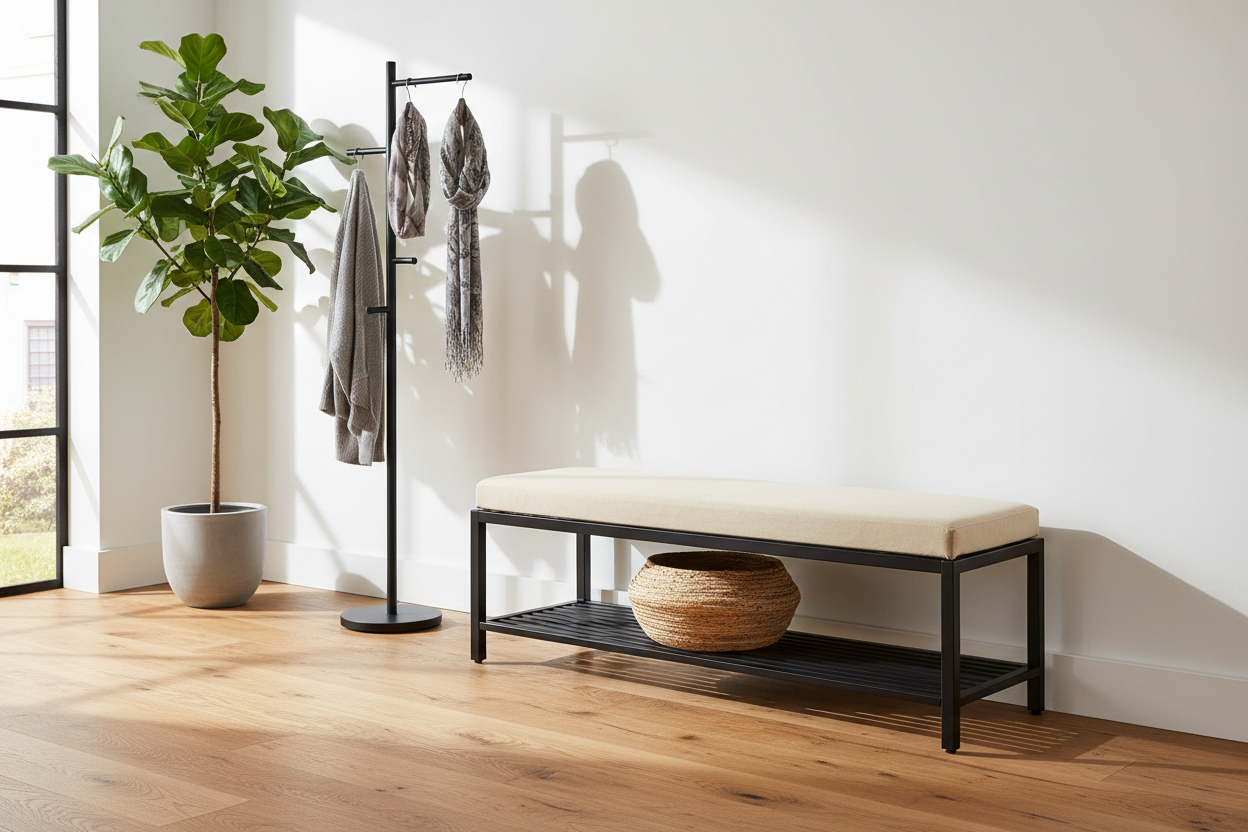
The entryway is the most abused square footage in any home. It is where wet raincoats drip, muddy boots land, and heavy grocery bags are dropped with a thud. If you have been relying on delicate particle board furniture or purely decorative seating in this high-traffic zone, you have likely noticed chips, wobbles, or water damage within a year or two. The solution isn't to stop living in your house; it is to upgrade the infrastructure. A metal entryway bench offers the structural integrity required to handle the daily grind while acting as a stylistic anchor for your foyer.
Choosing metal isn't just about industrial aesthetics; it is a practical decision for longevity. Unlike softer materials that dent or warp when exposed to moisture and fluctuating temperatures near the door, metal holds its ground. Whether you are looking for a sleek, modern profile or a vintage-inspired piece, understanding the nuances of these benches will help you buy the last one you will ever need.
The Reality of High-Traffic Zones
I learned the value of heavy-duty hallway furniture the hard way. A few years ago, I bought a charming, painted wooden bench for my front hall. It looked perfect for about three months. However, between a wet Golden Retriever shaking off rain and my kids tossing their lacrosse gear onto it, the finish began to crack, and the legs eventually grew uneven. It simply couldn't handle the weight or the environment.
Switching to a sturdy steel frame changed everything. It didn't flinch when heavy equipment was dropped on it, and cleaning mud off the legs required nothing more than a damp cloth. There is a specific peace of mind that comes with furniture you don't have to baby. You can sit down to tie your shoes without hearing a creak of protest from the joinery.
Balancing Warmth and Strength
One common hesitation homeowners have is that metal might feel too cold or clinical for a welcoming space. This is where the design brilliance of a metal and wood entryway bench comes into play. By combining a rigid steel or iron frame with a solid wood seat, you get the best of both worlds. The metal provides the indestructible skeleton, while the wood offers a warm, textured surface to sit on.
This combination is the cornerstone of the popular industrial farmhouse look, but it is versatile enough for other styles too. A wood and metal entryway bench with a live-edge slab sits beautifully in a rustic cabin, while a piece featuring polished walnut and matte black steel fits perfectly in a mid-century modern apartment. The wood softens the visual impact of the metal, preventing the entryway from looking like a locker room.
Choosing the Right Metal for Your Space
Not all metals serve the same purpose. If you are aiming for a classic, Victorian, or highly decorative look, an iron entryway bench is the standard. Wrought iron is heavy and substantial, often featuring intricate scrollwork that serves as art as much as furniture. It is incredibly durable but can be heavy to move, so place it where you intend to keep it.
For a more contemporary or minimalist approach, tubular steel or aluminum is preferable. These materials are lighter and often feature clean, straight lines. They are also easier to move around if you like to rearrange your furniture frequently. Regardless of the alloy, ensure the metal is powder-coated or sealed if you live in a humid climate to prevent oxidation over time.
Maximizing Functionality in Small Spaces
A bench that only offers seating is a missed opportunity, especially if your square footage is limited. A metal entryway bench with storage transforms a passive seating area into an organizational hub. Metal is particularly good for this because thin metal bars or grates take up less visual space than bulky wooden drawers, keeping the area looking open and airy.
Look for designs that incorporate a lower shelf made of metal slats. This is superior to a solid shelf for shoe storage because it allows dirt to fall through to the floor (where it is easily swept up) rather than accumulating on the shelf itself. It also allows wet soles to dry faster due to increased air circulation. Some metal benches incorporate wire baskets or hooks on extended vertical frames, providing a designated spot for scarves, leashes, and umbrellas.
Styling Your Metal Bench
Once you have the bench in place, styling it helps integrate it into the rest of your home's decor. Because metal is a hard material, you want to introduce soft textures. Add a few throw pillows in durable fabrics like canvas or wool. A sheepskin throw draped over the back of an iron bench can instantly make it look cozy and inviting.
Lighting plays a role here as well. Metal surfaces reflect light, so placing your bench under a warm wall sconce or near a window can highlight the finish, whether it is brushed nickel, matte black, or antique bronze. If your bench has open storage underneath, use uniform baskets to hide the clutter of shoes and bags, keeping the visual noise to a minimum.
Durability and Maintenance
The maintenance requirement for a metal bench is remarkably low, but it isn't non-existent. For general cleaning, a microfiber cloth is usually sufficient to remove dust. If you track in road salt during the winter, wipe down the metal legs promptly, as salt can corrode even treated metal over long periods.
If you have a wood and metal combination, treat the wood seat seasonally with a conditioner or wax to keep it hydrated, especially if it sits in direct sunlight or near a heating vent. For pure metal benches that develop scratches, a quick touch-up with metal paint can restore them to new condition instantly—a fix that is much harder to achieve with scratched wood or torn upholstery.
Frequently Asked Questions
Does a metal bench require assembly?
Most modern metal benches are shipped flat-packed and require some assembly, usually involving bolting the legs to the seat or connecting the storage shelf. However, high-end wrought iron benches often come as a single welded piece, requiring no assembly but demanding more effort to transport into the home.
Is a metal bench comfortable to sit on?
Metal provides a firm, rigid seat which is excellent for stability but less ideal for lounging. For an entryway where you are only sitting for a minute to tie shoes, it is perfectly adequate, though many people choose to add a seat cushion or select a wood-topped version for added warmth and comfort.
Can I use an indoor metal bench on my porch?
You should only use an indoor bench outside if it is specifically rated for outdoor use or if you have applied a weather-resistant sealant. Indoor metal furniture often lacks the UV and rust protection required to withstand rain and direct sunlight, leading to rapid deterioration if left exposed.


Leave a comment
This site is protected by hCaptcha and the hCaptcha Privacy Policy and Terms of Service apply.