

















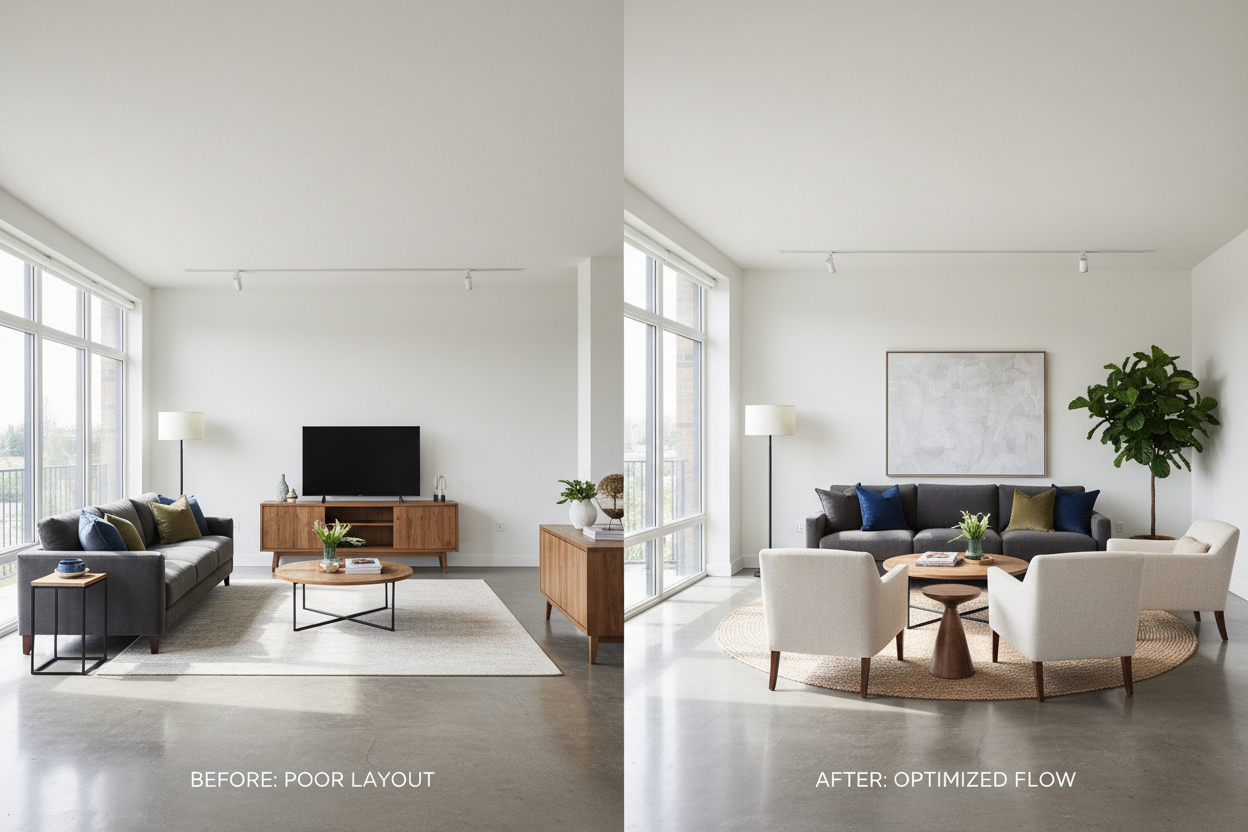
Walking into a room where the furniture feels like an obstacle course is a common design failure. It usually stems from a misunderstanding of scale and flow. The relationship between your lounge and sofa determines not just the aesthetic of the room, but how you actually live within it. Whether you are working with an open-plan apartment or a formal sitting room, selecting the right pieces goes beyond picking a pretty fabric swatch.
Quick Decision Guide: Key Features to Look For
If you are rushing through a showroom or browsing online, keep these four critical factors in mind to ensure long-term satisfaction:
- Suspension System: Look for 8-way hand-tied springs or high-gauge sinuous springs for longevity; avoid simple webbing which sags over time.
- Frame Construction: Kiln-dried hardwood frames prevent warping, whereas particle board is prone to cracking.
- Seat Depth: Standard depth is 21-22 inches. For a true "lounge" feel, aim for 24 inches or deeper.
- Martindale Rating: For a family home, ensure your fabric has a rub count of at least 25,000 to resist wear.
Defining the Zone: Layout and Flow
The terminology can get muddy, but the distinction matters for spatial planning. A "sofa" generally refers to a formal, upright seating arrangement, while a "lounge" implies a more relaxed, often modular configuration. When designing a layout that incorporates a lounge with sofa elements, traffic flow is paramount.
You need a minimum of 30 inches of walking path around your major furniture pieces. If you push a large sofa lounge against the wall in a large room, you create 'dead space' in the center. Conversely, floating a piece in a small room without anchoring it with a rug can make the furniture feel like it is drifting.
Materiality: Beyond the Swatch
As a designer, I often see clients fall in love with velvet or high-pile bouclé without considering the maintenance. If this is your primary viewing area, a lounge sofa needs performance fabric. Crypton or high-quality polyester blends offer the hand-feel of natural fibers like linen but possess the stain resistance required for daily life.
The Internal Structure
What is inside counts more than the exterior. A high-resilience foam core wrapped in down gives you that sinking feeling of luxury without the cushion losing its shape immediately. If you opt for 100% down fill, be prepared to fluff the lounge couch every single time you stand up. It is a high-maintenance aesthetic that does not suit every lifestyle.
Visual Weight and Balance
Mixing silhouettes creates a curated look. If you have a blocky, heavy sectional, pair it with an armchair that has legs to allow light to pass underneath. This reduces the visual weight of the room. A common mistake is matching a heavy lounge and sofa set; this often results in the room looking like a furniture showroom rather than a lived-in home. Contrast is your friend—mix a structured leather sofa with a softer, fabric-upholstered chaise.
My Personal Take on Lounge and Sofa Selection
I learned a hard lesson early in my career regarding "showroom syndrome." I specified a stunning, deep-seated modular sofa lounge for a client in a high-rise. It looked proportional in the massive warehouse showroom. However, once we got it into the client's living room, it completely overwhelmed the space. The "relaxed" linen fabric, which looked chic in the store, ended up pooling and looking messy after just three months of use by a family with two retrievers.
Furthermore, I didn't account for the elevator dimensions. We ended up having to hire a specialist hoist team to bring it up the balcony—a costly oversight. Now, I always tell clients: measure your service elevator, and be honest about your tolerance for wrinkles. If you hate fluffing cushions, never buy a feather-wrap seat, no matter how soft it feels in the store. Structure saves sanity.
Conclusion
Investing in the right seating is about balancing ergonomics with your visual goal. By paying attention to the internal construction and respecting the scale of your room, you can create a space that invites conversation and relaxation. Don't settle for a layout that doesn't serve your life.
Frequently Asked Questions
Q: What is the difference between a lounge and a sofa?
A: Generally, a sofa is more structured with a focus on upright seating, often used in formal settings. A lounge (or chaise) is designed for reclining and relaxation, often featuring deeper seats and softer cushioning.
Q: How do I choose the right size lounge sofa for a small room?
A: Measure the room and tape out the dimensions on the floor. Ensure you have at least 18 inches between the sofa edge and the coffee table. Opt for a sofa with raised legs to create a sense of openness.
Q: Is a modular sofa lounge worth the investment?
A: Yes, especially for renters or growing families. Modular pieces allow you to reconfigure the layout as you move homes or as your needs change, offering flexibility that a fixed-frame sofa cannot provide.

Leave a comment
This site is protected by hCaptcha and the hCaptcha Privacy Policy and Terms of Service apply.