

















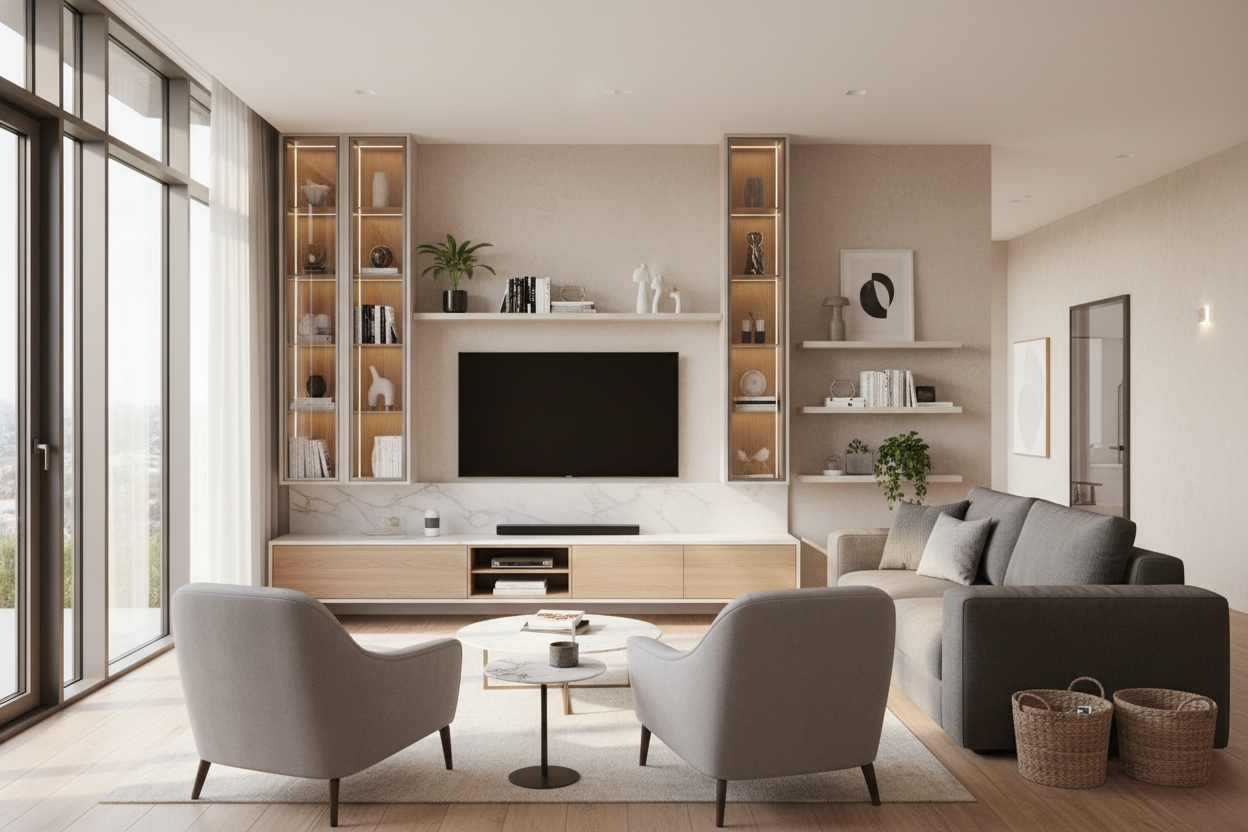
I remember my first 'adult' apartment. I spent three weeks' salary on a massive, dark-wood entertainment unit center because I thought that is what a real living room needed. It was 72 inches of solid MDF and it looked like a literal tombstone in my 12x12 living room. I spent the next two years stubbing my toe on it every time I tried to reach the window.
We have this weird habit of buying entertainment centers that are built for suburban basements and trying to shove them into modern apartments. Your TV doesn't need a fortress; it needs a place to sit. When you stop treating your home entertainment center like a piece of structural architecture and start treating it like a functional accessory, your whole room starts to breathe.
If you are currently staring at a wall that feels more like a storage unit than a sanctuary, it is time to rethink your entertainment furniture. Moving from a floor-heavy entertainment storage cabinet to something lighter isn't just about aesthetics; it is about reclaiming the four square feet of floor you didn't realize you were missing.
Quick Takeaways
- Floating units create the illusion of more space by keeping the floor line visible.
- Standard eye-level viewing is usually 42 inches from the floor to the center of the screen.
- Always mount into studs; drywall anchors are a recipe for a shattered 65-inch OLED.
- Open entertainment shelves are better for airflow, preventing console overheating.
The Floor-Space Illusion You're Probably Missing
In interior design, we talk a lot about 'visual weight.' A piece of furniture that sits flat on the floor, like a heavy entertainment storage center, acts as a visual anchor. It stops the eye. When you walk into a room, your brain calculates the size of the space based on the amount of visible floor. If a massive entertainment set is covering six feet of baseboard, the room feels six feet smaller.
Most entertainment consoles are deeper than they need to be. We are living in an era of slim OLEDs and streaming sticks, yet we are still using entertainment cabinets designed for 200-pound tube TVs and massive VCR stacks. This 'boxiness' creates a claustrophobic vibe. By switching to a tv media unit with legs or, better yet, a wall-mounted entertainment shelf, you allow the eye to travel all the way to the wall. It is a psychological trick that makes a cramped studio feel like a loft.
I have tested entertainment pieces that were only 12 inches deep, and the difference was staggering. You don't need a 20-inch deep home entertainment cabinet to hold a PlayStation and a soundbar. Narrower home entertainment stands keep the walkway clear and make the layout feel intentional rather than accidental.
Why I'm Finally Team 'Wall-Mounted'
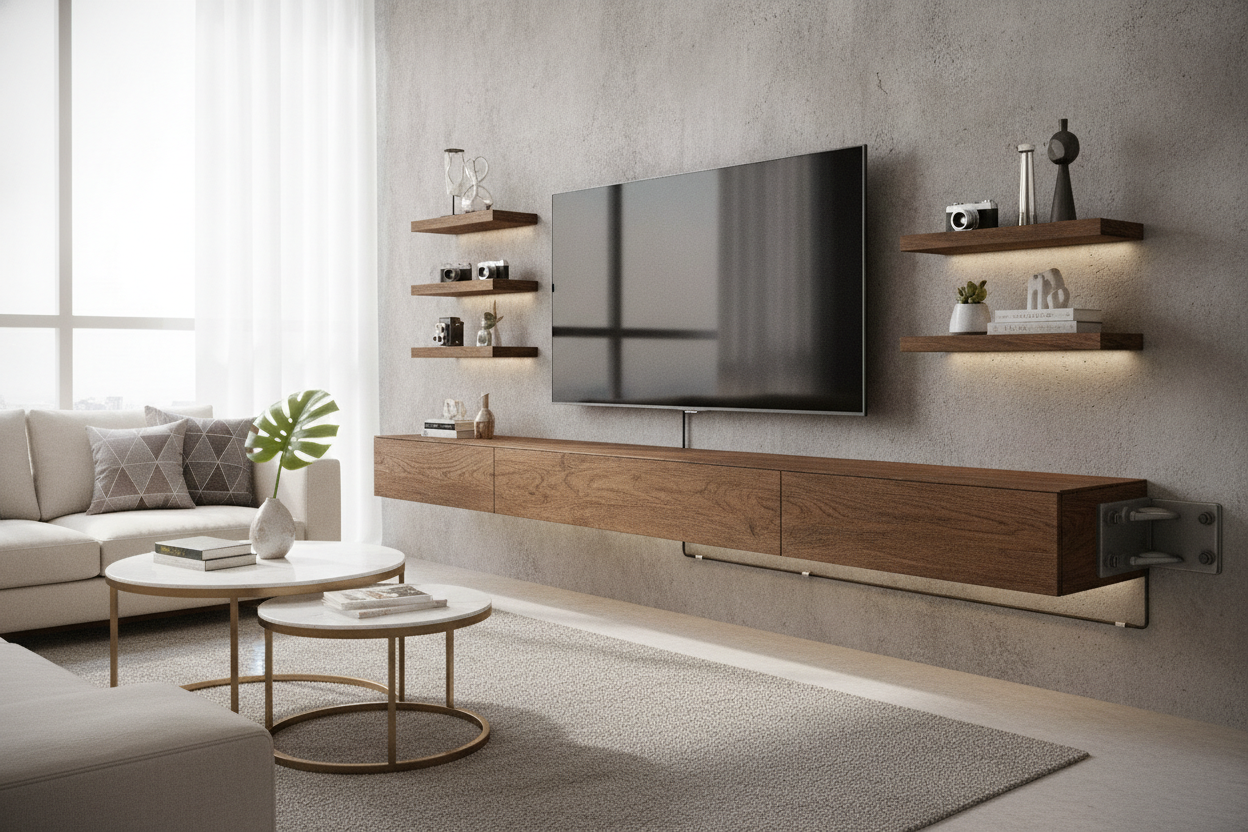
I used to be afraid of my drill. I worried about security deposits and crumbling drywall. But after mounting my first wall mounted media console, I am never going back to a standard media center tv stand. The primary benefit is the 'floating' effect. When you can see the floor underneath your entertainment system furniture, the room feels twice as airy. It also makes cleaning a breeze—no more moving a 150-pound entertainment rack to find the dust bunnies and lost remote batteries.
Beyond the floor space, a wall-mounted entertainment media center feels custom. It looks like it was built for the room, not just dragged in from a big-box store. You can find home entertainment furniture that matches your wall color to make it almost disappear, or go for a bold wood grain to make it a focal point. I personally prefer a console center with hidden cable management—there is nothing that ruins a 'sleek' look faster than a tangle of black wires hanging like vines.
When you buy entertainment center units that float, you are also future-proofing your layout. You aren't limited by where the floor vents are or how uneven your hardwood floors might be. It gives you total control over the height and positioning of your entertainment sets furniture, ensuring your entertainment centers for home actually work for your specific seating arrangement.
How High Should You Actually Hang It?
The biggest mistake people make with home furniture entertainment centers is hanging them too high. We call it 'TV-too-high syndrome.' You are not a Buffalo Wild Wings. You should not be craning your neck to see the score. Ideally, the center of your TV should be at eye level when you are sitting on your sofa. For most people, that means the bottom of your entertainment shelf will sit about 20 to 24 inches off the floor.
Before you commit to where to buy entertainment centers, measure your sofa’s seat height. If you have a low-profile Italian leather sofa, your home entertainment shelves need to be lower too. I always recommend taping out the dimensions of various home entertainment centers on your wall with painter's blue tape before you ever pick up a drill. This lets you visualize the gap between the floor and the unit.
Finding the right entertainment center system is about balance. If the gap is too small, it looks like the unit is sagging. If it is too large, the tv stand entertainment units look like they are floating away. Aim for a 10-to-12-inch gap. This is enough space for a robot vacuum to do its thing but low enough that your media center with storage still feels connected to the rest of the furniture.
Wait, Are Floor Consoles Completely Dead?
Look, I love a floating look, but they aren't for everyone. If you are renting from a landlord who loses their mind over a nail hole, a wall-mounted entertainment desk is a non-starter. Or, if you are a hardcore audiophile with a 40-pound receiver and a massive subwoofer, you need the structural integrity of home furniture entertainment center pieces that sit firmly on the ground. A floating shelf might look cool, but it won't hold a vintage McIntosh amp without bowing.
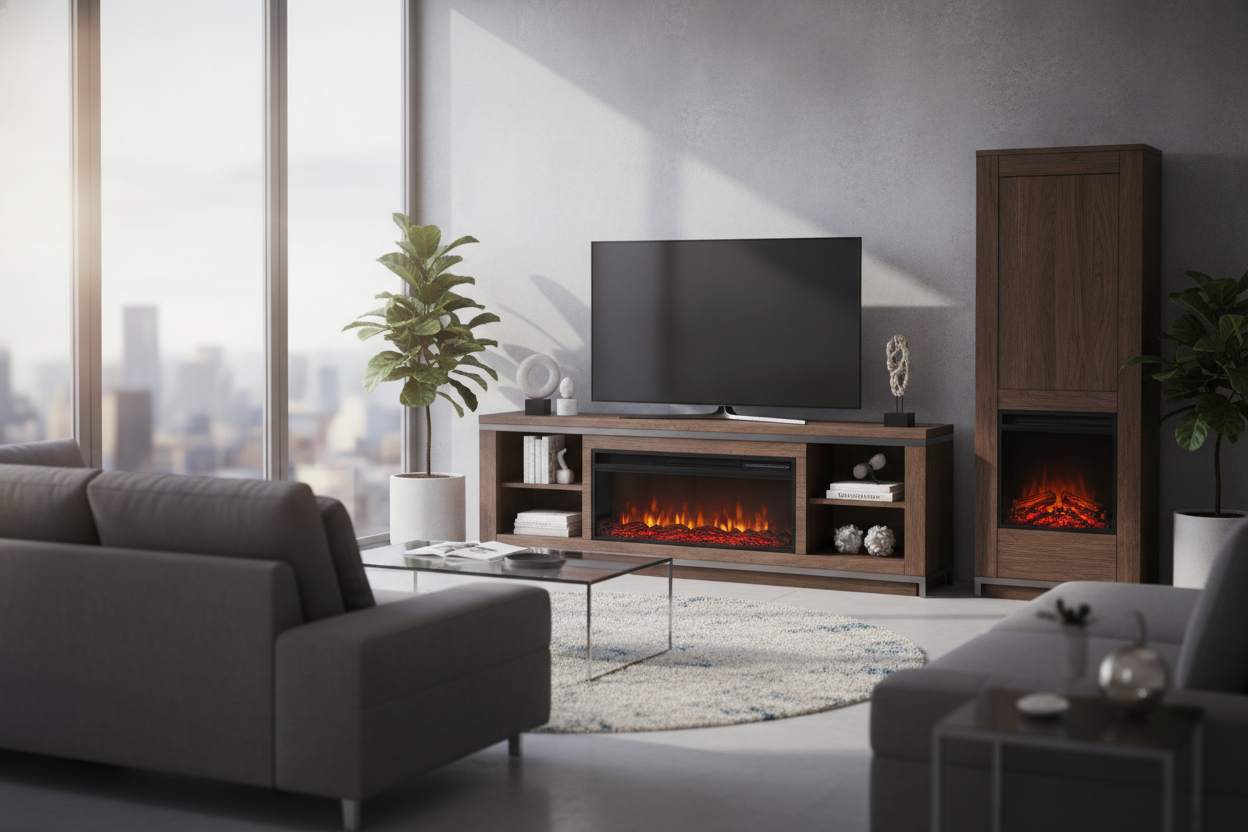
In those cases, I recommend a black tv stand entertainment center with slim, tapered legs. You still get that 'lifted' look and the benefit of seeing the floor underneath, but without the need to drill into the studs. It provides that much-needed entertainment storage cabinet space for physical media or bulky gaming consoles while maintaining a modern silhouette. Some entertainment pieces even come with integrated cooling fans, which is a must if you're hiding a PS5 behind closed doors.
Don't Forget the Rest of the House
Once you realize how much space you save by optimizing your entertainment pieces in the living room, you’ll want to do it everywhere. I’m a huge advocate for a bedroom entertainment center. Most people just slap a TV on top of a dresser, which is usually way too high for comfortable viewing in bed. A dedicated, slim-profile home entertainment cabinet in the bedroom keeps your clothes storage separate from your tech, making the room feel less like a dorm and more like a suite.
Whether you choose a floating entertainment unit center or a sleek floor-standing media center with storage, the goal is the same: stop letting your furniture dictate your floor plan. Reclaim your square footage, hide those hideous wires, and finally give your TV a home that doesn't feel like a heavy-duty crate.
FAQ
Is it hard to mount a floating entertainment center?
It is not 'hard,' but it is precise. You absolutely must find the studs in your wall. If you miss the studs and rely on drywall anchors, the weight of the unit plus your gear will eventually pull the screws out. Use a high-quality stud finder and a level.
How do I hide the wires if the unit is floating?
The cleanest way is to run them through the wall using a cable management kit. If you can't cut into the wall, use a paintable cord cover that runs vertically from the unit to the baseboard. It's a 10-minute fix that makes a huge visual difference.
Can I use a floating shelf as a TV stand?
Only if it is specifically rated for that weight. A standard decorative shelf is meant for pictures and plants, not a 50-pound television. Look for 'media consoles' specifically, as they have reinforced mounting brackets designed for the load.

Leave a comment
This site is protected by hCaptcha and the hCaptcha Privacy Policy and Terms of Service apply.