

















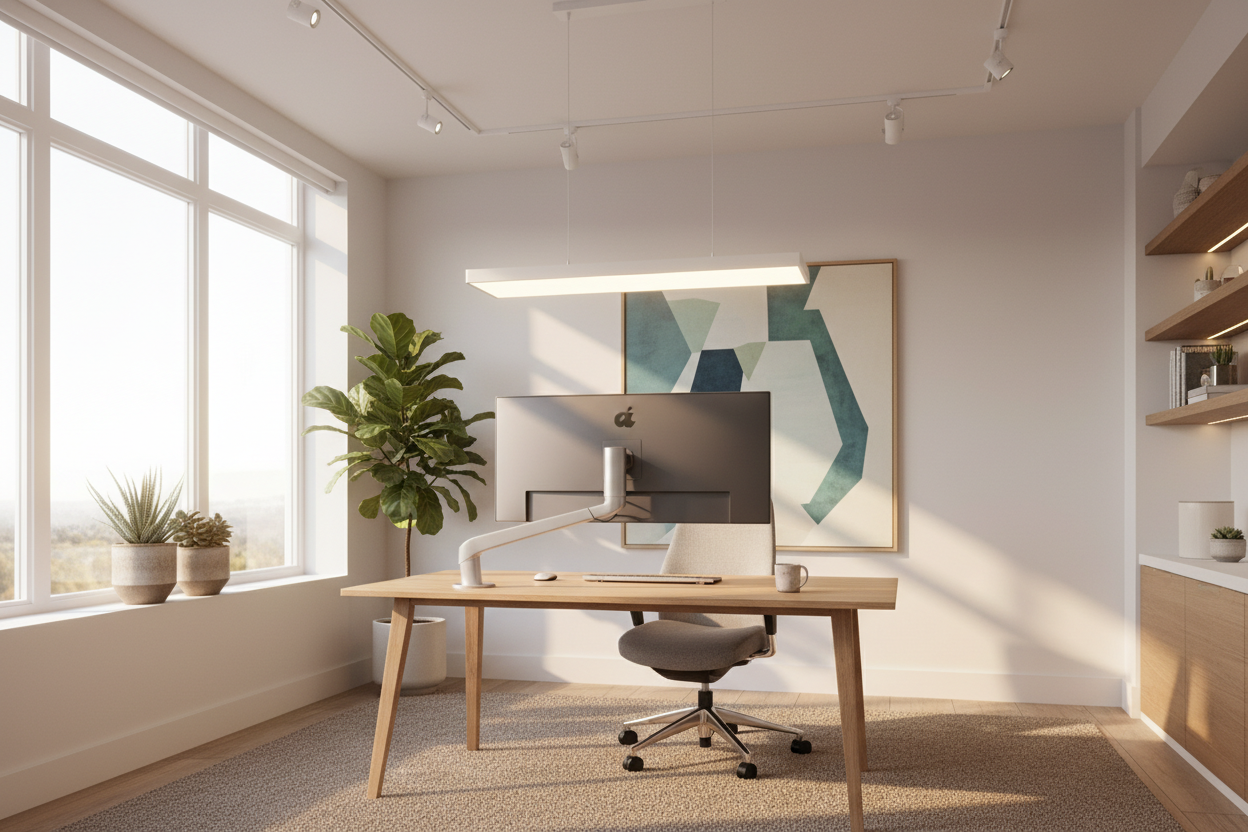
We often obsess over the ergonomic chair or the expansive mahogany desk, yet we neglect the single element that dictates the mood and functionality of the room: the lighting. Relying on a single, harsh source or, conversely, a dim fixture that induces squinting, is a design crime I see far too often. The right office overhead light does more than just illuminate; it defines the architectural volume of your workspace and significantly impacts your circadian rhythm and productivity.
Key Features for Selection
- Color Temperature (Kelvin): Aim for 3500K to 4000K for a neutral, alert white light that mimics daylight without turning blue.
- Lumen Output: Ensure the fixture provides adequate ambient brightness (approx. 300-500 lumens per square meter) to reduce eye strain.
- Glare Control: Look for diffusers, frosted glass, or deep-set bulbs to prevent light from bouncing off computer screens.
- Dimmability: Essential for transitioning from high-focus tasks to evening reading or ambient mood lighting.
- Acoustic Properties: Consider felt or fabric shades in echo-prone rooms to dampen sound.
Mastering Color Temperature and Lumens
In a residential or commercial workspace, the quality of light is paramount. We aren't looking for the warm, sleepy glow of a bedside lamp (2700K), nor do we want the sterile, clinical feel of a hospital (5000K+). The sweet spot for overhead office lights lies between 3000K and 4000K. This range supports alertness without feeling artificial.
Furthermore, consider the lumen output relative to the room size. A common error is selecting a fixture that looks beautiful but acts merely as decor. Your overhead source should provide the "general" layer of light, filling the shadows in the corners, while your desk lamp handles the specific task lighting. If the overhead fixture is too dim, the contrast ratio between your bright monitor and the dark room will cause significant visual fatigue.
Materiality and Visual Weight
When selecting the physical fixture, consider the visual weight it adds to the room. In a smaller home office, a heavy, solid metal drum pendant might feel oppressive, lowering the perceived ceiling height. In these instances, I recommend semi-flush mounts or fixtures with negative space—like open geometric cages or glass globes—to keep the room feeling airy.
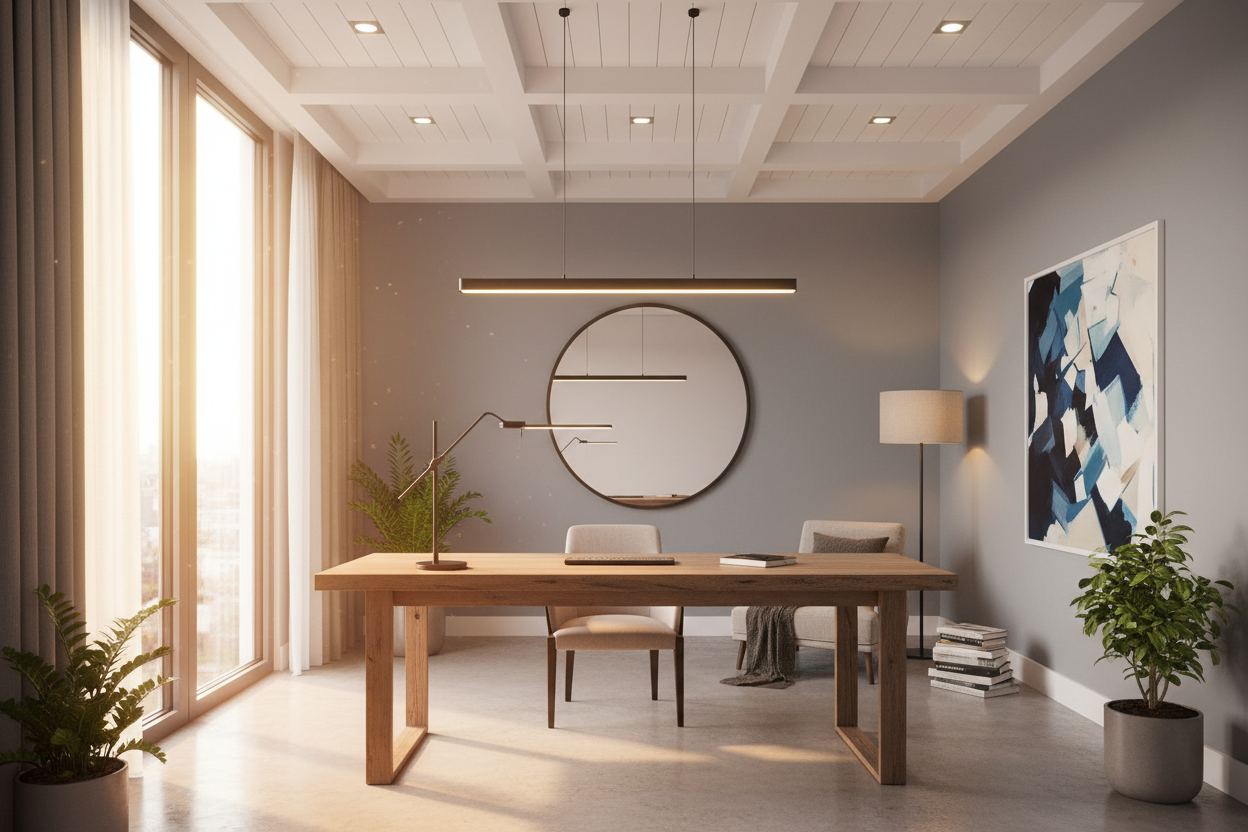
For larger executive suites, you have the luxury of scale. A linear suspension light or a large-scale chandelier can act as an anchor, centering the room and defining the zone where work happens. Materials like brushed brass or matte black powder-coated steel offer durability and a sophisticated, modern silhouette that resists dating.
Ergonomics of Light Placement
Placement is just as critical as the fixture itself. The light should never be positioned directly behind your chair, as this casts your own shadow onto your workspace. Ideally, the light source should be centered over the general work area or slightly in front of the desk.
Additionally, be wary of "hot spots." If you choose a fixture with exposed bulbs, the reflection on your monitor can be blinding. Always prioritize fixtures with a bottom diffuser—a sheet of acrylic or glass that softens the output—ensuring an even wash of light rather than a directed beam.
My Personal Take on Office Overhead Light
I learned the hard way about the importance of "maintenance reality" versus "showroom beauty" early in my career. I once specified a stunning, intricate glass chandelier for a client's high-ceilinged home office. It looked architectural and brilliant in the photos. However, six months later, the client called me. The fixture had become a dust magnet, and because of the complex assembly of glass rods, changing a burnt-out bulb required a ladder and nearly an hour of careful disassembly.
Since then, I always check how easy a fixture is to clean and service. If you can't reach it easily, or if the finish shows every speck of dust (looking at you, high-gloss black enamel), it’s going to annoy you more than it inspires you. I now lean heavily toward integrated LED fixtures with sealed diffusers for offices—no bulbs to change and a quick wipe with a microfiber cloth keeps them pristine.
Conclusion
Treating your lighting plan as an afterthought is a missed opportunity to elevate your work life. By selecting a fixture that balances the technical needs of lumens and Kelvin with the aesthetic joy of texture and form, you create a space that invites you to work. Invest in a quality fixture; your eyes—and your productivity—will thank you.
Frequently Asked Questions
How low should I hang a pendant light in an office?
If the light is centered over a desk, the bottom of the fixture should be approximately 30 to 36 inches above the desktop surface. If it is hanging in the center of the room where people walk, ensure a clearance of at least 7 feet from the floor to the bottom of the fixture.
Can I use a chandelier as an office overhead light?
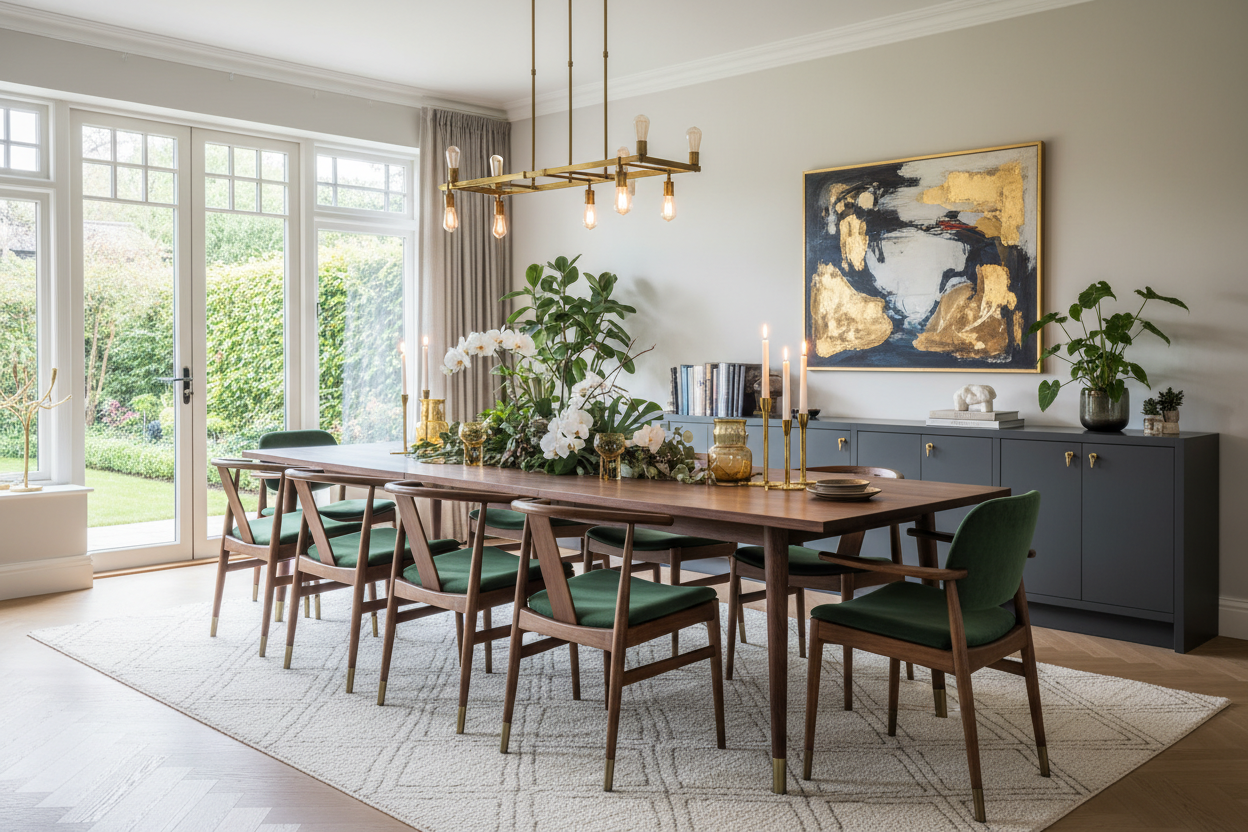
Absolutely, but with a caveat. Avoid chandeliers with bare, candle-style bulbs as they create harsh glare on screens. Opt for shaded chandeliers or modern interpretations that use diffusers to scatter the light evenly.
Is a dimmer switch necessary for an office?
I consider it mandatory. Lighting needs change throughout the day—you need maximum brightness for reviewing documents on a cloudy afternoon, but a softer, dimmed setting is preferable for computer work in the evening to align with your natural circadian rhythm.

Leave a comment
This site is protected by hCaptcha and the hCaptcha Privacy Policy and Terms of Service apply.