


















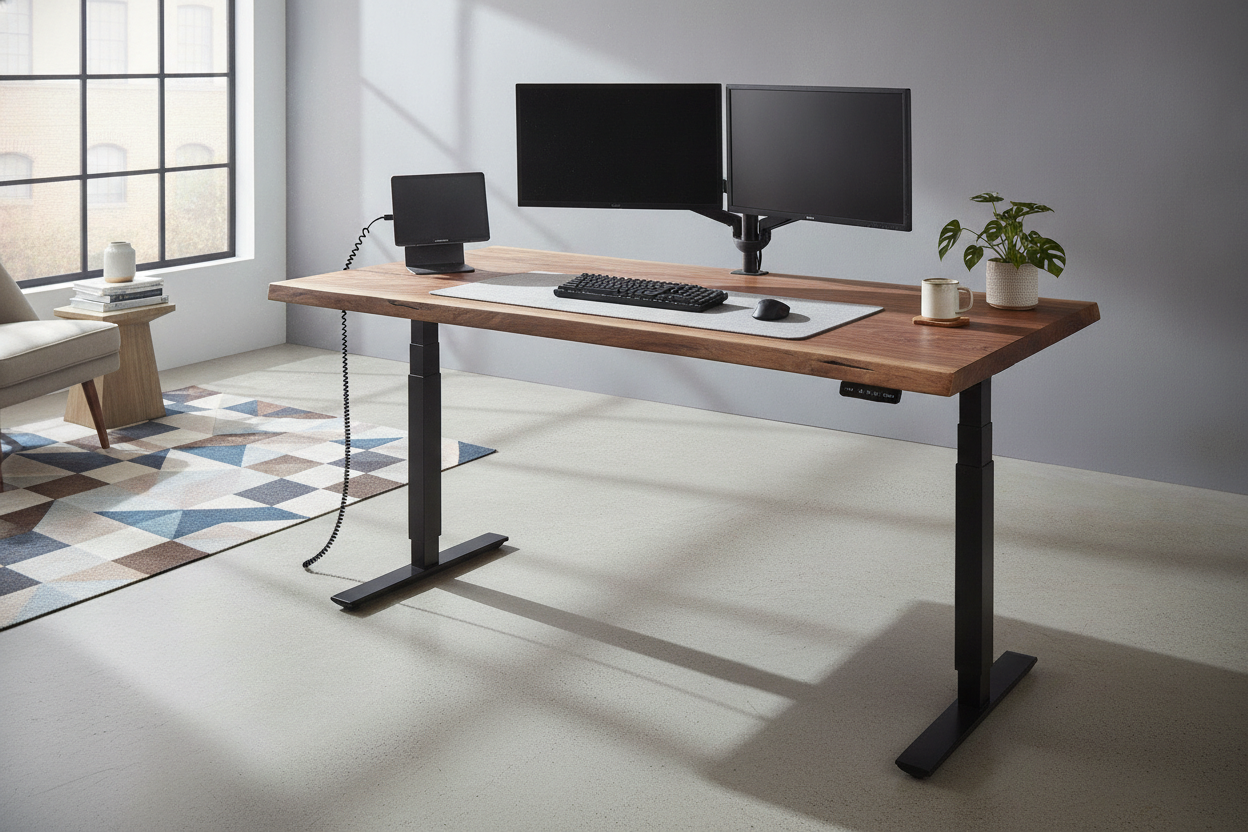
I spent $600 on a desk that can lift 300 pounds of gear into the air with the whisper of a German-engineered motor. For the first six months, I used that motor exactly twice: once to show my partner, and once to clean a cobweb off the baseboard. I felt like a failure every time I looked at the 'up' arrow while sitting hunched over my keyboard.
If you bought an adjustable frame just to let it rot in the lowest setting, you're not alone. It's time to actually stand at your desk without the performative guilt. Here is how I finally started using the furniture I paid for.
Quick Takeaways
- Standing isn't an 8-hour shift; it's a 20-minute reset.
- Tie your height adjustments to specific tasks to avoid decision fatigue.
- Memory presets are your best friend for morning consistency.
- Forgiveness is more productive than a sore lower back.
The Guilt of the $500 Static Table
I looked at my motorized frame every morning with the same resentment I reserve for my unused gym membership. I’d spent weeks researching dual-motor stability and weight capacities, only to treat it like a standard computer desk that might as well have been bolted to the floor. It’s a specific kind of WFH shame.
The problem is that we treat the standing feature like a lifestyle overhaul instead of a tool. I was so worried about 'doing it right' that I did nothing at all. My expensive ergonomic investment became a glorified shelf for coffee mugs and dust.
Stop Trying to Stand Up at Your Desk All Day
The internet loves to tell you that sitting is the enemy and that you should stand up at your desk for your entire shift. That is terrible advice. If you go from zero to eight hours on your feet, your calves will scream and your productivity will tank. I tried it for one day and ended up lying on the floor by 3 PM.
Whether you’re rocking a premium walnut top or looking into budget stand up desk setups, the hurdle isn't the gear—it's the expectation. Start small. If you stand for 15 minutes twice a day, you've already won. The goal is movement, not martyrdom.
Rule 1: Tie Your Posture to Your Tasks
I stopped asking myself 'should I stand now?' and started assigning specific tasks to specific heights. Zoom calls? I’m standing. It makes me feel more engaged and less like a potato in a swivel chair. It also helps my voice project better when I'm not slumped over.
Deep focus writing or spreadsheet work? I’m sitting. Clearing out the morning inbox or Slack messages? Always standing. By removing the choice, you remove the friction. You don't have to decide to stand; the task decides for you. It’s a psychological trick that cuts through the 'I'll just stay sitting for five more minutes' loop.
Rule 2: Let Your Presets Bully You (A Little Bit)
Here is my favorite low-effort hack. Before you shut down your computer for the night, hit the 'up' button. When you walk into your office the next morning, the desk is already at standing height. You’re much more likely to start your day on your feet if the alternative is waiting 12 seconds for the motor to hum its way down.
This is why buying a desk with memory preset controller is the only way to go. If you have to manually hold a button and eye-ball the height every time, you won't do it. One-touch automation turns a chore into a background habit. I set Preset 1 to my sitting height and Preset 2 to my standing height, and I never look back.
Rule 3: Forgive Yourself When You Just Want to Sit
Some days, my back hurts or I didn't sleep well, and the thought of standing feels like a massive chore. That's fine. The goal isn't to be a standing desk purist. If you spend a whole Tuesday in your chair because you're exhausted, don't let it turn into a week of 'well, I guess I don't use the standing feature anymore.'
I’ve learned that 15 minutes of standing while I drink my first coffee is better than zero minutes. Give yourself some grace. The motor is there to serve you, not to judge you. Just try again tomorrow.
FAQ
How long should I stand at once?
Start with 20 minutes. Anything longer usually leads to foot fatigue if you aren't used to it. You can gradually increase it, but even short bursts provide the circulatory benefits you're looking for.
Do I need an anti-fatigue mat?
Yes. Standing on a hard floor or even thin carpet in socks will kill your heels in an hour. A decent 1-inch thick foam mat makes a massive difference in how long you can comfortably stay upright.
What if my desk wobbles when it's high?
Most T-frame desks have a little sway at their max extension. If it's distracting, try lowering it by just half an inch—sometimes that settles the center of gravity. Also, make sure your floor is level; most desks have leveling feet you can screw in or out.

Leave a comment
This site is protected by hCaptcha and the hCaptcha Privacy Policy and Terms of Service apply.