

















I remember the day I tried to mount a 55-inch OLED in a 1920s apartment. The 'studs' were just crumbling plaster and prayers. After three failed toggle bolts and a patch job that looked like a middle school art project, I threw in the towel. If you are renting or just tired of turning your living room into a construction zone, there is a better way.
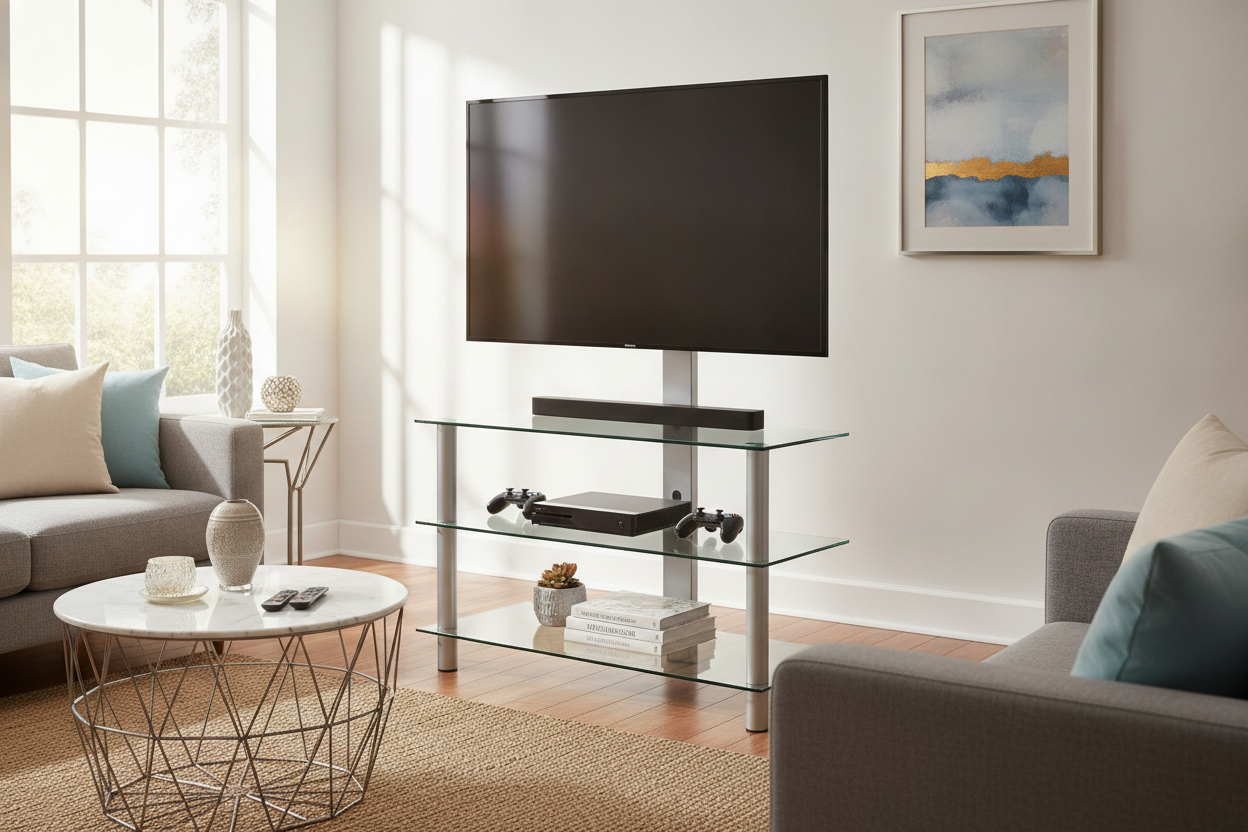
The 3 shelf glass tv stand with mount is the solution I wish I had found years ago. It gives you that sleek, floating look without the structural commitment or the landlord's wrath. It is sturdy, keeps your gear organized, and actually looks like a piece of furniture rather than a utility rack.
- No Damage: Zero holes in the wall means you get your security deposit back.
- Integrated Mount: The built-in VESA bracket offers the 'floating' look of a wall mount.
- Gear Storage: Three tiers of glass provide ample space for consoles, soundbars, and players.
- Superior Airflow: Open shelving prevents your PS5 or Xbox from overheating.
The Drywall Anchor Nightmare (And Why I Gave Up)
Let’s be real: drywall anchors are a lie. They promise to hold 50 pounds, but the second you hang an expensive screen, you start imagining the sound of it crashing to the floor at 3 AM. In my last place, I actually faked a wall mount with a basic unit I found at a big-box store, but it was a disaster. The moment I added a heavy receiver and a few gaming consoles, the whole thing started to lean like the Tower of Pisa.
Renting makes this even harder. Most leases have a strict 'no holes larger than a thumb tack' policy. Patching a dozen 1/2-inch holes from a heavy-duty mount is a Saturday afternoon I’ll never get back. I wanted the aesthetic of a wall-mounted screen—the height, the clean lines, the lack of clutter—but I needed it to be self-contained. I needed something that could handle my tech addiction without requiring me to become a part-time carpenter.
Why a 3 Shelf Glass TV Stand With Mount Is the Ultimate Hack
The 3 shelf glass tv stand with mount is essentially a hybrid. It takes the heavy-duty spine of a professional wall mount and welds it to a weighted glass base. This design solves the two biggest headaches of modern living rooms: where to put the screen and where to hide the junk. Instead of buying a separate console table and then drilling into the wall, this unit does both jobs at once.
Most of these units come with a VESA-compatible bracket that handles everything from a 32-inch monitor to a 65-inch beast. The 'magic' is in the verticality. By lifting the TV up on the spine, you clear the entire top shelf for a soundbar or a center-channel speaker. It creates a layered look that makes the room feel larger. You aren't just placing a TV on a table; you are creating a media hub that feels intentional and architectural.
Wait, Is It Actually Stable?
I get this question every time a friend sees my setup. It looks top-heavy, right? But the physics actually work in your favor. These stands use thick, 8mm to 10mm tempered glass for the bottom shelf. That glass is incredibly heavy. When you put that weight at the very base of the unit, it creates a low center of gravity that makes the whole thing rock-solid. Even if you have a cat that thinks your TV is a jungle gym, these stands aren't going anywhere. Just make sure you tighten the safety screws on the back of the bracket—don't skip that step.
The Magic of the 3-Tier Glass TV Stand With Mount Setup
When you start loading up a 3-tier glass tv stand with mount, you realize how much better it is for your electronics. Most wood cabinets are heat traps. If you shove a PS5 into a closed wooden cubby, you can practically hear the fans screaming for help. With the open glass design, air flows freely around every component. I keep my primary console on the middle shelf for easy access and my soundbar on the top shelf, right under the screen.
The bottom tier is usually the largest, making it the perfect spot for the 'heavy' stuff—think older receivers, 4K players, or even a sub-woofer if it’s small enough. The transparency of the glass keeps the unit from looking like a giant black monolith in the corner of the room. It feels light and airy, which is a massive win if you are trying to maximize a small studio apartment or a cramped den.
Hiding the Wires (Because Glass Forgives Nothing)
The biggest challenge with a 3 tier glass tv stand with mount is that glass shows everything. If your cable management is a mess, everyone is going to see that 'spaghetti' of HDMI and power cords behind the shelves. However, almost every decent model features a hollow metal spine. This is your best friend. You route the cables through the top hole near the TV and bring them out at the bottom.
I personally use black velcro ties instead of plastic zip ties. They are easier to adjust when you inevitably buy a new console. I also recommend using a power strip that can be mounted to the back of the spine or tucked discreetly behind the bottom glass shelf. If you take ten minutes to route your wires properly, the 'floating' effect becomes much more convincing. It’s the difference between a professional-looking setup and a college dorm vibe.
Styling It So It Doesn't Look Like a Dorm Room
To keep the setup from looking too 'techy,' you have to treat the shelves like actual furniture. I often suggest people treat their TV stand with glass shelving like a display case. Don't just stack plastic game cases; add a few coffee table books, a small potted succulent, or a ceramic bowl to hold your remotes. The mix of organic shapes with the sharp lines of the glass and metal makes the unit feel like a deliberate design choice.
If you find that you have too many small items or cables that you simply cannot hide, you might actually want to look at a storage credenza with sliding glass doors instead. But for the purist who wants that ultra-modern, floating screen look without the permanent wall damage, the tiered glass mount is the undisputed king of renter-friendly tech setups.
FAQ
Will this stand hold a 65-inch TV?
Most 3-tier glass stands are rated for 32 to 65 inches, but always check the weight limit. A 65-inch OLED is light, but an older 65-inch LED might be pushing the limits of the VESA bracket. Check the VESA pattern (like 400x400) on the back of your TV first.
Is tempered glass safe?
Yes, it is designed to be much stronger than standard glass. If it does break, it shatters into small, blunt pebbles rather than sharp shards. Just don't drop a heavy metal receiver directly onto the corner of the shelf during assembly.
Can I swivel the TV once it is mounted?
Most of these stands include a swivel feature, usually allowing for 30 degrees of movement left or right. It is perfect for cutting glare from a window or watching the game from the kitchen while you cook.

Leave a comment
This site is protected by hCaptcha and the hCaptcha Privacy Policy and Terms of Service apply.