
















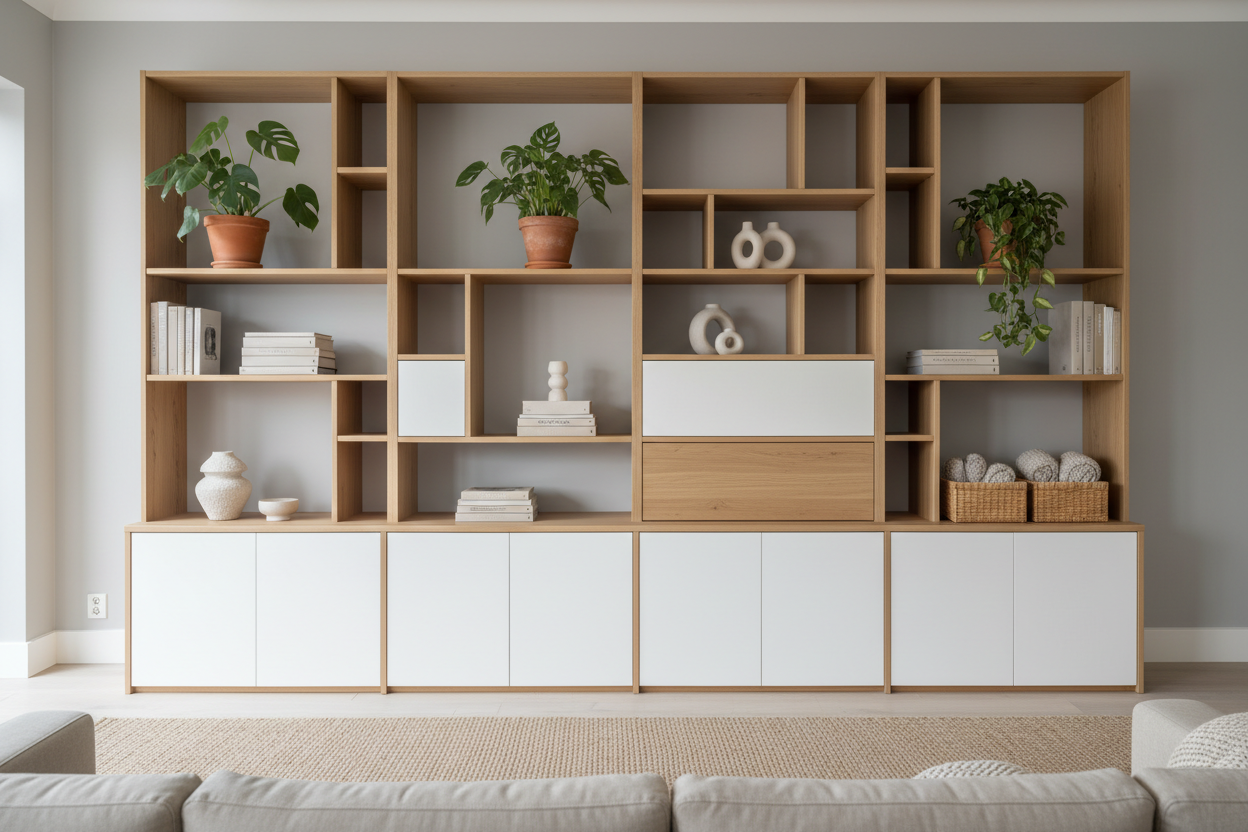
We have all stood in the middle of a room, staring at a pile of belongings, torn between two conflicting desires. You want to show off your curated collection of books, travel souvenirs, and trailing plants, but you also desperately need a place to hide the tax documents, tangled charging cables, and that stack of board games with the broken corners. The answer usually isn't buying two separate pieces of furniture. It is finding a single unit that does both jobs simultaneously.
Combining open display space with concealed compartments is the most practical design choice for modern living. It allows you to curate the visual aesthetic of a room while maintaining the functionality of a closet. By keeping heavy, cluttered items behind closed doors near the floor and lighter, decorative items on open shelves above, you create a sense of balance that makes ceilings look higher and rooms feel less chaotic.
The Logic Behind the Design
Interior designers often talk about "visual weight." A solid block of wood from floor to ceiling can feel imposing and make a room feel smaller. Conversely, entirely open shelving often looks messy because few of us possess enough perfectly color-coordinated items to fill them without creating visual clutter. This is where shelves with storage cabinet bases shine. They ground the space with a solid bottom section while keeping the upper area airy and light.
This configuration works because it mimics how we naturally interact with a room. Items we need frequently but don't want to look at—like printer paper, linens, or kids' toys—are easily accessible at hand level or below. Meanwhile, the items we want to appreciate are elevated to eye level. It effectively separates utility from beauty without sacrificing square footage.
Choosing the Right Configuration for Your Space
Not all hybrid storage is created equal. The market is flooded with options, and selecting the right one depends largely on the footprint of your room and what exactly you are trying to hide.
The Classic Cupboard Style
For dining rooms, living areas, or large hallways, a substantial cupboard with doors and shelves is often the centerpiece. These pieces often resemble a modern take on a hutch or a buffet. The advantage here is width. You get expansive horizontal shelf space for arranging wider decor items, like large vases or wide rows of books. The lower cupboard section is usually deep enough to hold dinner plates, serving platters, or bulky photo albums.
When shopping for this style, pay close attention to the depth difference between the top and bottom. A stepped design, where the bottom cabinet is deeper than the upper shelves, offers a convenient ledge for placing items temporarily and prevents the unit from feeling top-heavy.
Going Vertical in Tight Spaces
If you are working with a narrow corner or a bathroom, a wide unit simply won't fit. In these instances, a storage tower with doors is the superior choice. These tall, slender units maximize vertical space, drawing the eye upward. They are particularly effective in bathrooms for hiding toiletries behind the bottom door while stacking clean towels on the open upper shelves. In a home office, a pair of these towers flanking a desk can create a built-in library look without the custom carpentry price tag.
A Lesson From My Own Living Room
A few years ago, I made the mistake of buying completely open industrial shelving for my main living area. I loved the look in the catalog. In reality, it was a disaster. I didn't have enough "pretty" things to fill five levels of shelving. I ended up stuffing Tupperware bins on the bottom shelves to hold electronics and miscellaneous junk. It looked cheap and unfinished. The bins were transparent, so you could still see the mess inside.
I eventually swapped that unit for a mid-century style cabinet that featured solid wooden doors on the bottom third and open shelving on top. The transformation was immediate. The "visual noise" of the room quieted down. I could toss the video game controllers and ugly router behind the doors and shut them tight. Suddenly, the books and plants on the upper shelves looked intentional rather than accidental. It taught me that the ability to conceal is just as valuable as the ability to display.
Material Selection and Durability
When investing in storage furniture with doors, the hardware is often the first thing to fail. Since the doors will likely be opened and closed daily to access practical items, you need robust hinges. Look for adjustable European-style hinges that allow you to realign the doors if they start to sag over time—a common issue with particleboard furniture.
For the material itself, consider the environment:
- Solid Wood or Plywood: Essential for bookshelves that will hold heavy loads. Particleboard shelves will bow under the weight of textbooks over time.
- Metal: excellent for the storage tower with doors variety, especially in humid environments like bathrooms or kitchens, as it resists warping.
- Glass Accents: Some cupboards feature glass doors on the upper section. While this protects items from dust, remember that it removes the "hide the mess" benefit. Use glass-fronted sections only for items you are happy to see every day.
Organizing the Hidden Sections
Just because you have doors doesn't mean the inside should be a disaster zone. The deep cabinets at the bottom of these units can easily become black holes where items go to disappear. To maximize the utility of your shelves with storage cabinet, treat the closed section like a file cabinet or a pantry.
Use square baskets or magazine holders inside the cabinet to categorize items. If the cabinet has a single large shelf, consider adding a shelf riser to double the usable surface area. This is particularly helpful for a cupboard with doors and shelves used in a media room, where you might need to stack flat items like laptops or game consoles without piling them directly on top of one another.
Styling the Open Shelves
With the clutter safely tucked away below, the upper shelves are your canvas. The key to a professional look is negative space. Do not pack the shelves from edge to edge. Leave gaps between groups of items. Vary the height of objects; place a tall vase next to a short stack of horizontal books. If your unit is dark wood, use light-colored objects to create contrast. If the unit is white, use greenery and textured baskets to add warmth. This balance between the hidden utility below and the curated beauty above is what makes hybrid storage the ultimate furniture choice.
Frequently Asked Questions
How do I prevent the cabinet doors from becoming misaligned over time?
Regular use can loosen hinge screws, causing doors to sag or rub against each other. Check the hinge screws every six months and tighten them with a screwdriver; most modern cabinets use adjustable hinges that let you tweak the vertical, horizontal, and depth alignment with a simple turn.
Can I use a storage tower in a room with low ceilings?
Yes, but be mindful of the proportions. If the tower goes almost to the ceiling, it can actually make the room feel taller by drawing the eye up. However, ensure there is at least a few inches of clearance at the top so the furniture doesn't look like it is wedged in, which can cramp the visual space.
Is it safe to anchor hybrid shelving units to the wall?
It is not just safe; it is necessary. Units that are heavy on the bottom and lighter on top are generally stable, but once you load the upper shelves with books and open the lower doors, the center of gravity shifts. Always use anti-tip kits to secure tall furniture to a stud in the wall to prevent accidents.

Leave a comment
This site is protected by hCaptcha and the hCaptcha Privacy Policy and Terms of Service apply.