

















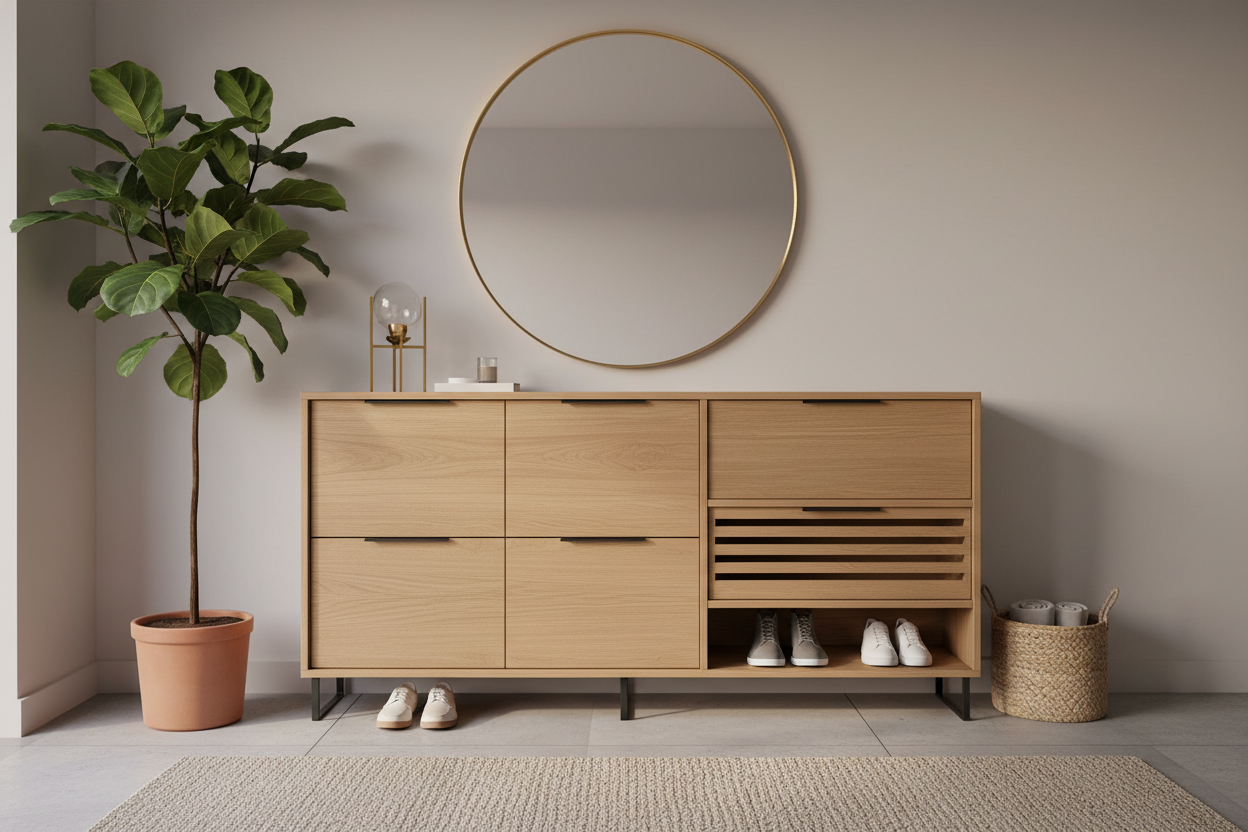
The foyer sets the immediate tone for your entire home, serving as the transition point between the chaotic outdoors and your curated interior. Yet, it is frequently the victim of clutter, specifically the inevitable pile of footwear that accumulates by the door. Selecting the right shoe entryway cabinet is not merely about storage utility; it is about introducing a piece of furniture that anchors the space, provides a surface for styling, and maintains the visual integrity of your entrance.
Key Features to Look For
- Ventilation: Look for louvred doors or woven rattan inserts to allow air circulation and prevent moisture buildup.
- Depth & Clearance: Standard cabinets require 13-15 inches of depth, while tilt-out mechanisms can function in as little as 10 inches.
- Material Durability: Prioritize solid wood or high-pressure laminate (HPL) over standard particle board to withstand wet soles and heavy traffic.
- Adjustable Shelving: Essential for accommodating varying heights, from flat sandals to high-top boots.
Materiality and Durability
As an interior designer, I often see clients prioritize the silhouette over the substance. An entryway shoe storage cabinet faces unique stressors: mud, grit, and moisture. While engineered wood with a veneer finish offers a sleek aesthetic at a lower price point, be wary of cheap edge banding. If water seeps into the seams, the material will swell and warp.
For longevity, look for sealed surfaces. If you prefer the warmth of wood, ensure it has a marine-grade varnish or a polyurethane topcoat. Metal cabinets offer an industrial edge and are impervious to water, but they can be noisy without proper soft-close dampeners.
Space Planning and Ergonomics
The primary constraint in most foyers is traffic flow. A shoe storage cabinet for entryway applications must not impede the walkway. This is where the mechanism dictates the form.
The Tilt-Out vs. Swing Door
For narrow hallways (less than 40 inches wide), a tilt-out cabinet is the superior choice. These units utilize vertical space and reduce the footprint significantly. However, be aware of the ergonomic trade-off: tilt-outs often cannot accommodate men’s sizes over 11 or bulky hiking boots without angling the shoes awkwardly.
Swing doors offer a more traditional furniture look and deeper storage, allowing you to store shoe boxes or bins. If your entryway allows, a cabinet depth of 14 inches is the "gold standard" for versatility.
Styling: Creating a Focal Point
Treat this piece as you would a console table. The surface of your cabinet is prime real estate for setting a mood. A round mirror placed above breaks up the rectilinear lines of the cabinetry and reflects light to make the space feel larger. Flank the surface with a structural lamp for ambient lighting and a catch-all tray for keys to merge function with high-end design.
My Personal Take on Shoe Entryway Cabinets
In my early years designing city apartments, I specified a stunning, high-gloss white lacquer cabinet for a client with two young children. It looked architectural and pristine—for exactly one week.
The lesson I learned the hard way wasn't about the storage capacity, but about the hardware. This specific unit had push-to-open latches. Within days, the high-gloss finish was covered in smudgy fingerprints right where you had to push to access the shoes. Furthermore, the lack of ventilation meant that damp sneakers created a musty odor that hit you the moment the drawer popped open.
Now, I almost exclusively recommend units with distinct handles or pulls to protect the finish, and I always check the back panel. If it's solid, I'll often drill discreet holes in the back myself to ensure proper airflow. It’s a small, unpolished detail that saves the furniture—and the foyer's atmosphere—in the long run.
Conclusion
Investing in the right storage solution elevates your daily routine. By focusing on durable materials, appropriate sizing, and ventilation, your cabinet will serve as a lasting guardian of your home's first impression.
Frequently Asked Questions
How do I stop my shoe cabinet from smelling?
Ventilation is key. Choose cabinets with slatted doors or open backs. Additionally, placing small sachets of activated charcoal or cedar balls inside the cabinet helps absorb moisture and neutralize odors effectively.
What is the ideal depth for a shoe storage cabinet?
For standard shelving where shoes sit flat, you need a depth of 13 to 14 inches. For slim, tilt-out cabinets designed for narrow spaces, a depth of 9 to 11 inches is standard, though this may require storing larger shoes at an angle.
Should I anchor the cabinet to the wall?
Absolutely. Shoe cabinets, especially slim tilt-out versions, are front-heavy when opened. To prevent tipping and ensure safety, always secure the unit to a stud using the provided anti-tip hardware.


Leave a comment
This site is protected by hCaptcha and the hCaptcha Privacy Policy and Terms of Service apply.