

















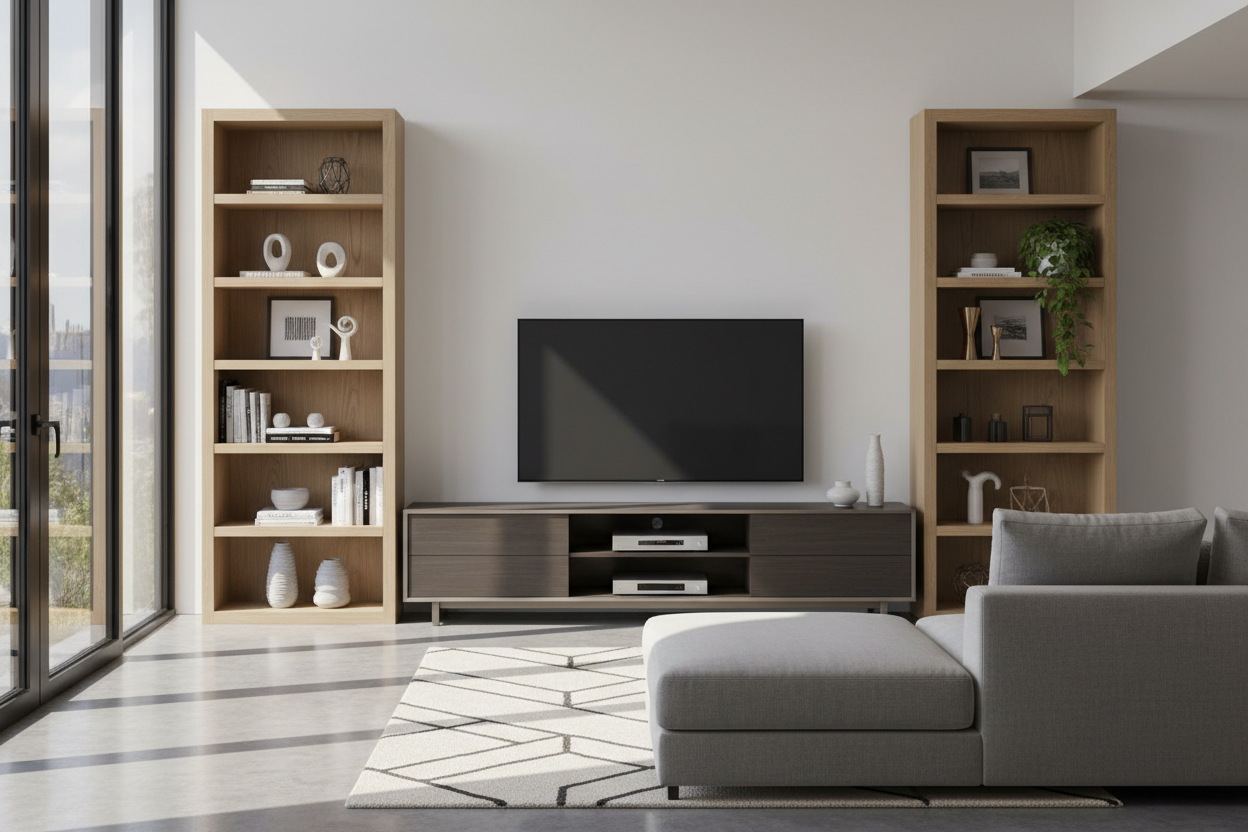
We have all been there. You spend hours agonizing over the perfect sofa, layering textures with rugs and pillows, only to sit down and stare directly at a tangled mess of black cords and blinking router lights beneath your television. The media wall is the focal point of most North American living rooms, yet it is often treated as an afterthought. Choosing the right modern entertainment stands is not just about giving your screens a place to rest; it is about grounding the room and managing visual clutter. By the end of this guide, you will know exactly how to size, select, and style a piece that works for your specific layout.
Quick Decision Guide
- Always choose a stand that is at least 4 to 6 inches wider than your TV on either side to maintain visual balance.
- Prioritize closed storage if you have gaming consoles, routers, or children's toys to hide.
- Floating or wall-mounted designs create the illusion of more floor space in small apartments.
- Look for solid wood or high-grade veneer if you plan to keep the piece for more than five years.
Getting the Scale and Proportion Right
One of the most common mistakes I see in residential projects is a massive 75-inch television hovering over a tiny modern tv console table. It creates a top-heavy, anxious feeling in the room, making the technology dominate the architecture.
The Golden Ratio for Media Units
Your console should anchor the wall. A good rule of thumb is to look for a piece that extends comfortably beyond the edges of your screen. If you have a 65-inch TV (which is roughly 57 inches wide), you need a simple tv console table that is at least 65 to 70 inches long. This negative space on the ends gives you room to style a trailing plant, a stack of art books, or a structural table lamp, softening the harsh black rectangle of the screen.
Blending Technology with Interior Design
Televisions and soundbars are inherently cold and industrial. To counter this, your furniture needs to introduce warmth and texture. A sleek modern tv console in slatted walnut, warm white oak, or even a woven cane front brings a much-needed organic element to the space.
Managing Visual Weight
If your living room feels cramped, opt for modern stands with slender metal legs or a wall-hung design. Showing more floor space tricks the eye into thinking the room is larger. Conversely, if you have a massive open-concept suburban family room, a floor-to-ceiling built-in look or a heavy, plinth-base cabinet will prevent the furniture from looking lost in the vastness of the room.
Navigating Quality and Pricing
It is tempting to grab the first flat-pack option you see, especially if you catch a flashy media console sale online. However, the build quality of these pieces varies wildly, and replacing a sagging unit every two years costs more in the long run.
Materials That Last
Engineered wood with a thin paper laminate will inevitably peel at the corners, especially if you live in a humid climate or frequently mop your floors. If you are on a strict budget, look for powder-coated metal or solid pine painted in a dark, matte finish. If you can invest, solid hardwoods or thick wood veneers offer longevity, handle the weight of heavy receivers, and can be refinished down the line.
Designer's Honest Take
Over the years, I have sourced hundreds of media units, and I will be the first to admit I have made mistakes. A few years ago, I specified a stunning, ultra-low profile matte black console for a client's minimalist condo. It looked incredible on installation day. But within a month, the client called to tell me it was a nightmare. The matte black finish showed every single speck of dust, and because it was barely two inches off the ground, the robot vacuum constantly wedged itself underneath and scratched the baseboard.
Another hard lesson? Never trust the pre-drilled cord holes on cheaper units. I once spent two hours trying to thread a thick, braided HDMI cable and a heavy-duty power strip plug through a tiny two-inch plastic grommet. Now, I always check the back panel material. If it is flimsy cardboard, I know I can easily cut a larger hole myself. If it is solid wood, I make sure the existing cutouts are at least three inches wide before buying.
Frequently Asked Questions
How tall should my TV stand be?
The ideal height depends on your seating. When sitting on your sofa, your eye level should hit the middle of the TV screen. For most standard sofas, a console height of 20 to 24 inches works perfectly.
Can I put a heavy TV on a glass console?
Only if the manufacturer explicitly states the weight capacity and the glass is tempered. However, from a design perspective, glass stands expose all your messy cords and power strips, making them very difficult to style cleanly.
How do I hide cords if my stand has an open back?
Use zip ties or velcro straps to bundle cables tightly together, and run them straight down the back legs of the stand. You can also buy paintable cord covers that stick to the wall, blending the wires seamlessly into your paint color.

Leave a comment
This site is protected by hCaptcha and the hCaptcha Privacy Policy and Terms of Service apply.