

















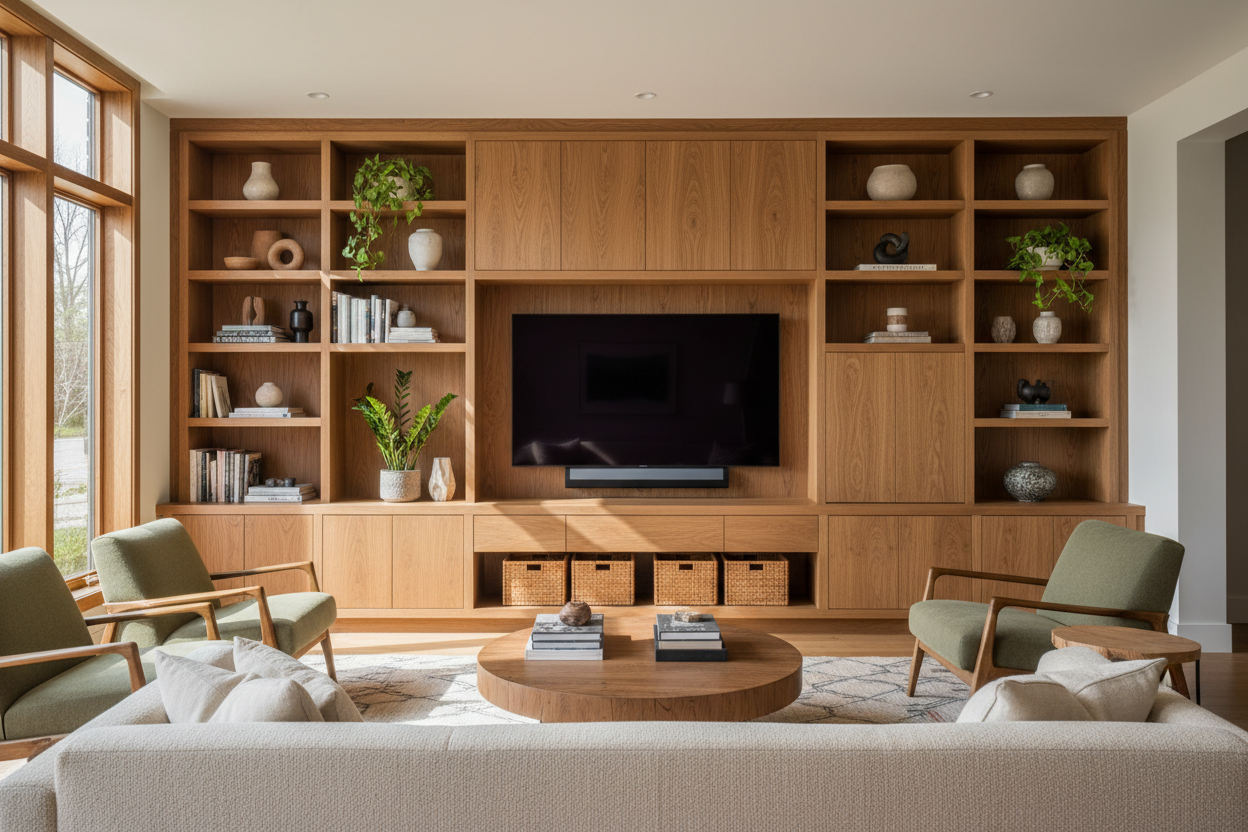
I spent three years staring at a 'wood-look' TV stand that I bought for a couple hundred bucks. By the second year, the laminate was peeling because I had the audacity to spill a glass of water, and the middle shelf was bowing like a sad smile under the weight of my record player. That is the lie of fast furniture. If you are tired of your home feeling like a temporary staging area, it is time to talk about a wood wall unit that actually has some backbone.
- Solid wood handles weight without sagging, unlike MDF which eventually gives up.
- Real timber develops a patina over time, meaning it actually looks better as it ages.
- A massive wall unit provides the architectural 'anchor' that modern, cookie-cutter apartments usually lack.
- Mixing wood tones is better than buying a matching set—it makes your room look curated, not 'purchased in one click.'
The 'Fast Furniture' Fatigue
We have all been there. You buy the flat-pack media center because it is cheap and the photos look decent enough. But six months later, the doors are misaligned and the corners are chipping to reveal that grey, compressed sawdust underneath. It is a cycle of waste that keeps you spending money on things that have zero resale value and even less soul.
When you start looking at high-quality living room collections, the price tag can be a shock at first. But do the math. I have replaced three cheap TV stands in the time my neighbor has owned one solid oak piece. Investing in a solid wood wall unit isn't just about aesthetics; it is about ending the cycle of disposable decor that ends up in a landfill when you move.
Why a Solid Wood Wall Unit Changes the Entire Room
There is a psychological weight to real timber. When you walk into a room with a massive solid wood wall unit, the space feels grounded. It stops being a box with four white walls and starts feeling like a library or a custom-designed den. The natural grain patterns provide a visual texture that paint or plastic simply cannot replicate.
I have found that a large unit also solves the 'floating furniture' problem. In many living rooms, everything is pushed against the walls, leaving the middle feeling empty and cold. A substantial wooden structure gives the eye a place to land. It provides a sense of permanence. It says, 'I actually live here, and I plan to stay for a while.'
How to Scale Wooden Wall Units for Living Room Spaces
The biggest mistake I see? People buying units that are too small. If you have a twelve-foot wall, a five-foot console looks like a postage stamp. For wooden wall units for living room setups, you want to aim for at least two-thirds of the wall's width. If you go too small, the TV looks like it is swallowing the furniture.
Height is your friend. Don't be afraid to go tall, but leave at least 12 to 18 inches of breathing room from the ceiling so the room doesn't feel cramped. If a massive wall unit feels like too much for one side of the room, I like to balance the visual weight by placing a wood dresser storage cabinet on the opposing wall. This keeps the room from feeling lopsided while giving you even more space to hide the clutter.
The Golden Rule: Don't Match Your Woods Perfectly
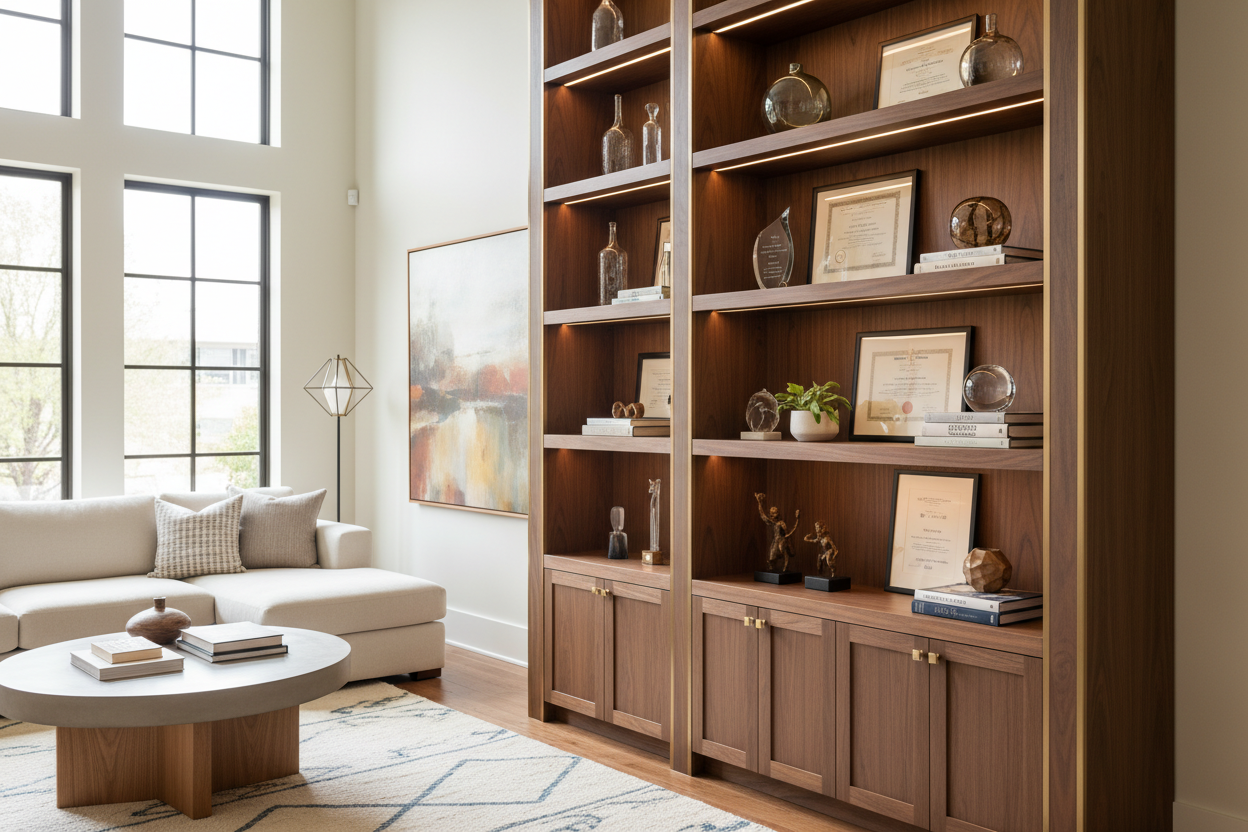
Please, I am begging you: stop buying the matching coffee table, end table, and wall unit set. It looks like a hotel lobby. When styling wooden wall units living room designs, you want a mix of tones. If your wall unit is a dark, moody walnut, try bringing in a solid wood modern sideboard in a slightly lighter oak or cherry nearby.
The trick is to keep the undertones similar. If your wall unit is a 'cool' brown, keep the other pieces in that cool family. You can bridge the gap between different furniture pieces by using wood end tables with storage that pull a secondary tone from the grain of your larger unit. This creates a layered, organic look that feels like it grew over time rather than arriving in one box.
Are Wood Wall Units for Living Room Use Actually Kid-Proof?
People worry that wood wall units for living room use are too precious for families. I argue the opposite. When a toddler runs a toy car across an MDF shelf, it gouges the plastic and stays that way forever. When that happens to real wood, it is just a scratch in the grain. You can sand it, oil it, or—my personal favorite—just leave it.
Real wood develops a history. A few dents and rings from coffee mugs actually add to the character. It is much easier to live with furniture that can be repaired than furniture that is essentially 'broken' the moment it gets its first scratch. If you have kids, go for a matte or oil finish rather than a high-gloss lacquer; it hides the fingerprints much better.
Personal Experience: The Teak Tragedy
I once bought a vintage mid-century wall unit that was stunning but incredibly heavy. I tried to move it by myself across a hardwood floor and ended up with a massive gouge in the floor and a cracked leg on the unit. My lesson? Respect the weight. These pieces are heirloom-quality because they are dense and substantial. Get a friend to help you move it, and use felt pads on the bottom. I still have that unit, and even with the repaired leg, it is the most complimented piece in my house.
FAQ
Is solid wood better than wood veneer?
Usually, yes. While high-end veneers on plywood are stable and look great, solid wood allows for deeper repairs and has a weight that veneer just can't match. Avoid 'paper veneer' at all costs—that is just a photo of wood glued to cardboard.
How do I clean a solid wood unit?
Skip the aerosol sprays. Use a slightly damp microfiber cloth for dust and a high-quality furniture oil once or twice a year. Over-cleaning with harsh chemicals is the fastest way to kill the natural luster of the timber.
Will a large wall unit make my room look smaller?
Counter-intuitively, one large, well-placed piece of furniture often makes a room feel bigger than five small, cluttered pieces. It simplifies the visual landscape of the room and draws the eye upward.


Leave a comment
This site is protected by hCaptcha and the hCaptcha Privacy Policy and Terms of Service apply.