

















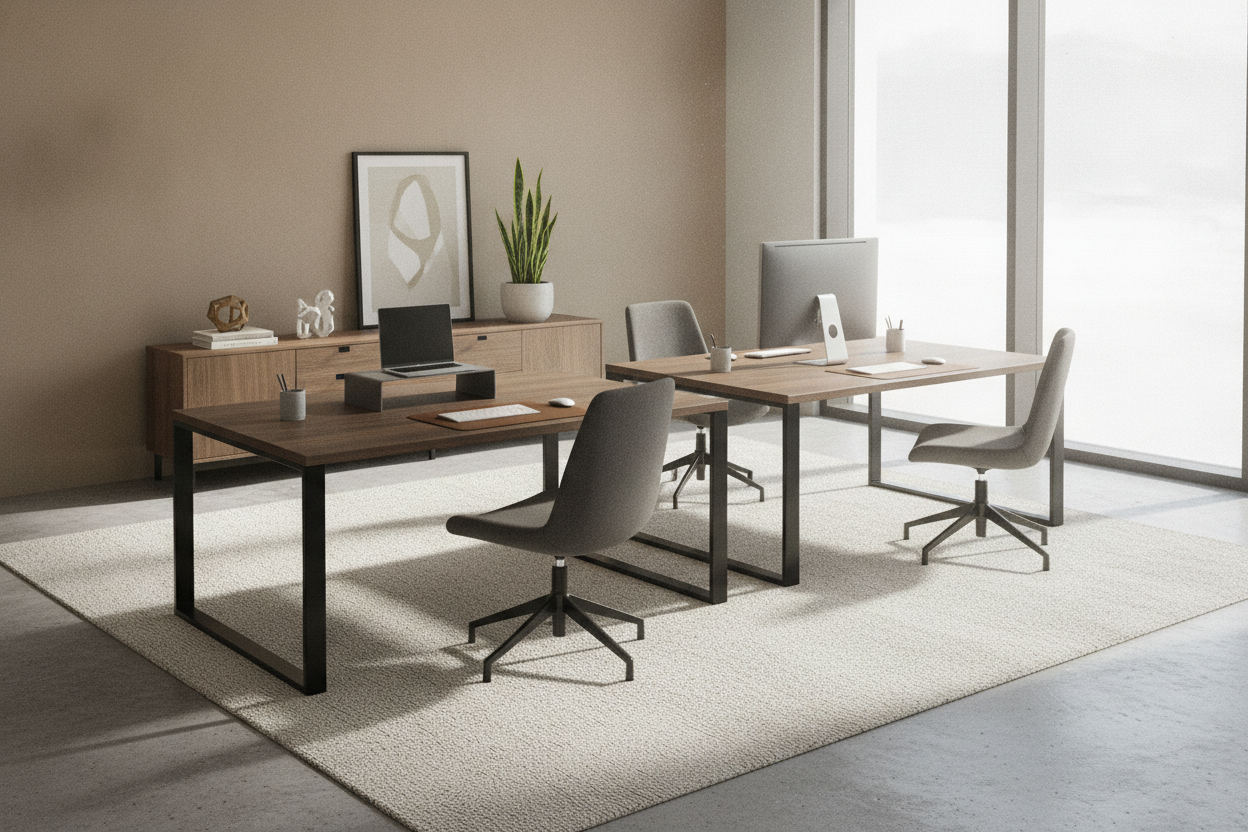
I remember signing the lease for my first 1,200-square-foot office like it was yesterday. I spent weeks scrolling through Pinterest, convinced I could save five grand by buying those minimalist, Scandi-style tables from a certain Swedish retailer. I thought I was being a savvy entrepreneur by skipping the 'boring' stuff.
Two months later, my lead developer’s dual-monitor setup was literally sagging the center of his desk. Every time someone typed with a bit of passion, the screens wobbled like bobbleheads. That was the moment I realized I shouldn't have been looking for 'cute tables'—I needed actual office desks for business.
- Commercial desks are built to BIFMA standards, meaning they won't collapse under a heavy PC.
- Residential furniture uses thin paper veneers that peel within months of daily use.
- Built-in cable management is the difference between a clean office and a fire hazard.
- Commercial warranties actually cover 'multi-user' environments, unlike home furniture.
The 'Aesthetic Table' Trap I Fell Into
When you're starting out, your budget is tight and your desire to look 'cool' is high. I fell for the trap of buying hollow-core residential tables because they looked great on Instagram. They were light, airy, and cheap. But here is what Instagram doesn't show you: the sound of a hollow desk when a phone vibrates on it is deafening. Within three months, the 'white' finish was stained with coffee rings that wouldn't budge, and the edges were chipping where my team’s wrists rubbed against the laminate.
These pieces weren't designed for 8 to 10 hours of daily friction. They were designed for a guest bedroom where someone occasionally writes a thank-you note. If you are tempted by that $99 table, please read this before buying another residential piece. I ended up throwing those tables in a dumpster after just six months. It wasn't a bargain; it was a $1,500 mistake that ended up in a landfill. A real business desk needs to be dense, heavy, and ready for a beating.
The Real Difference Between Residential and Commercial Desks
The biggest difference is something you can't see from a product photo: the core material. Most home furniture is made of low-density particle board or, worse, a honeycomb paper filling. A proper commercial desk uses high-density industrial-grade particle board or MDF, usually at least 1 inch thick. This isn't just about weight; it's about the ability to hold a screw. In cheap furniture, the screws eventually wallow out of the soft wood, leading to that permanent 'wobble' that drives employees crazy.
Then there is the laminate. Commercial office desks for business use Thermally Fused Laminate (TFL) or High-Pressure Laminate (HPL). These are engineered to resist scratches, heat, and liquids. While standard writing computer desk setups for a home office might use a thin 0.5mm PVC edge, a heavy duty commercial office desk will have a 2mm or 3mm impact-resistant edge banding. This prevents that annoying peeling that happens when a chair bumps into the desk for the thousandth time. Plus, commercial desk furniture usually comes with a 5-year or 10-year warranty, compared to the measly 90 days you get with most 'trendy' home pieces.
Why Your Team Secretly Needs 'Clunky' Features
I used to think cable grommets and built-in drawers were 'ugly.' I wanted that clean, floating-top look. My employees hated me for it. Without a commercial office desk with drawers, their pens, notebooks, and snacks ended up in piles on the surface, making the office look cluttered and chaotic. A commercial computer desk is designed with the reality of work in mind, not just the aesthetic of a catalog.
The cable management situation was even worse. When you have three monitors, a docking station, a phone, and a lamp, you have a 'spaghetti monster' of wires. Commercial desks for offices have integrated channels and grommets to hide this mess. Once I switched, the office vibe changed instantly. People were less stressed because their workspace felt organized. It turns out there is a reason why corporate furniture actually works—it prioritizes the user's daily workflow over a minimalist photo op. It’s about ergonomics and utility, not just looking 'airy.'
The Financial Math of Heavy Duty Commercial Office Furniture
Let’s talk numbers, because that’s what business owners do. If you buy a $150 residential desk, it will likely look like garbage in 18 months. You’ll spend another $150 to replace it, plus the labor cost of someone assembling it twice. That’s $300 plus two days of lost productivity. A $450 heavy duty commercial office furniture piece will easily last a ten-year lease. The 'expensive' option actually costs you less per year.
There is also the employee retention factor. If your team is working on wobbly, cramped desks, they feel like they are working for a 'temporary' company. Providing a solid, professional office desk corporate environment signals that you are invested in their comfort and the company’s future. In a tight labor market, the 'math' of a good desk includes keeping your best talent from looking for a job with a better-equipped workspace. Don't underestimate the power of a desk that doesn't shake when someone sneezes.
How to Outfit Your Space Without Making It Look Like 1999
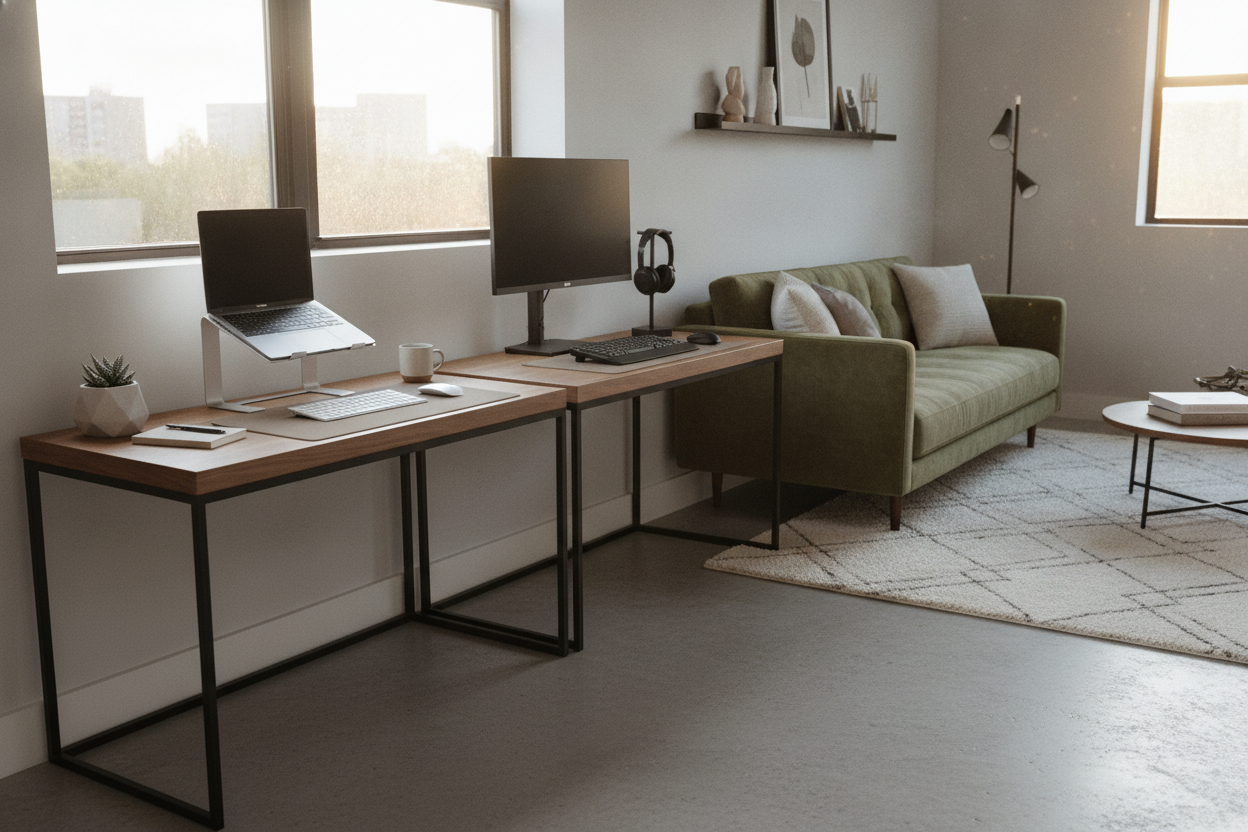
The good news is that commercial office desk furniture has come a long way since the gray-on-gray cubicles of the 90s. You can find a commercial desk that has the structural integrity of a tank but the look of a modern tech hub. Look for mixed materials—metal legs with thick wood-grain tops. You can even mix in high-end focal points, like a modern gray reception desk with LED accents, to give clients a great first impression while keeping the back-office desks functional and durable.
When shopping for commercial desks for offices, look for 'open-frame' designs that use heavy-gauge steel. They provide the 'airy' look I originally wanted but without the structural failure. Stick to a consistent color palette—whites, grays, or deep walnuts—and use your chairs or acoustic panels to add 'pops' of color. This way, your office desk commercial use setup looks intentional and professional, rather than like a collection of random home furniture you found on sale. Invest in the bones of your office, and the rest of the decor will fall into place.
Is a commercial desk harder to assemble?
Honestly, yes. Because the materials are denser and higher quality, the boxes are much heavier. You’ll likely need two people to flip a 72-inch commercial desk over after the legs are attached. But the hardware is usually much better—think metal-to-metal connections rather than wood screws into particle board.
Why are commercial desks more expensive?
You're paying for the 'wear layer' and the structural testing. A business desk is tested to hold hundreds of pounds and withstand thousands of 'cycles' (opening drawers, leaning on edges). Home furniture isn't required to pass these tests, which is why it's cheaper and flimsier.
Can I use a dining table as a communal desk?
I tried it, and I don't recommend it. Dining tables are usually 29-30 inches high, which is okay, but they lack any way to manage power. You'll end up with power strips taped to the legs and wires tripping people. Plus, the finish on a dining table isn't usually rated for the 'micro-scratches' caused by computer mice and keyboards.


Leave a comment
This site is protected by hCaptcha and the hCaptcha Privacy Policy and Terms of Service apply.