

















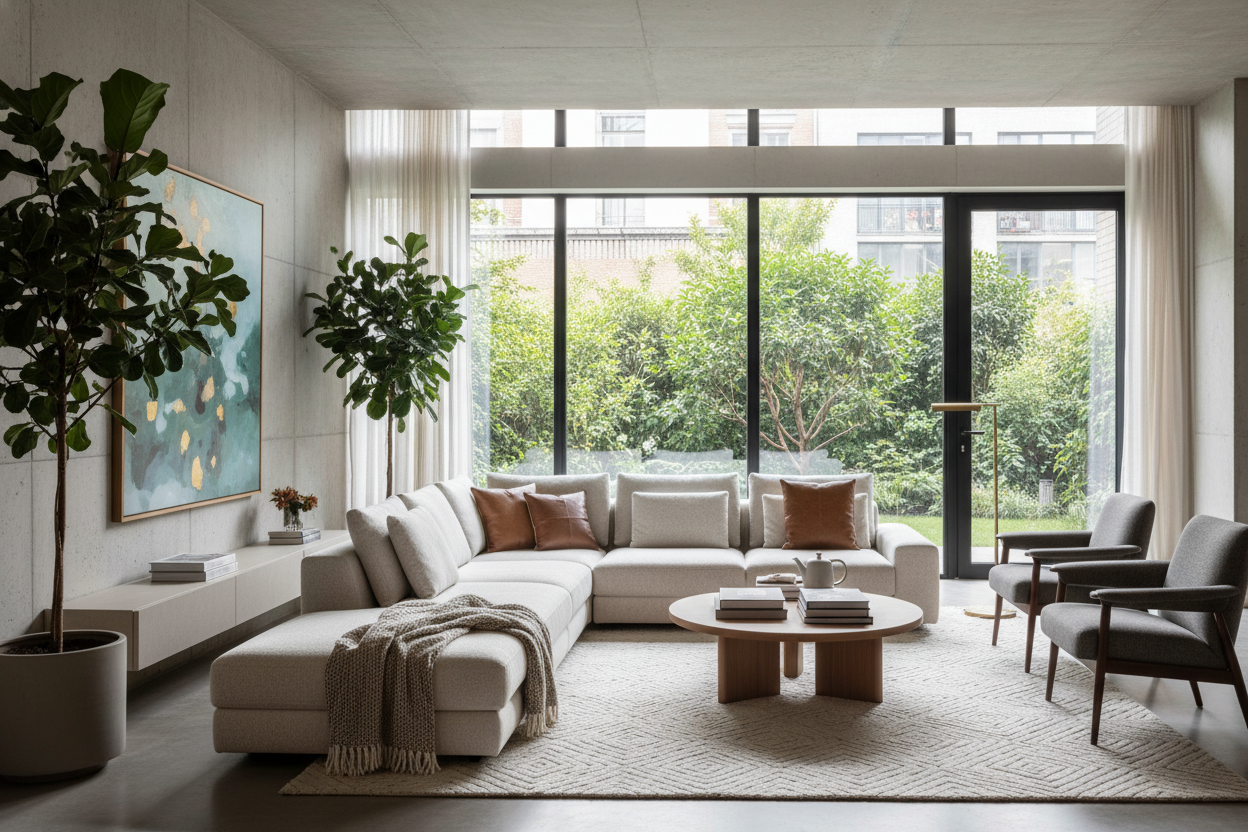
Few design elements carry as much weight—both visual and functional—as the sofa sala. It is the anchor of your living space, the spot where guests congregate, and the refuge where you collapse after a long week. Yet, I see homeowners consistently make the same mistake: prioritizing a showroom aesthetic over residential reality. You might find a piece that looks stunning in a catalog, but if it doesn't align with your room's traffic flow or your family's lifestyle, it becomes a costly source of frustration.
Quick Decision Guide: Key Features to Look For
If you are rushing through a showroom or browsing online, check these four critical specifications first to ensure quality and fit.
- Frame Construction: Look for kiln-dried hardwood (like oak or maple) rather than particleboard or soft pine, which can warp over time.
- Suspension System: Eight-way hand-tied springs are the gold standard for longevity, though high-density sinuous springs are a reliable runner-up.
- Seat Depth: Standard depth is 21–24 inches. If you prefer lounging, aim for 24+ inches; for formal sitting, stick to 20–22 inches.
- Fabric Durability: Check the "double rub" count. For a family sala sofa, aim for 15,000 to 30,000 rubs.
Mastering Space Planning and Layout
Before obsessing over velvet swatches, we must address the silhouette and scale. A common issue with a sala sofá is visual heaviness. In a compact room, a sofa with a skirted base (fabric touching the floor) blocks light and makes the footprint feel dense. Conversely, a sofa on raised, tapered legs allows light to pass underneath, creating a sense of airiness.
The "Walk-Around" Rule
Ergonomics dictate that you need at least 30 to 36 inches of clearance around your furniture for comfortable movement. If your sofa pushes against this boundary, the room will feel claustrophobic regardless of how high-end the upholstery is. When mapping out your floor plan, consider the "sightlines." The back of the sofa should not be the first thing you see upon entering the home unless it is a low-profile design specifically meant to divide an open-plan space.
Material Integrity: Beyond the Surface
The longevity of your furniture relies heavily on what is underneath the fabric. While high-resilience foam is standard, the best comfort often comes from a foam core wrapped in down or a down-alternative fiber. This provides that initial sink-in feeling while maintaining structure.
Fabric Selection for Real Life
For a high-traffic area, performance fabrics are non-negotiable. Modern technology allows for solution-dyed acrylics that mimic the soft hand of linen but repel water and oil. If you desire a leather sala sofa, distinguish between full-grain (which develops a patina) and bonded leather (which will eventually peel). Full-grain is an investment; bonded is a temporary fix.
Lessons from My Own Projects
I want to share a specific realization I had while sourcing a custom sectional for a client in a pre-war apartment. We found the perfect Italian-made sofa—deep seating, low profile, absolutely stunning. On paper, the dimensions fit the room perfectly. However, I neglected to account for the elevator depth and the angle of the entryway hallway.
It didn't fit. We had to hire a specialized hoisting service to bring it in through the balcony window, costing the client an extra $800. Since then, I carry a laser measure and physically walk the delivery path before purchasing. Another detail I've noticed personally: avoid loose-back cushions if you have children or pets. In my own home, I constantly found myself fluffing and realigning the back pillows to make the room look tidy. Now, I almost exclusively recommend tight-back or semi-attached back sofas to clients who value a low-maintenance, tailored look. That structural rigidity keeps the piece looking crisp years longer than a loose-cushion design.
Conclusion
Selecting the right seating is about balancing architectural proportion with tactile comfort. By focusing on the frame mechanics and choosing a silhouette that respects your room's flow, you ensure your purchase is an asset rather than a liability. Take your time, measure your doorways, and invest in materials that age gracefully.
Frequently Asked Questions
How do I determine the right size sofa for my room?
A good rule of thumb is that your sofa should not occupy more than two-thirds of the wall it rests against. Visually, this leaves "breathing room" on either side for side tables or floor lamps, preventing the space from looking overcrowded.
What is the difference between a sala sofa and a standard couch?
While the terms are often used interchangeably, "sala" refers specifically to the living or reception room in various cultures. A sofa sala often implies a set or a significant, formal seating arrangement meant for hosting guests, as opposed to a casual "couch" meant for a den or basement.
How often should I rotate the cushions?
To prevent uneven wear and permanent indentations, rotate and flip your seat cushions every two weeks. If your cushions are fixed, smooth the fabric from the center outward regularly to prevent wrinkling and puddling.

Leave a comment
This site is protected by hCaptcha and the hCaptcha Privacy Policy and Terms of Service apply.