

















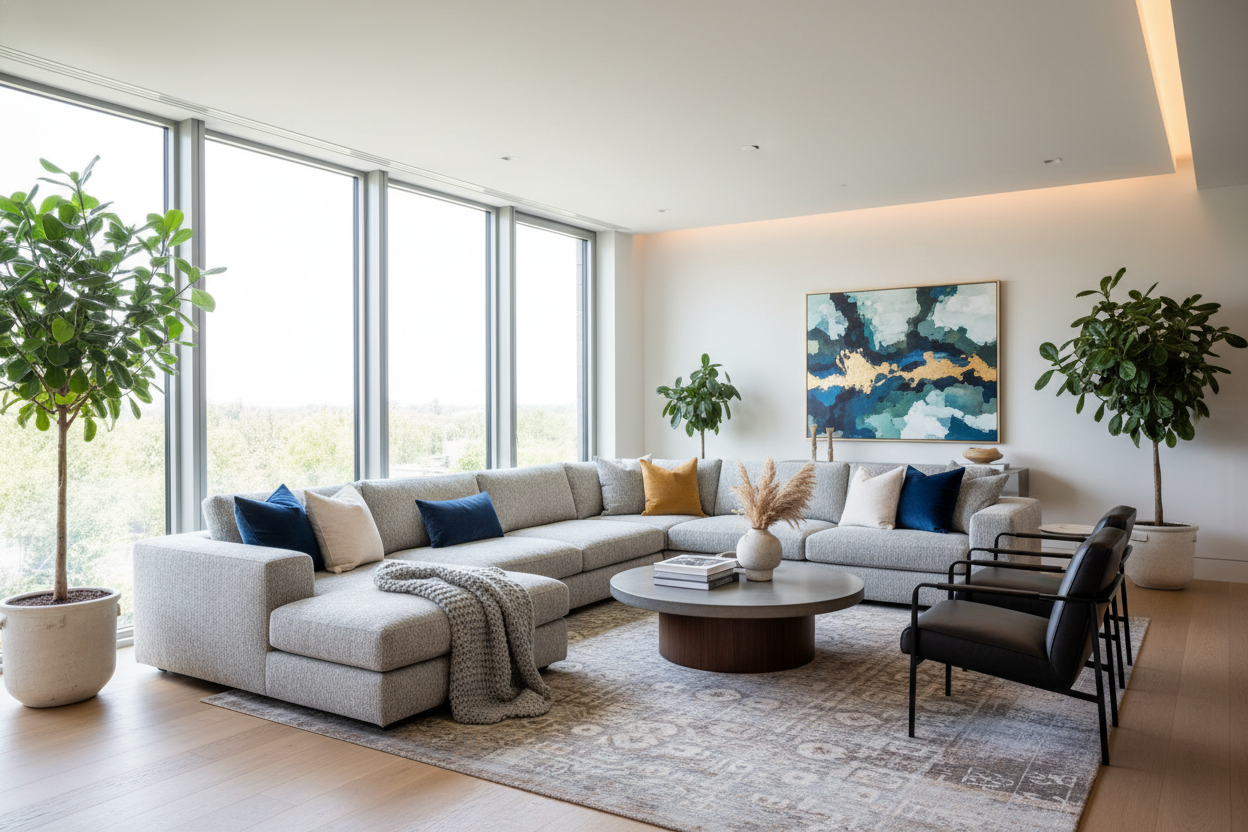
There is a distinct difference between a lounge intended for Netflix marathons and a formal space designed for conversation. The drawing room is the latter—a space of reception, dialogue, and visual impact. Yet, the most frequent issue I encounter when entering a client's home isn't the color palette; it is the scale and ergonomics of the seating. Selecting the wrong sofa for drawing room layouts can disrupt the traffic flow and make the space feel claustrophobic rather than inviting.
This guide moves beyond basic aesthetics to the structural and spatial nuances that distinguish high-end design from fast furniture.
Key Features to Look For
- Frame Construction: Look for kiln-dried hardwood frames (maple or oak) rather than plywood or particleboard to prevent warping.
- Suspension System: An 8-way hand-tied spring system is the gold standard for longevity, offering superior support compared to sinuous springs.
- Seat Depth: For a formal drawing room, aim for a depth of 20-22 inches to facilitate upright conversation rather than lounging.
- Fabric Durability: Check the 'double rub' count; a rating above 30,000 is essential for longevity in high-traffic areas.
Mastering Proportion and Spatial Planning
In interior design, 'visual weight' is just as important as physical dimensions. A heavy, skirted sofa absorbs light and grounds a room, while a mid-century modern piece with exposed legs creates a sense of airiness. When considering a sofa set drawing room arrangement, avoid pushing all furniture against the walls. This creates a 'waiting room' effect.
Instead, float the sofa. If your drawing room is open-plan, use the sofa’s back to define the boundary of the conversation area. Ensure there is at least 30 inches of walkway clearance around the piece to maintain a comfortable traffic flow.
Materiality: Beyond the Swatch
The tactile experience of a sofa drawing room setting defines the room's atmosphere. While velvet offers a luxe, light-reflecting quality that adds depth, it is prone to 'crushing' or marking. For a more relaxed yet sophisticated look, a high-weight linen blend is breathable, though it will develop natural wrinkles—a feature we call 'patina' in the trade, but 'messy' if you aren't expecting it.
The Importance of Cushion Fill
The interior fill dictates the silhouette maintenance. A 100% down fill feels luxurious but requires daily fluffing to avoid looking frumpy. For a drawing room that needs to look pristine, I recommend a high-resiliency foam core wrapped in a layer of down. This provides the crisp structure of foam with the crown and comfort of feathers.
My Personal Take on Sofa for Drawing Room
I learned a hard lesson early in my career regarding 'bench seat' sofas (those with one long, continuous cushion). I specified a stunning, 9-foot velvet bench sofa for a client who wanted a sleek, uninterrupted line.
It looked incredible on installation day. However, six months later, the client called. Because people naturally gravitate toward the corners or the exact center, the single long cushion had developed a 'smile'—a visible sag in the middle that couldn't be fixed by simply flipping the cushion, because there were no individual cushions to rotate. Now, whenever I suggest a bench seat, I insist on a reinforced front rail and strictly advise the client on the maintenance reality. If you want low maintenance, stick to a two or three-cushion design; it distributes wear much more evenly.
Conclusion
Your drawing room sofa is an investment piece that anchors the home's formal aesthetic. By prioritizing frame integrity, appropriate scaling, and the right cushion composition, you ensure the piece remains a focal point for decades, not just a season. Measure twice, check the suspension, and trust the process.
Frequently Asked Questions
What is the ideal length for a drawing room sofa?
Standard lengths range from 84 to 96 inches. However, the ideal length depends on your wall size. Leave at least 18 inches of breathing room on either side of the sofa if placed along a wall to accommodate side tables.
Can I mix different sofa styles in one room?
Absolutely. In fact, a matching sofa set drawing room look can sometimes feel dated. Try pairing a transitional tuxedo-style sofa with a pair of contrasting, sculptural armchairs to create a curated, dynamic look.
How do I choose the right fabric for a sunny room?
If your drawing room receives direct sunlight, avoid natural fibers like silk, linen, or cotton, which fade quickly. Opt for solution-dyed acrylics (often used in outdoor furniture but now available in luxury indoor textures) which are fade-resistant.

Leave a comment
This site is protected by hCaptcha and the hCaptcha Privacy Policy and Terms of Service apply.