


















We have all been there: staring at a makeshift workspace, realizing the dining chair pulled from the kitchen is wreaking havoc on our posture and the room's aesthetic. As an interior designer, I see this constantly. Clients invest heavily in a mahogany desk or custom joinery, yet treat seating as an afterthought. Finding the perfect home desk chair is not just about avoiding back pain; it is about curating a piece of furniture that anchors your room without screaming "corporate cubicle."
Key Features to Look For
Before you commit to a purchase, consider these non-negotiable elements. This checklist ensures you balance form with function:
- Lumbar Support: Essential for long hours; look for adjustable support that mimics the spine's natural curve.
- Seat Depth & Width: You should have 2-4 inches between the back of your knees and the seat edge.
- Material Breathability: Mesh offers airflow, while top-grain leather provides a luxurious, durable finish.
- Adjustability: Seat height, tilt tension, and armrest positioning are critical for ergonomic alignment.
- Base Type: Choose soft casters for hardwood floors or glides for a stationary, architectural look.
Balancing Ergonomics with Residential Aesthetics
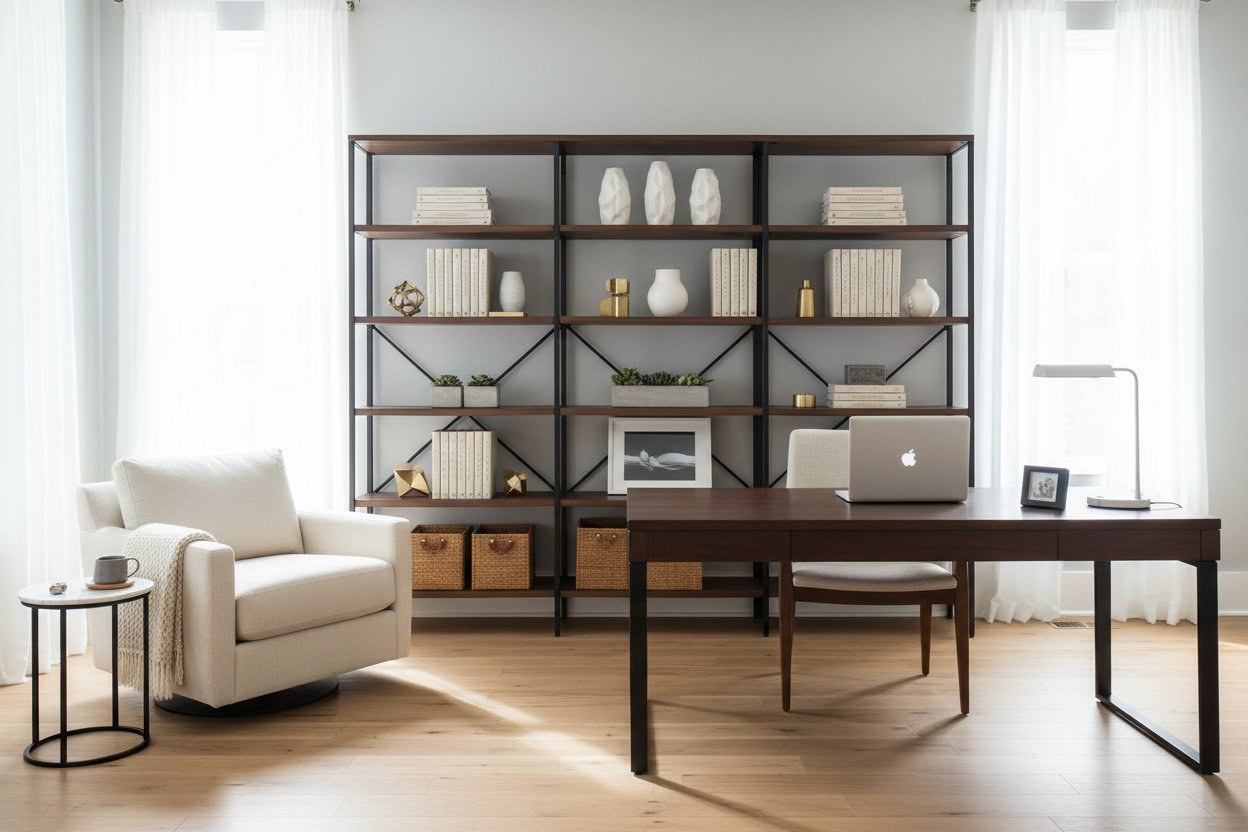
The primary challenge with home office chairs is that the most comfortable options often look overly industrial. When designing a home library or a dedicated workspace, we want to avoid the plastic-heavy look typical of a standard officework office chair. Instead, focus on the silhouette. Look for chairs with hidden mechanisms—where levers and knobs are integrated into the underside of the seat rather than protruding from the sides. This maintains a clean visual line that complements residential furniture.
Selecting the Right Upholstery
Texture plays a massive role in how home office desk chairs integrate into a room. If your workspace is in a shared living area, consider a high-performance velvet or a wool blend. These materials soften the acoustic and visual "noise" of the room. However, for chairs for working 8+ hours a day, leather or high-grade mesh is superior for hygiene and temperature regulation. Be wary of cheap bonded leather; it tends to peel within a year of daily use.
Space Planning and Visual Weight
In interior design, we talk about "visual weight"—how heavy an object looks to the eye. If you are working with a compact writing desk or a floating shelf setup, a high-back executive chair will overwhelm the space. For smaller footprints, low-to-mid-back home computer chairs are preferable. They provide necessary support without blocking lines of sight or dominating the room's proportions. Conversely, a grand, floating executive desk requires a substantial chair to create a balanced focal point.
Lessons from My Own Projects
I learned a hard lesson about work chairs for home early in my career during a project for a client in a historic brownstone. We selected a stunning, mid-century modern replica chair. It had a bentwood walnut frame and looked like a piece of sculpture. It was aesthetically perfect.
Three weeks later, the client called me. The issue wasn't the back support—it was the casters. The vintage-style metal wheels were chewing up her original parquet flooring, and the lack of a swivel return meant the chair always looked messy when she stood up. I had to replace it with a model featuring soft, polyurethane-coated casters and a memory-return swivel. Now, whenever I specify an office chair for home use, I physically run my hand over the caster edges and check the return mechanism. It’s those unpolished, practical details that save your floors and your sanity.
Conclusion
Your workspace should be a sanctuary of productivity, not a source of physical strain or visual clutter. By prioritizing adjustable ergonomics hidden within a sophisticated silhouette, you elevate your daily work experience. Invest in quality materials and the right scale, and your chair will serve you for years to come.
Frequently Asked Questions
How do I protect hardwood floors from my desk chair?
Avoid standard plastic rug mats, which can trap grit and scratch floors over time. Instead, swap the chair's standard wheels for "rollerblade style" rubber casters. They are silent, smooth, and safe for all hard surfaces.
Are armless chairs bad for ergonomics?
Generally, yes. Armrests support the weight of your arms and shoulders, reducing strain on the upper back. However, if space is tight and the chair needs to tuck fully under a desk, look for a chair with flip-up arms to get the best of both worlds.
What is the ideal seat height for a home office chair?
Your feet should be flat on the floor, with your knees at a 90-degree angle. Most standard desks are 29-30 inches high, so your chair needs to adjust enough to allow your forearms to rest parallel to the desk surface without hunching shoulders.


Leave a comment
This site is protected by hCaptcha and the hCaptcha Privacy Policy and Terms of Service apply.