

















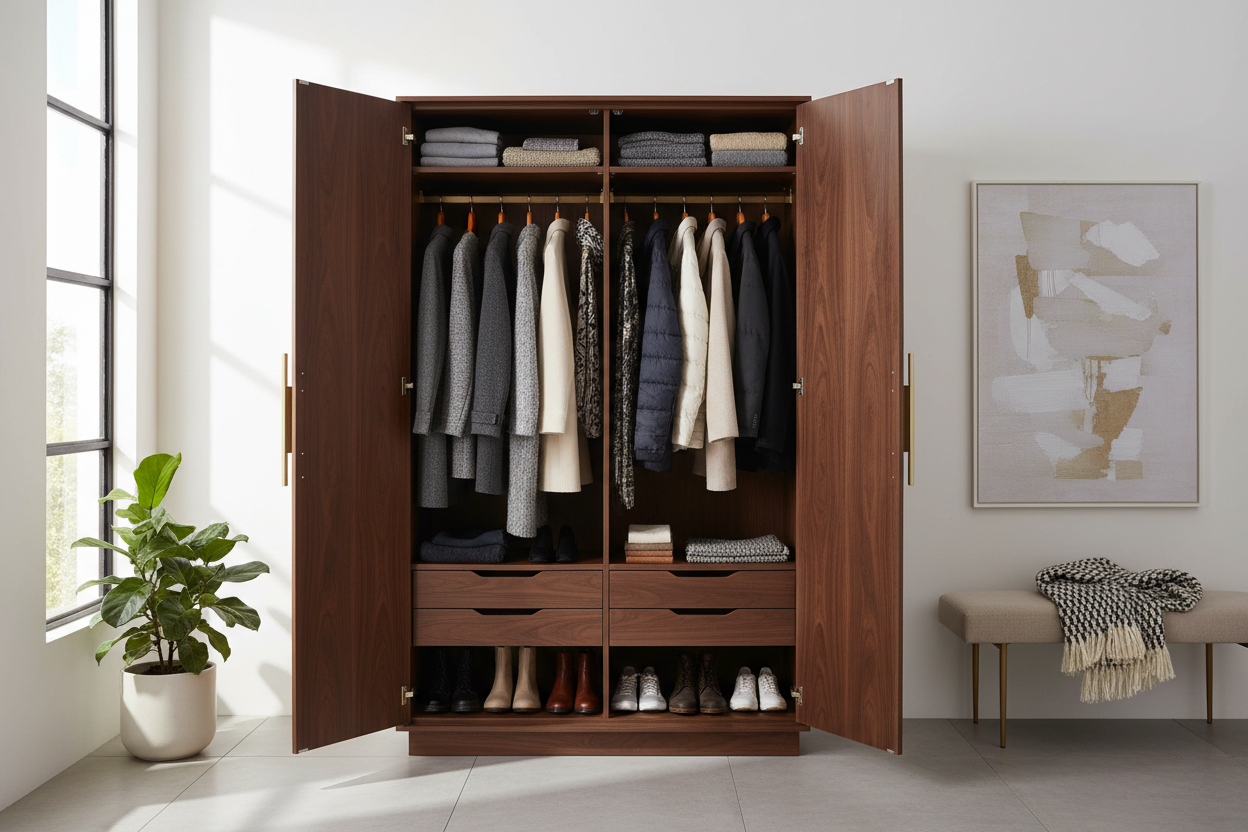
There is nothing quite as frustrating as walking through your front door and being immediately greeted by visual chaos. A pile of jackets on a bench or a bursting rack can ruin the ambiance of an otherwise curated home. The solution isn't just more hooks; it is the intentional placement of a coat armoire. This piece of furniture does more than store outerwear—it acts as an architectural anchor, defining the transition from the outdoors to your sanctuary.
Key Features to Look For
- Internal Depth: Ensure a minimum depth of 24 inches (61 cm) so standard hangers sit flush without preventing the doors from closing.
- Weight Capacity: Look for reinforced joinery; winter coats are heavy, and a flimsy coat wardrobe will bow over time.
- Base Stability: A tall coat closet requires a weighted base or wall-anchoring kit to prevent tipping when doors are loaded.
- Ventilation: Subtle back-panel venting prevents damp wool coats from developing mildew inside the cabinet.
Choosing the Right Silhouette and Material
When selecting a wardrobe for coats, you are balancing visual weight with functional volume. In my design practice, I often advise clients to treat a freestanding coat closet as they would a piece of sculpture. If your entryway is narrow, avoid bulky, dark woods which can make the space feel claustrophobic.
Instead, opt for a coat closet cabinet with mirrored fronts or a light oak veneer. This reflects light and reduces the perceived mass of the furniture. For larger foyers, a substantial wooden coat closet in walnut or mahogany adds a sense of grandeur and permanence. Be wary of cheap particle board; the humidity changes near an entryway can cause inferior materials to swell and warp.
Functionality: More Than Just Hanging Space
The modern armoire for coats must be a multitasker. A simple rod is rarely enough. The most efficient designs are hybrid units—essentially an entryway armoire for coats and shoes. Look for a layout that offers a dedicated lower compartment for footwear. This keeps street grime away from the hemlines of your long trench coats.
Configuring the Interior
If you are eyeing a large coat closet, customization is key. Adjustable shelving allows you to adapt the wardrobe coat closet as seasons change. In summer, you might need more shelf space for hats and bags; in winter, you need full vertical clearance for parkas. A coat closet with doors that open 180 degrees is also a subtle but critical ergonomic detail, allowing you to access the corners of the unit without obstruction.
Space Planning for the Standalone Coat Closet
Placement is everything. A standing coat closet should never obstruct the flow of traffic. I recommend leaving at least 36 inches of clearance in front of the coat closet armoire to allow for comfortable door swing and human movement. If you are tight on square footage, look for a coat armoire wardrobe with sliding doors. This allows you to fit a wardrobe closet for coats into tight corridors where a swing-door model would be impossible.
Lessons from My Own Projects
I learned the hard way about the importance of "usable depth" versus "exterior depth" early in my career. I specified a stunning, antique-style armoire for hanging coats for a client in a pre-war Manhattan apartment. On paper, the exterior measured 22 inches deep, which seemed sufficient. However, the back panel and the door thickness ate up nearly 3 inches of interior space.
The result? The client’s broad-shouldered wool suits prevented the doors from latching shut. We had to install an angled valet rod instead of a standard hanging rod, which reduced the capacity by half. It was a functional failure despite being aesthetically beautiful. Now, whenever I source a coat storage with doors, I literally bring a standard hanger to the showroom to test the clearance. It’s an unpolished, practical step that saves massive headaches later.
Conclusion
Investing in a high-quality entryway coat wardrobe is about reclaiming your space. Whether you choose a sleek, modern coat wardrobe cabinet or a rustic armoire wardrobe coat closet, prioritize the internal dimensions and material integrity. The right piece will hide the clutter and elevate your daily departure and arrival ritual.
Frequently Asked Questions
How deep should a coat closet wardrobe be?
To hang coats on a standard hanger perpendicular to the back wall, you need at least 24 inches of exterior depth (providing about 22-23 inches of internal clearance). Anything shallower will require front-facing slide-out rods.
Is a freestanding coat closet safe for homes with children?
Any tall coat closet or armoire for coats and shoes poses a tipping hazard if not secured. It is non-negotiable to anchor these pieces to a stud in the wall, especially since heavy winter coats can shift the center of gravity when doors are pulled open.
Can I use a regular bedroom wardrobe as an entryway coat armoire?
Yes, but with caveats. Bedroom wardrobes often lack the structural reinforcement needed for heavy outerwear. If you repurpose one as a wardrobe for coats and shoes, ensure the rod is reinforced and consider adding a waterproof mat at the bottom for wet boots.

Leave a comment
This site is protected by hCaptcha and the hCaptcha Privacy Policy and Terms of Service apply.