

















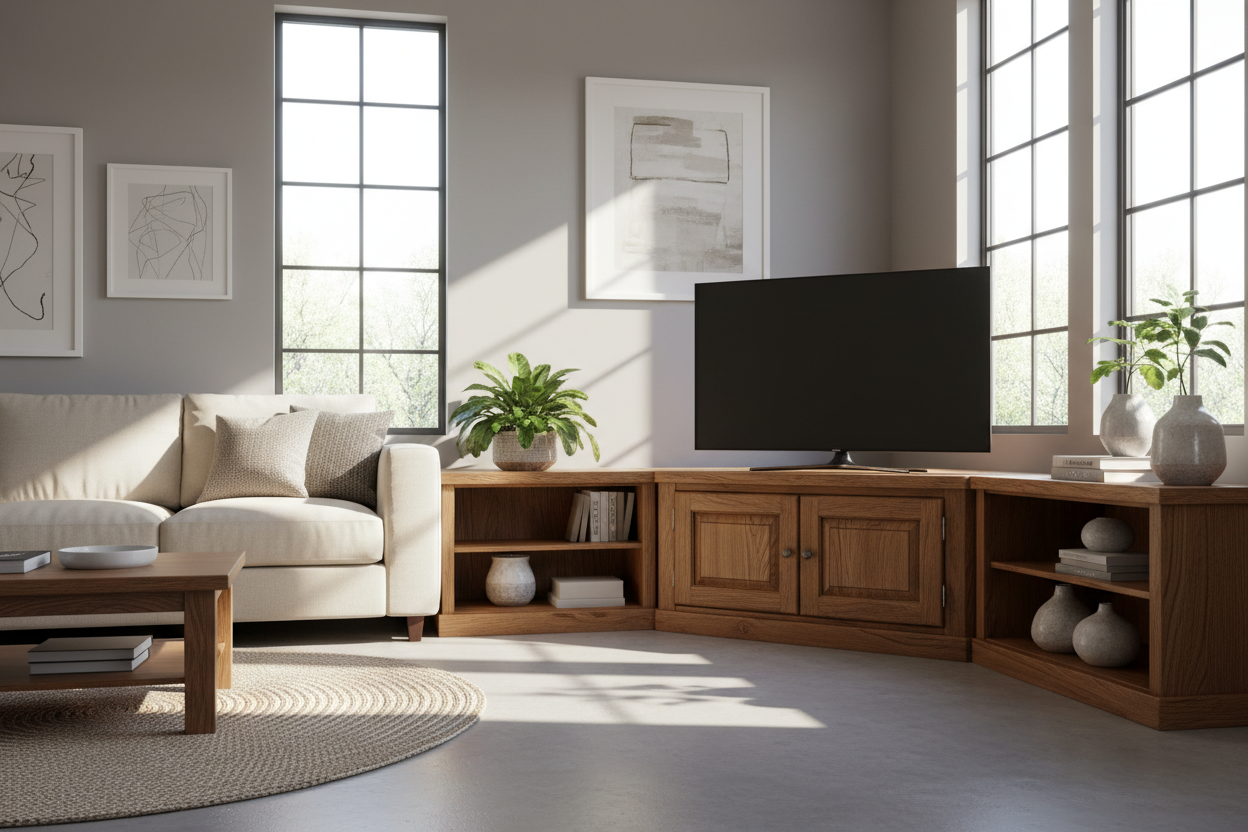
We have all walked into a living room that feels fundamentally confused. Usually, it happens in North American suburban builds from the late 90s or modern open-concept condos where wall space is an absolute luxury. You have a beautiful fireplace, massive windows, and absolutely nowhere logical to put the television. Shoving a standard media console into a corner creates dead space, traps dust, and creates awkward sightlines. This is where a solid wood corner tv stand becomes a design necessity rather than an afterthought.
Finding a piece that fits the architecture of your room without looking like cheap dorm furniture requires a bit of strategy. In this guide, you will learn exactly how to measure for a corner unit, why material choice dictates longevity, and how to style it so the room feels intentional and balanced.
Quick Decision Guide
- Measure the depth first: Corner units require more floor depth than flat-wall consoles. Ensure you have at least 24 inches from the corner point to the front edge to accommodate modern TV bases.
- Watch the viewing angle: Position the center of the screen at eye level (typically 42 inches from the floor) for optimal ergonomics and neck comfort.
- Check for ventilation: Solid wood traps heat. Ensure the unit has open shelving or rear cutouts to keep gaming consoles and audio receivers cool.
- Scale matters: The width of the stand should be at least 4 to 6 inches wider than your television to maintain visual balance and prevent a top-heavy look.
Space Planning and Layout
The Geometry of Awkward Corners
Placing furniture on an angle immediately changes the flow of a room. When you angle a television, you are establishing a new focal point that competes with existing architectural features. To make this work, you need to anchor the piece properly. Do not push the stand aggressively tight against the baseboards. Leaving a one-inch gap allows for baseboard clearance, protects your walls, and prevents the piece from looking crammed into the space.
If you are dealing with an open-concept space, a well-proportioned solid wood corner tv cabinet can actually soften the hard 90-degree angles of the room. Just map out your walking paths carefully. You need a minimum of 36 inches of clearance between the front of the TV stand and your coffee table or sofa to ensure the room does not feel claustrophobic.
Material Quality and Visual Weight
Why Genuine Materials Matter
Corners are naturally shadowed areas in a room. If you place a dark, cheap particle-board console in a dimly lit corner, it absorbs light and looks like a black hole. Opting for a real wood corner tv stand—whether it is white oak, walnut, or maple—brings natural texture and warmth that reflects light beautifully and adds character to an otherwise dead space.
Solid wood also provides necessary structural integrity. Today's flat screens might be lighter than the heavy tube TVs of the past, but the accompanying gear (soundbars, heavy receivers, gaming consoles, and decor) adds up. Engineered woods and cheap veneers tend to bow under sustained weight, especially in the wider center span of a corner unit.
Lessons from My Own Projects
A few years ago, I was designing a family room in a 1980s colonial home. The room had a massive brick fireplace on one wall and floor-to-ceiling windows on the other. A corner setup was our only viable option. We sourced a stunning, heavy solid walnut unit. It looked incredible, grounding the room perfectly and matching the home's transitional aesthetic.
But I learned a hard lesson about weight and cable management that day. Solid wood is incredibly heavy. After we wrestled the 180-pound piece into the exact corner, the client realized they needed to plug in a new streaming device. We had to drag it back out, completely scratching the newly finished hardwood floors in the process. The main downside of high-quality solid wood is its sheer mass. My rule now: buy heavy-duty felt pads for the feet before the piece even comes off the delivery truck, and run every conceivable cable (even spare HDMI cords) before pushing it into its final resting spot.
Frequently Asked Questions
How do I know what size corner TV stand I need?
Measure the total physical width of your TV, not the diagonal screen size. Your stand should be at least a few inches wider than the TV itself. Then, measure out from the corner of your walls along the baseboards to ensure the angled side edges of the stand will not block adjacent windows or doorways.
Do real wood corner TV stands require special maintenance?
Yes. Natural wood responds to humidity and temperature changes. Keep it out of direct, harsh sunlight if possible to prevent the finish from fading or bleaching. Dust weekly with a dry microfiber cloth, and use a dedicated wood conditioner twice a year to keep the grain hydrated and prevent cracking.
Can I just put a flat-wall TV stand in a corner?
Technically yes, but it wastes an enormous amount of floor space behind the unit and creates a massive dust trap. Purpose-built corner stands have clipped back edges designed specifically to nestle deeply into the corner, maximizing your room's square footage while keeping the screen at the proper distance.

Leave a comment
This site is protected by hCaptcha and the hCaptcha Privacy Policy and Terms of Service apply.