

















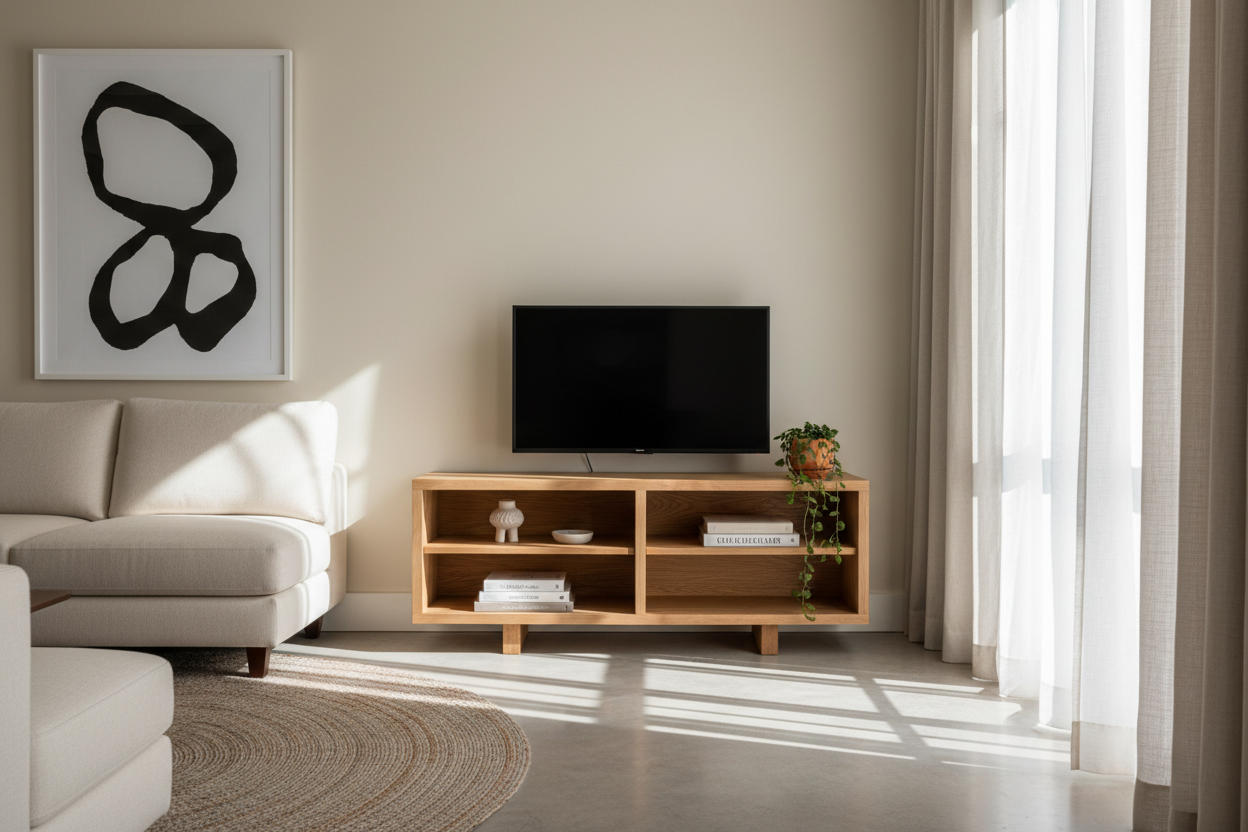
We have all seen it: a beautiful, cozy living room completely swallowed whole by a massive, oversized media console. When dealing with tight square footage in suburban family rooms or city apartments, finding the right proportion is the hardest part of the job. You want something that grounds the screen but leaves enough negative space to breathe. That is where small wood tv stands come into play.
Choosing a compact piece does not mean you have to sacrifice warmth or character. In fact, scaling down your media center forces you to be intentional about material and silhouette. Here is what you need to know to balance storage, style, and walkway clearance before buying your next piece.
Quick Decision Guide
- Measure your clearance: Always leave at least 36 inches of walkway between your media unit and the coffee table.
- Match the screen width: The stand should be at least 2 to 3 inches wider than the base of your TV to avoid a top-heavy look.
- Watch the visual weight: A wooden tv stand with shelves feels lighter in a room than a heavy, solid block of cabinetry.
- Prioritize cord management: Small profiles mean less room to hide messy cables. Look for built-in routing holes.
Navigating Tight Living Rooms
The Golden Rules of Scale
In North American homes, we often default to oversized furniture. But when you are working with less than 150 square feet of lounge area, every inch matters. When sourcing wood tv stands for flat screens, the depth of the unit is your most critical dimension. Standard consoles run 18 to 20 inches deep, but a compact wooden tv table stand can trim that down to 14 or 16 inches. Those saved four inches make a massive difference in your daily traffic flow.
Choosing the Right Silhouette
If your room lacks architectural interest, opt for unique wooden tv stands with fluted details or mid-century tapered legs. Lifting the frame off the floor creates an illusion of more space. Conversely, if you need maximum storage, a modern wooden tv armoire can utilize vertical height rather than eating up valuable floor space.
Finding the Right Visual Weight
Open Shelving vs. Closed Doors
The age-old debate in small space design is whether to display or conceal. A wood shelf tv stand keeps sightlines open, making the room feel airy. However, open shelving requires strict curation. If you have gaming consoles, routers, and a messy collection of remotes, a wooden tv console stand with sliding slatted doors offers the best of both worlds—texture without the visual clutter.
For those who prefer a minimalist approach, a simple wood tv table stand paired with a wall-mounted screen allows the furniture to act as a decorative grounding element rather than a heavy utility piece. Wood tv units with a mix of concealed drawers and an open cubby for a soundbar strike a great balance.
Designer's Honest Take
Let me share a lesson from a recent condo project. I sourced a stunning, custom walnut wooden tv entertainment stand for a client with a very narrow living room. It looked beautiful on installation day. But within three months, the sharp right angles of the unit were dinged and chipped.
Why? The walkway was just a bit too tight, and the clients kept brushing against the corners when walking to the kitchen. I learned the hard way that in high-traffic, compact spaces, unique wood tv stands with rounded or bullnose edges are not just an aesthetic choice—they are a functional necessity. Also, while solid wood is incredibly durable, a high-quality wood veneer on an MDF core is far less likely to warp if your apartment has fluctuating winter humidity levels.
Frequently Asked Questions
What size TV fits on a small wooden tv stand?
As a general rule, the furniture should be wider than the TV itself. For a 43-inch to 50-inch flat screen, look for a stand that is at least 45 to 55 inches wide to maintain proper proportion and visual balance.
How do I hide cords on an open wood shelf tv stand?
Cable management is tricky with open designs. Use zip ties or velcro straps to bundle cords, and run them down the back legs of the stand. You can also mount a power strip directly to the underside of the top shelf to keep plugs off the floor.
Is a wooden tv armoire outdated for modern spaces?
Not at all, provided the silhouette is updated. While the chunky 1990s media cabinets are out, sleek, vertical armoires with cane webbing or reeded wood fronts are making a massive comeback, especially in studio apartments where concealing the screen is a priority.

Leave a comment
This site is protected by hCaptcha and the hCaptcha Privacy Policy and Terms of Service apply.