


















The Ergonomic and Spatial Architecture of Sit and Stand Desks
Modern residential work environments demand furniture that adapts to changing physical postures throughout the day. Selecting sit and stand desks allows professionals to alternate smoothly between seated focus and standing tasks without dismantling their technical setups. A well-designed height-adjustable workstation bridges the gap between active ergonomics and static room layout, creating an adaptable environment for intensive daily productivity. Choosing the right stand up and sit down desk requires understanding how kinetic frames, surface dimensions, and surrounding storage units interact across different room layouts.
Dimensional Sizing Tiers and Spatial Clearance Planning
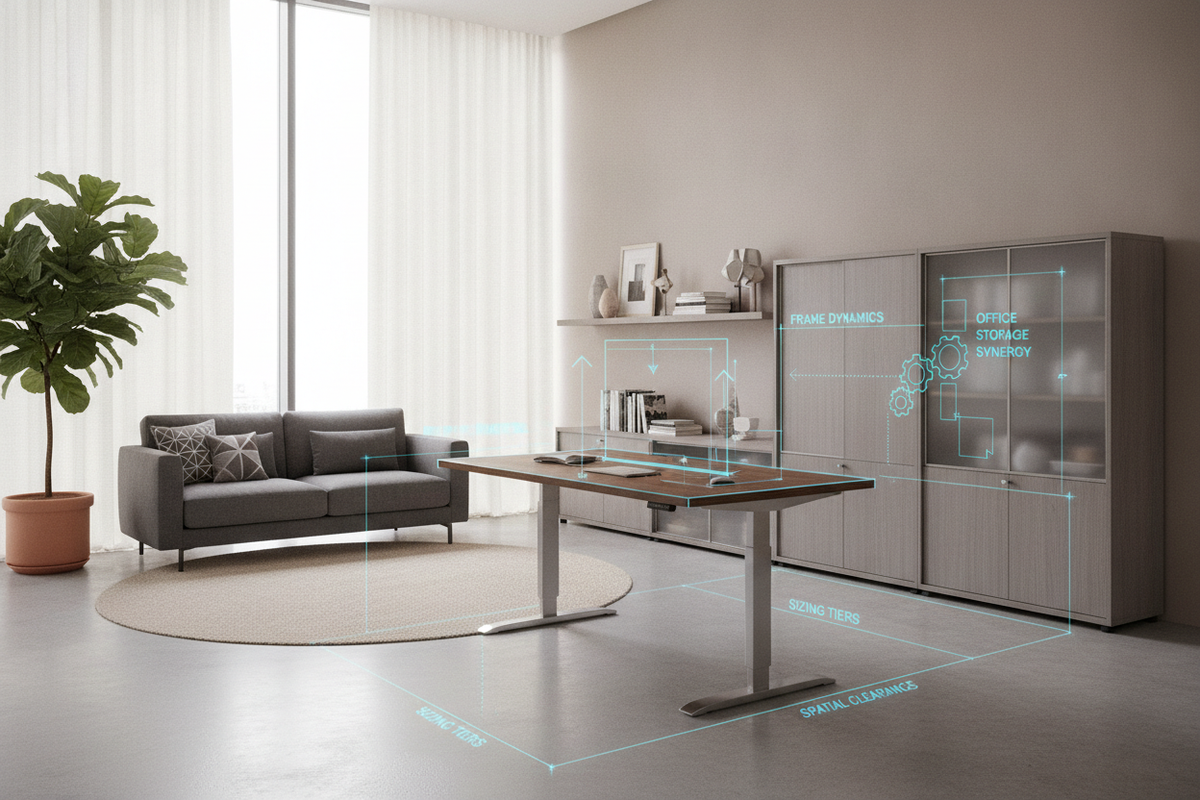
Evaluating desktop dimensions is the first structural step in selecting sit and stand tables. Because an adjustable desktop standing desk moves vertically, its footprint must account for perimeter clearances, wall moldings, and adjacent architectural features. Choosing the appropriate scale prevents visual crowding and structural conflict with nearby fixtures, especially when incorporating raised computer desks into shared or multi-purpose rooms.
Compact Workstations for Nooks and Hybrid Living Spaces
In smaller alcoves, bedrooms, or dual-purpose living spaces, a compact footprint or a pedestal standing desk delivers vertical adaptability without monopolizing walking paths. A moveable office desk offers added flexibility when reconfiguring flexible room layouts. For smaller floor plans, reviewing our computer desk office guide helps integrate active workspaces with discreet interior cabinetry.
Standard and Executive Workstations for Multi-Screen Workflows
Larger spaces accommodate broad work surfaces such as an electric computer desk or an electric adjustable computer table. These spacious surfaces support multiple display arms, audio hardware, and reference documents on a continuous adjustable standing desktop. Planning display sightlines and surface depth works hand in hand with choosing the right display hardware, as outlined in our computer office buy guide.
Kinetic Frame Mechanics and Lifting Column Stability
The foundation of any dependable electric sit and stand desk lies in its motorized underframe and telescoping column design. A smooth standing desk lift prevents desktop vibrations that could disrupt delicate electronics or task lighting. Premium motorized computer desk frames utilize rigid steel construction and precision drive shafts to ensure quiet, balanced travel. Investing in a quality electric rising desk provides reliable vertical transition day after day.
Single vs. Dual Motor Configurations and Load Dynamics
When selecting a stand up desk motorized frame, motor configuration directly influences transit balance and operating volume. A dual-motor design features dedicated motors integrated into each lifting column, distributing mechanical effort evenly during daily raising and lowering desk cycles. This setup is ideal for heavier desktop accessories on a sit to stand desk electric platform, such as the ergonomic office sit product designed for smooth daily transitions.
Controller Presets, Anti-Collision Systems, and Kinetic Safety
Modern controllers elevate the daily convenience of an automatic sit to stand desk. Digital keypads featuring programmable memory positions allow users to return instantly to their preferred seated or standing heights. In addition, an anti-collision sensor in a standing desk adjustable height electric system detects physical resistance, halting movement if the desk contacts a chair armrest or low window ledge. Workstations equipped with programmable keypads, such as this ergonomic office sit product, streamline daily height adjustments while protecting surrounding furnishings.
Surface Materials and Structural Desktop Integrity
A resilient electric desk top must resist surface deflection, moisture, and daily abrasion. Heavy monitor mounts create concentrated clamping pressure, making core desktop density a critical selection criterion. High-density engineered wood cores, durable high-pressure laminates, and solid hardwood slabs all provide strong structural support on an adjustable table top desk. Selecting a scratch-resistant height adjustable desktop preserves the visual appeal of your home office over years of intensive use.
Static Writing Desks vs. Height-Adjustable Platforms
While an active desk for sitting and standing offers dynamic movement, some interior schemes favor the classic proportions of traditional joinery. Before you buy adjustable desk frames, explore whether a stationary platform from our computer desk collection better matches your decorative aesthetic and storage requirements.
Resolving the Sit-Stand Storage Challenge with Surrounding Furniture
Because kinetic frames require clear vertical travel paths, sit and stand desks rarely include integrated full-height drawer pedestals. To maintain an organized workspace, pair your adjustable ergonomic desk with mobile filing carts, lateral credenzas, or wall-mounted shelving positioned outside the desk travel envelope. Mobile drawer units can tuck beneath the desktop during standing mode and roll alongside during seated focus, keeping essential supplies accessible without obstructing lifting columns.
Kinetic Cable Routing, Slack Geometry, and Power Management
Effective wire management is essential for any motorized standing working desk. Because the distance between your work surface and wall outlets shifts constantly, power cords require planned slack geometry to avoid tension strain. Fasten a heavy-duty surge protector directly to the underside of the electric table, and bundle monitor and peripheral cables into a flexible vertebral spine or mesh sleeve. This single-umbilical routing approach protects electronic ports and preserves clean room aesthetics across all height settings.
Buyer Decision Framework: Step-by-Step Selection and Room Setup
To choose the ideal sit stand electric desk for your space, follow a systematic planning process:
- Measure Spatial Envelope: Verify desktop width, frame depth, and vertical clearance against window sills, electrical plates, and shelving.
- Determine Equipment Payload: Account for the combined weight of monitors, mounts, audio gear, and the desktop slab when evaluating a stand up desk electric frame.
- Coordinate Perimeter Storage: Position low bookcases or mobile pedestals outside the kinetic travel path of your sit desk.
- Organize Cable Geometry: Install an under-desk power rail with flexible wire sleeves to allow snag-free movement throughout the entire height range.


Leave a comment
This site is protected by hCaptcha and the hCaptcha Privacy Policy and Terms of Service apply.