


Introduction: Upgrading Kitchen Storage with a Sideboard Pantry Cabinet
Finding sufficient room for groceries, bulk ingredients, and specialty cookware can challenge even the most organized household. When a kitchen lacks a built-in walk-in pantry, dry goods often spill onto countertops or crowd daily food prep areas. Using a dedicated sideboard pantry cabinet bridges the gap between classic entertaining furniture and practical kitchen pantry storage, giving you hidden capacity without disrupting your decor.
Unlike utilitarian wire racks or tall utility boxes, a dining room pantry sideboard blends seamlessly into open living spaces. It functions as an elegant buffet cabinet during dinner parties while quietly housing cereals, canned goods, and baking supplies behind closed doors. Exploring a wide kitchen dining storage collection can help you visualize how waist-high and mid-height pantry cabinets elevate your room layout while resolving stubborn storage bottlenecks. By adding ample storage and generous storage compartments to your dining space, you create a versatile piece that balances modern functionality with timeless appeal.
Credenza, Buffet Cabinet, or Kitchen Pantry: Key Differences
Shoppers often see the terms credenza, sideboard, and buffet cabinet used interchangeably, but slight distinctions can help narrow down your search for the right kitchen buffet pantry cabinet to meet your unique storage needs:
- Sideboard: Traditionally designed with short legs or a solid plinth base that sits close to the floor, this cabinet style emphasizes enclosed storage with a balanced mix of cabinet doors and drawers.
- Buffet Cabinet: Typically sitting slightly taller, a buffet cabinet provides a comfortable surface height for serving food during gatherings and often features long, unbroken counter space.
- Kitchen Pantry Cabinet and Credenza Combo: Credenza designs generally showcase a lower, sleek design with sliding or hinged panels, making them an ideal kitchen pantry alternative in narrow dining areas or modern living rooms.
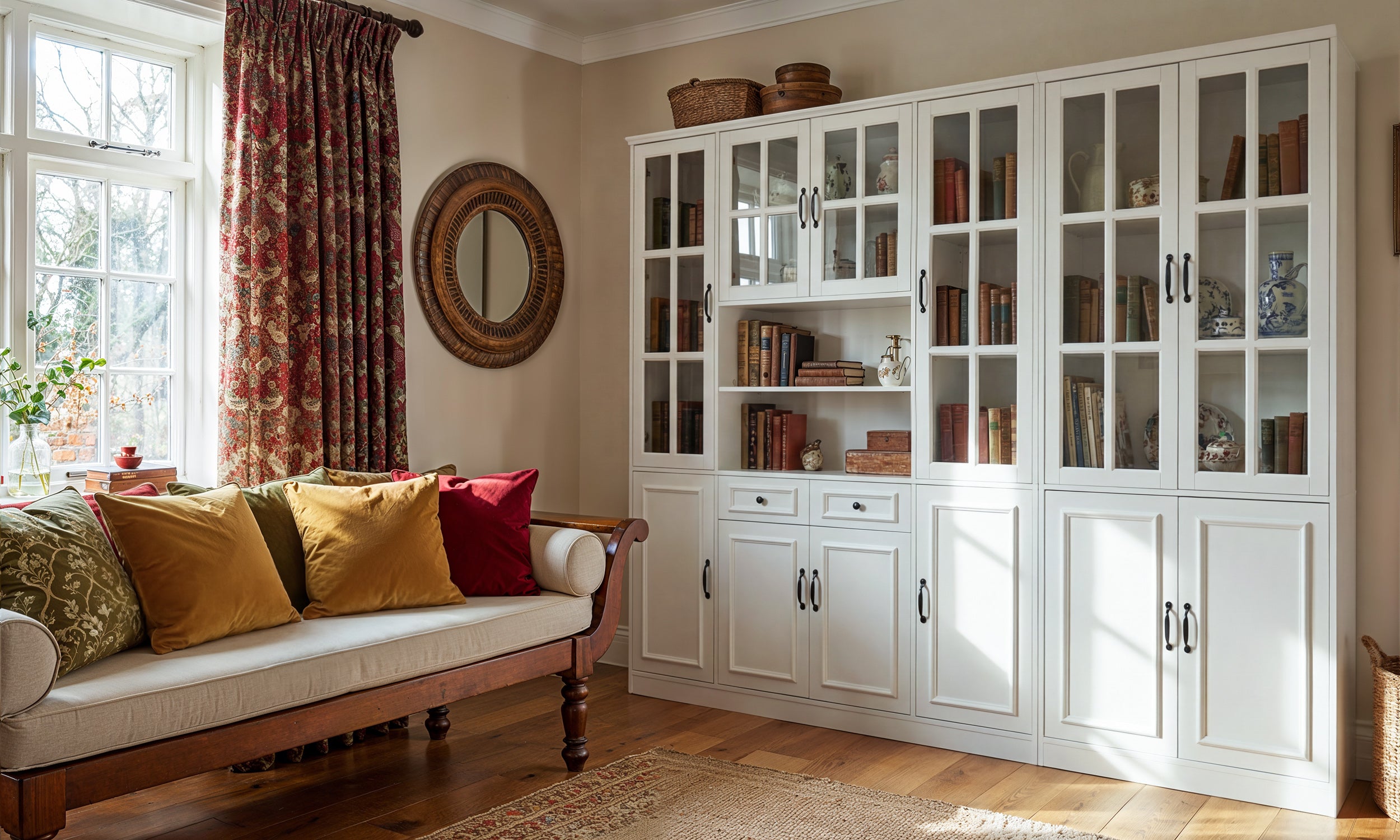
- Buffet with Hutch: A hutch adds vertical open shelving or glass cabinets atop a base buffet cabinet, providing extra space for display alongside deep concealed cupboards.
Regardless of the specific term you prefer, selecting a cabinet tailored for dry food storage means evaluating what happens behind the cabinet doors. If you want a deeper look at balancing dining utility with visual appeal, our sideboard buffet cabinet guide covers styling choices, finishes, and functional profiles across different home layouts.
Sizing and Room Fit for Dining Room Pantry Cabinets
Before bringing a new cabinet home, thoughtful spatial planning ensures easy movement during meal preparation and family meals. A freestanding pantry cabinet with doors requires enough clearance so the front panels can swing fully open without colliding with dining chairs, barstools, or entryway walkways. Whether placed along an open dining room wall or tucked into a wide hallway, measuring cabinet depth is essential.
For compact apartments or tight kitchen alcoves, smaller silhouettes make efficient use of vertical and horizontal real estate. Choosing a compact unit like a dedicated food pantry kitchen product provides dedicated dry good compartments without overwhelming narrow floor plans. In contrast, spacious open-concept layouts can easily accommodate a large buffet cabinet with four doors that anchors a long wall. Remember to measure both the depth of the cabinet body and the total space needed when drawers and cabinet doors extend forward.
Interior Layout: Adjustable Shelves, Drawers, and Doors
The interior architecture of a sideboard cabinet with food storage determines how effectively it keeps clutter under control. Pantry staples come in varied heights and weights, from dense canned goods to tall cereal boxes and olive oil bottles, making flexible pantry cabinets invaluable.
Adjustable Shelves for Flexible Organization
Movable internal shelves allow you to reconfigure vertical space as your grocery shopping habits change. Spacing lower shelves closer together creates dedicated zones for cans and flat tins, leaving upper shelves open for taller cereal boxes, bulk jars, and small kitchen appliances.
Drawers for Cutlery and Linens
Smooth-gliding drawers prevent small pantry items from migrating to the back of dark shelves. Use interior organizers to separate flatware, cutlery, spice jars, seasoning packets, napkins, and tea boxes. Having dedicated drawers ensures that entertaining essentials remain distinct from everyday cooking ingredients.
Solid vs. Glass Doors for Kitchen Storage
Choosing between solid doors and decorative glass doors depends on your visual goals for the dining room. Solid wooden doors offer completely enclosed storage, keeping colorful grocery packaging hidden from sight to maintain a clean, sleek design. In contrast, cabinets featuring glass doors allow you to showcase neat rows of matching glass jars, fine glassware, or decorative items, adding character to the room while keeping dry goods dust-free.
If your room allows for vertical expansion, multi-tiered systems like a kitchen sideboard buffet product pair a substantial base buffet cabinet with overhead wall storage and open shelving, providing drawers, doors, and prep counter space in one unified footprint.
Smart Storage Ideas for Canned Goods and Pantry Overflow
Transforming a dining room buffet cabinet into a high-functioning kitchen pantry cabinet requires practical categorization. Grouping items by meal type or frequency of use prevents frantic searches while cooking:
- Tiered Risers: Placing tiered organizers on interior shelves ensures you can read can labels at a glance without having to move front rows aside.
- Stackable Storage Bins: Clear acrylic or woven baskets keep snack pouches, pasta boxes, and baking ingredients contained. Baskets also make it easy to slide an entire category out onto the counter during dinner prep.
- Small Appliance Zones: Reserve one section of the cabinet interior for small appliances you use occasionally, such as blenders, slow cookers, or stand mixers. Stashing these behind buffet doors frees up prime kitchen counter space.
- Glassware and Dish Displays: In designs that combine a lower cabinet with an upper hutch, use upper open shelving or glass cabinets to display everyday plates, bowls, and glassware, keeping the base cabinet reserved for pantry staples.
For additional layout inspiration on organizing kitchen tools and staples together, explore our storage kitchen buffet guide for practical arrangement tips.
Materials, Weight Support, and Assembly Considerations
A freestanding pantry cabinet holds significantly more weight than standard dining furniture used exclusively for table linens. Cans, sauces, and bulk grains add up quickly, so stable construction and proper weight distribution are vital when selecting furniture for your home.
Look for sturdy engineered wood or solid oak designs that resist shelf bowing over time. Warm finishes such as natural oak or white oak lend welcoming rustic charm, while painted matte finishes suit modern transitional rooms. Distribute the heaviest items—such as bulk flour bins, cast iron cookware, and canned soups—across the bottom base shelf, reserving upper adjustable shelves for lighter packages, pasta, and snacks. Durable laminate or oak surfaces simplify how you maintain the furniture when syrup bottles or cooking powders leave residue.
When you assemble your new kitchen storage unit, follow the clear instructions carefully to ensure that every panel, drawer glide, and door hinge aligns smoothly. Pay close attention to door hinge hardware adjustments to ensure even gaps across double or four doors. Finally, always install the included anti-tip hardware brackets. Because kitchen pantry cabinets hold heavy items and feature moving doors and drawers, securing the unit firmly to wall studs provides peace of mind and keeps your dining space safe.
Selecting the Right Freestanding Pantry Sideboard for Your Home
Choosing the best buffet cabinet to function as a kitchen pantry comes down to balancing your food storage volume with your personal interior style. Whether you lean toward the warm tones of rustic charm or prefer the clean lines of modern minimalist furniture, your cabinet should elevate the room as much as it simplifies daily kitchen routines.
By measuring your available walkway clearance, planning for adjustable internal shelves, and utilizing bins and dividers, you can turn a handsome dining credenza into the ultimate secret kitchen pantry cabinet that keeps your culinary supplies organized and your entertaining areas clutter-free.


Leave a comment
This site is protected by hCaptcha and the hCaptcha Privacy Policy and Terms of Service apply.