
















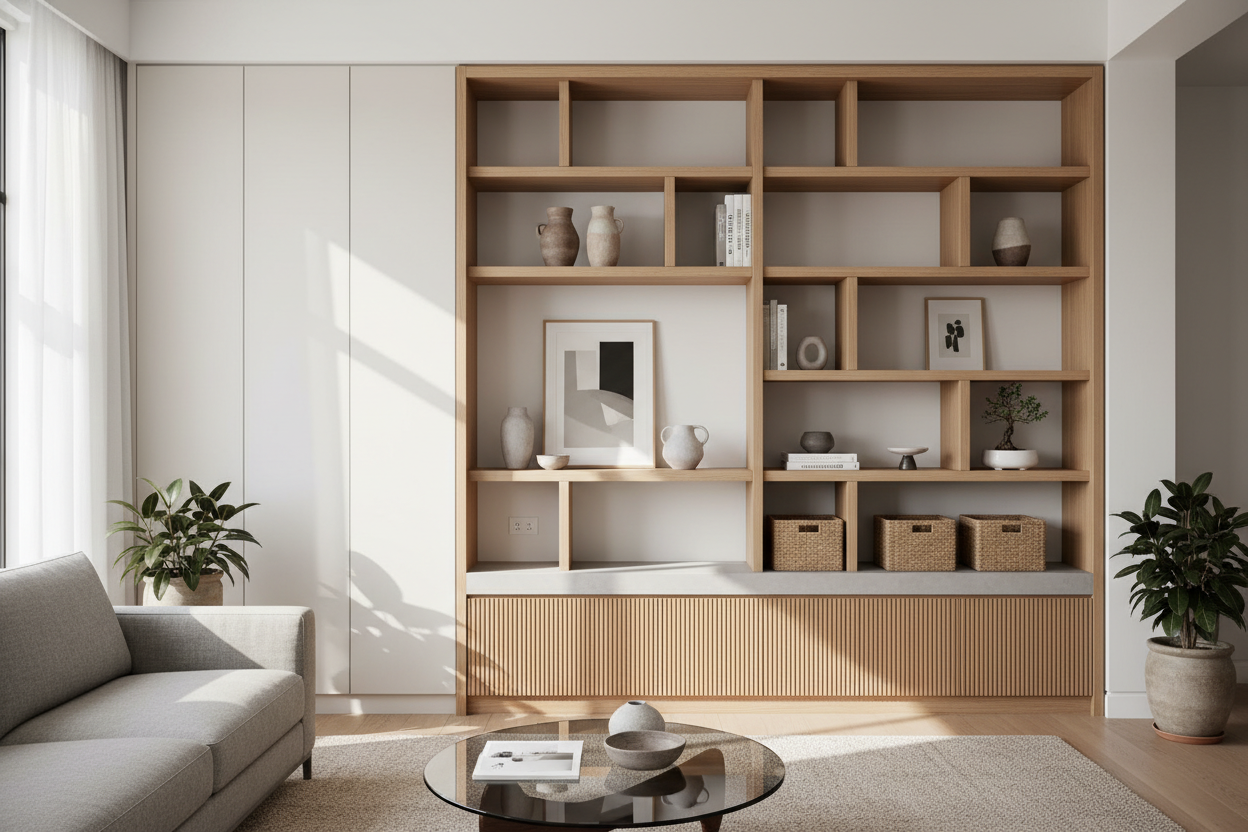
We've all stared at a blank living room wall or a chaotic home office and thought, "I just need more storage." But buying furniture to solve clutter often creates a new problem: a wall that feels heavy, overwhelming, or constantly messy. The secret to getting it right lies in balancing open display areas with closed storage, making a well-designed shelf and cabinet configuration one of the most hardworking elements in any home.
Whether you are outfitting a suburban family room or a compact city apartment, understanding how to mix concealed storage with open display will dictate how your room functions. By the end of this guide, you will know exactly how to plan, scale, and style these pieces so your space feels curated rather than crowded.
Quick Decision Guide
- Follow the 1/3 rule: Aim to hide two-thirds of your items behind closed doors and display only the top one-third on open tiers.
- Anchor the base: Always place heavier, closed storage at the bottom to ground the room and prevent a top-heavy aesthetic.
- Measure your depth: Standard base units are 18 to 24 inches deep, while upper display tiers should only be 10 to 14 inches deep to maintain an airy feel.
- Mix materials strategically: Pair a painted base with stained wood uppers to break up large, monolithic built-ins.
Space Planning & Layout
Understanding Visual Weight
The biggest mistake homeowners make is treating storage as a single, massive block. A solid wall of dark wood can make a standard 8-foot ceiling feel oppressive. Instead, you want to manipulate visual weight. Place your deep, closed storage on the floor. This anchors the room. As your eye moves upward, transition to open framing. This negative space allows the wall color to peek through, making the room feel larger than it is.
Clearances for North American Homes
Scale is everything. In a typical open-concept living area, your base unit needs breathing room. Always leave at least 36 inches of clearance between the front of your storage piece and your coffee table or sofa. If your doors swing open, factor in that arc so you aren't constantly bumping into furniture when reaching for board games or extra blankets.
Style & Coordination
Blending Cupboards and Shelves
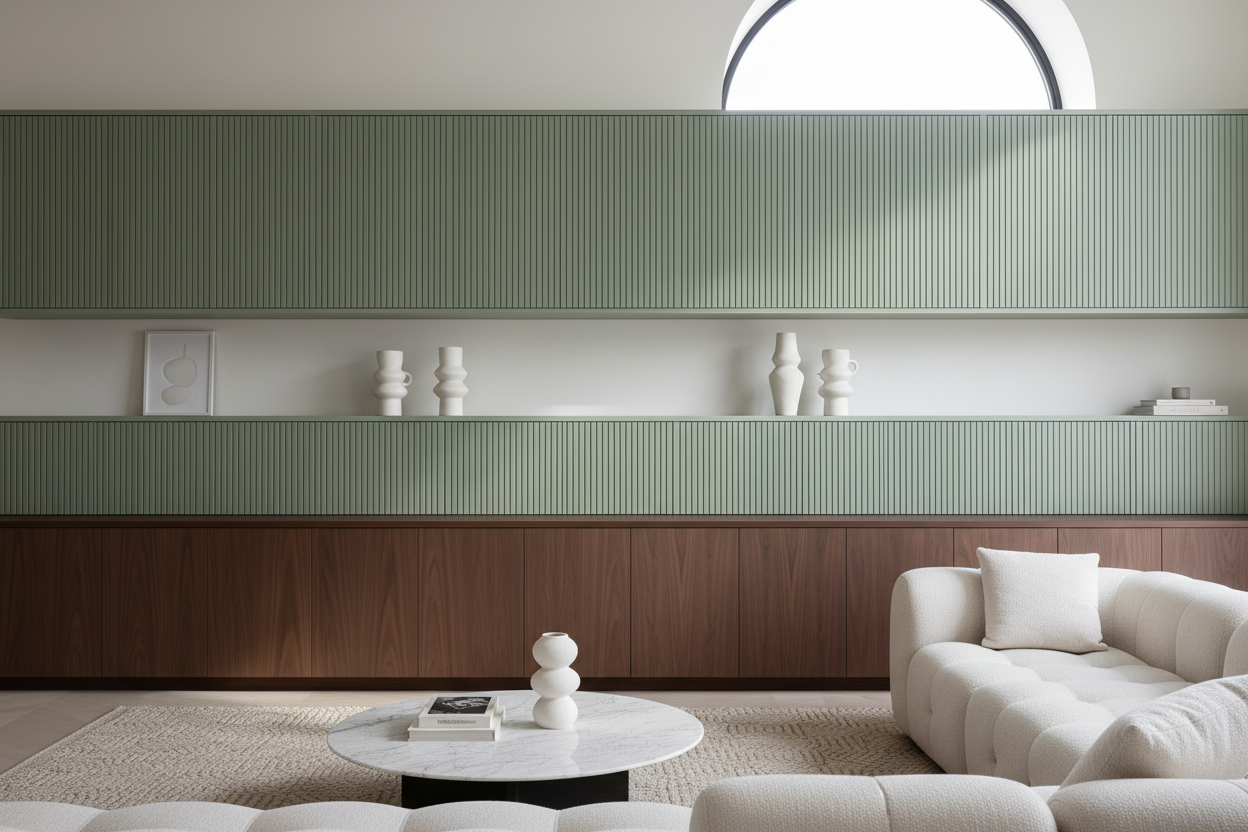
Coordinating the finishes between your open and closed sections can be tricky. If you opt for a modern transitional look, consider a monochromatic approach where both the cupboards and shelves are painted the same color as your walls. This creates a seamless, built-in illusion even with freestanding furniture. For a mid-century or organic modern vibe, try a ribbed walnut base paired with matte black metal upper framing. The contrast in texture adds architectural interest without demanding too much attention.
Material & Build Quality
Solid Wood vs. Engineered Solutions
When investing in a large storage system, pay attention to the construction of the shelves themselves. A 36-inch wide shelf made of cheap particleboard will visibly sag under the weight of heavy art books within six months. Look for solid wood, a high-quality plywood core with wood veneer, or metal-reinforced tiers. The base unit, however, can often utilize engineered wood since its structural integrity relies on the vertical dividers and back panel rather than long horizontal spans.
Designer's Honest Take
Early in my career, I designed a stunning, floor-to-ceiling open shelving wall for a client's den. It looked incredible on installation day when I styled it with three carefully placed vases and a few curated books. Fast forward two months, and it had become a dumping ground for mail, router cables, and stray dog toys. It looked chaotic.
That was the last time I recommended purely open storage for a high-traffic area. I learned the hard way that real life requires doors. Now, I always specify a shelves and cupboard unit combo. Having a drop zone where you can simply shut the door on the mess is crucial for your sanity. The downside? High-quality combination units are often more expensive than simple bookcases because hinges, doors, and drawer glides drive up the manufacturing cost. But trust me, hiding the clutter is worth every penny.
Frequently Asked Questions
What is the best way to style a shelf and cabinet combo?
Keep the heavier, less attractive items (like electronics and paperwork) in the bottom section. On the top, group items in odd numbers, mix vertical and horizontal book stacks, and leave plenty of negative space so the eye can rest.
Can I use freestanding pieces instead of built-ins?
Absolutely. You can achieve a custom look by pushing two or three matching freestanding units together. Just ensure you secure them to the wall with anti-tip hardware, especially if you have children or pets.
How deep should the upper display tiers be?
Upper display sections usually look best when they are 10 to 12 inches deep. Anything deeper tends to cast dark shadows and makes it tempting to push items to the back, which ruins the styled aesthetic.

Leave a comment
This site is protected by hCaptcha and the hCaptcha Privacy Policy and Terms of Service apply.