

















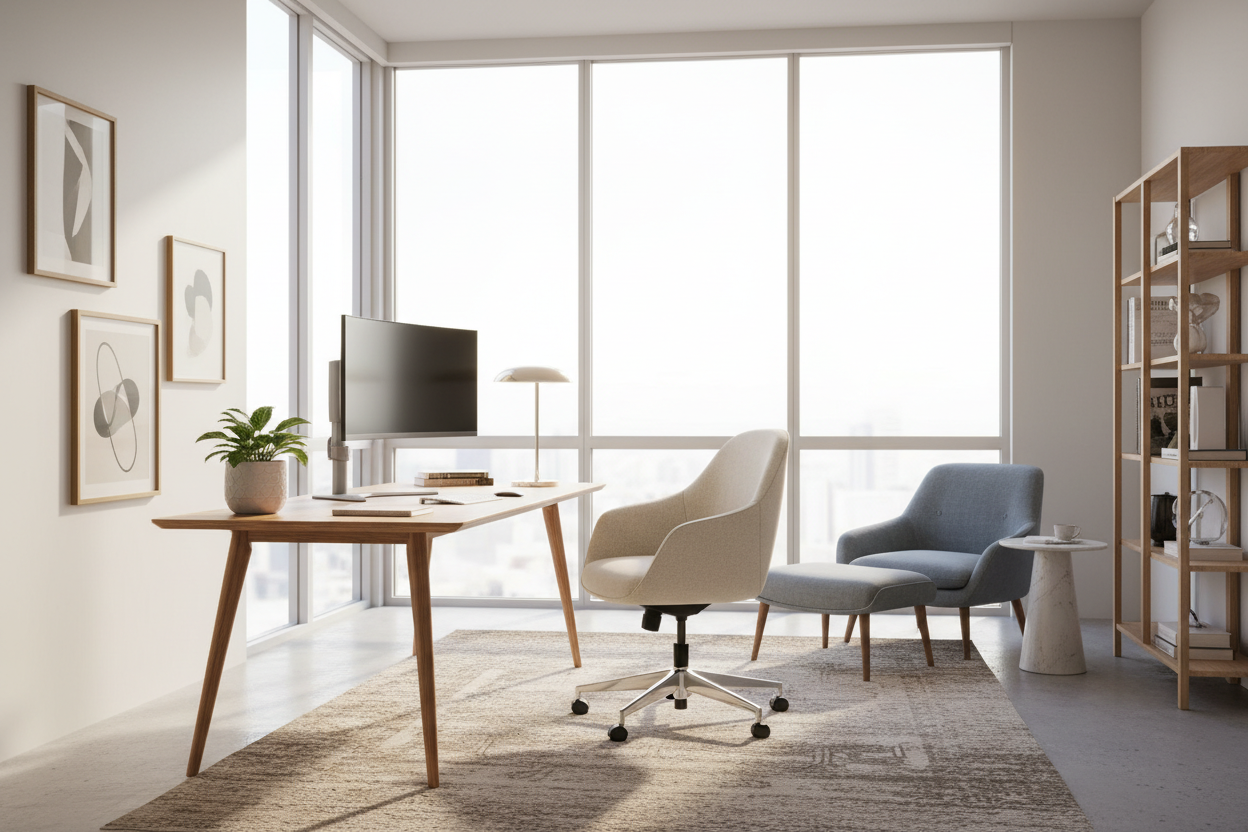
We have moved past the era where a laptop on the kitchen island suffices as an office. The blurred lines between rest and productivity often lead to burnout, physical discomfort, and a cluttered mind. As a designer, I tell my clients that setting up work from home space is not just about buying a desk; it is about carving out a sanctuary that respects your professional integrity while harmonizing with your home’s existing aesthetic. It requires a thoughtful approach to ergonomics, acoustics, and visual weight.
Key Features to Look For
Before purchasing furniture or choosing a paint color, consider these foundational elements to ensure your space performs as well as it looks:
- Ergonomic Integrity: Prioritize chairs with lumbar support and desks at the correct typing height (typically 28-30 inches) to prevent fatigue.
- Lighting Layers: Ensure a mix of ambient (overhead) and task lighting (lamp) to reduce eye strain and eliminate screen glare.
- Material Durability: Select desk surfaces that resist heat from electronics and are smooth enough for writing but durable enough to withstand daily wear.
- Acoustic Control: Incorporate soft furnishings like rugs or curtains to dampen echo and create a quieter environment for calls.
Zoning: Defining the Work From Home Room
Whether you have a dedicated room or a multi-purpose corner, establishing a clear zone is critical. In design terms, we look at the "negative space" around the furniture as much as the pieces themselves. When creating a work from home space, avoid facing a wall directly if possible. This is often referred to as the "command position." Positioning your desk to face the door or into the room allows for better energy flow and reduces the subconscious stress of having your back to the activity of the house.
If you are working within a shared living area, use an area rug to visually anchor the "office" zone. This psychological boundary signals to your brain—and your family—that when you are on the rug, you are at work.
Materiality: Solid Wood vs. Veneer vs. Laminate
The tactile experience of your workspace matters. When advising on how to set up work from home space, I urge clients to think about the surface they touch for eight hours a day.
Solid Wood
Solid wood offers unmatched warmth and longevity. It develops a patina over time that adds character. However, be mindful of humidity; solid wood expands and contracts. If you live in a climate with drastic temperature shifts, ensure the desk construction allows for this movement to avoid warping.
High-Quality Veneer
Veneer provides the look of exotic woods without the weight or cost. In a luxury home office, a walnut veneer desk can offer a sleek, mid-century modern silhouette that feels sophisticated. Ensure the substrate is high-density fiberboard (HDF) rather than particle board for longevity.
Performance Laminates
For high-traffic spaces or homes with children, high-pressure laminates (HPL) have come a long way. Matte finishes can mimic the look of slate or wood grain while being impervious to coffee rings and scratches. It is the pragmatic choice for a heavy-duty work from home room.
Lighting: The Invisible Architecture
Lighting is often the most undervalued investment. A single overhead ceiling fixture creates unflattering shadows and eye strain. To achieve a showroom-quality look and professional function, you need three layers:
- Ambient: Soft, general illumination.
- Task: An articulated desk lamp with a CRI (Color Rendering Index) above 90 to show true colors.
- Accent: A small lamp on a bookshelf or LED strips behind a monitor to reduce contrast ratios and soften the room's mood.
My Personal Take on setting up work from home space
I once specified a gorgeous, reclaimed rough-sawn oak desk for a client's home office. Visually, it was stunning—rich texture, incredible depth, and it anchored the room perfectly. Two weeks later, the client called me. Their mouse wouldn't track properly on the uneven grain, and writing a quick note on a single sheet of paper resulted in shaky, illegible script because of the ridges in the wood.
We had to commission a custom leather blotter to fix the issue, covering up a good portion of that beautiful wood. It was a humbling reminder that in a workspace, function cannot take a backseat to form. Now, when I design a space, I always run the "fingernail test" on surfaces. If I can feel a ridge, it’s not a primary work surface, no matter how beautiful it looks in a catalog. Additionally, I’ve learned to avoid high-gloss finishes on desktops; the reflection from overhead lights or monitors creates a glare that guarantees a headache by 2:00 PM.
Conclusion
Your home office should be a reflection of your professional standards and your personal style. By investing in the right materials, prioritizing layout flow, and layering your lighting, you transform a simple room into a productivity powerhouse. Don't settle for a temporary setup; build a space that invites you to do your best work.
Frequently Asked Questions
How do I set up a workspace in a small bedroom?
Focus on verticality. Use a wall-mounted ladder desk or shelving unit with a drop-down surface. This keeps the floor footprint minimal and draws the eye upward, making the room feel larger while maintaining functionality.
What is the best color temperature for office lighting?
Aim for 3500K to 4000K. This creates a bright, neutral white light that mimics daylight and promotes alertness. Anything lower (2700K) is too yellow and relaxing, while anything higher (5000K+) can feel sterile and harsh.
Is a standing desk worth the investment for a home design?
Yes, but aesthetics can be a challenge. Look for standing desks that conceal the motor mechanisms within the legs and offer wood-look tops. Alternatively, use a high-quality converter that sits atop a traditional desk if you have a vintage piece you love.

Leave a comment
This site is protected by hCaptcha and the hCaptcha Privacy Policy and Terms of Service apply.