

















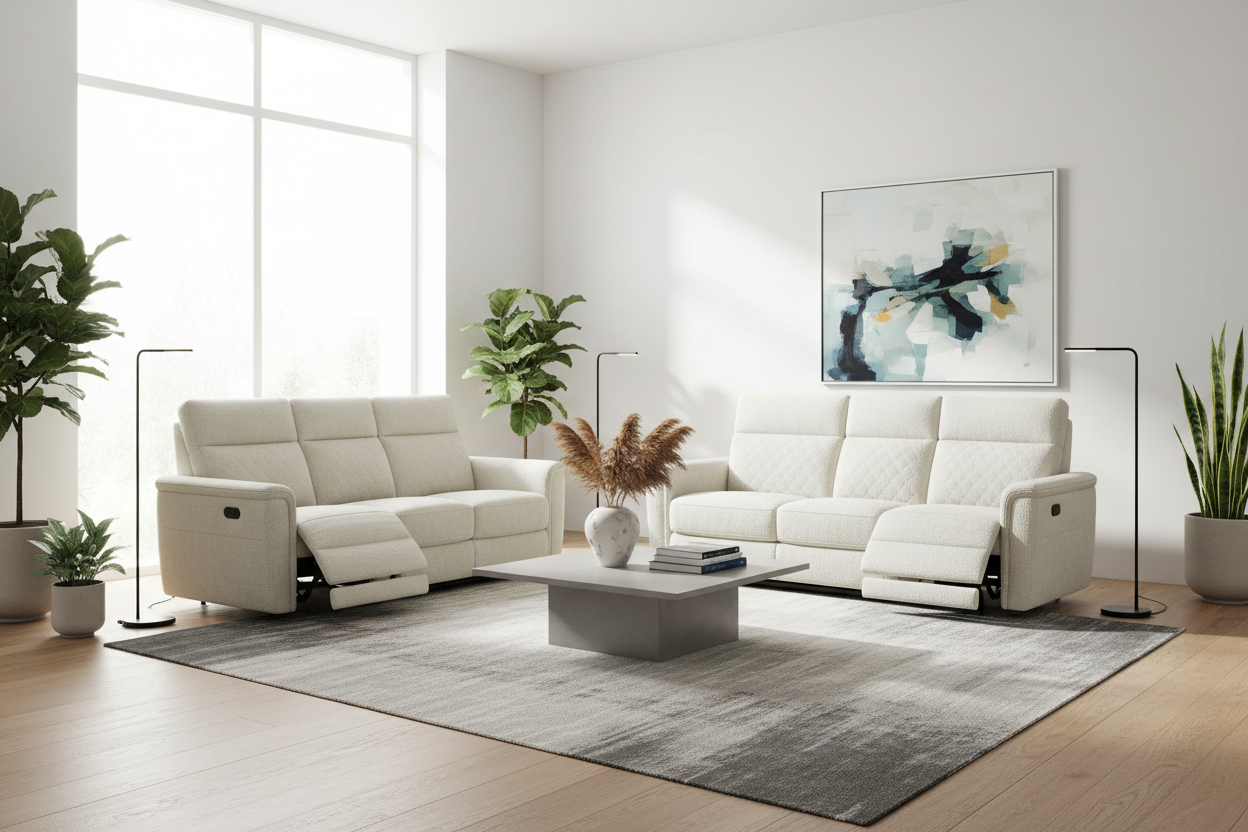
For years, there has been a silent war in interior design: the battle between the sleek aesthetic of a formal living room and the undeniable comfort of motion furniture. Many of my clients hesitate to admit they want a recliner, fearing it will disrupt the visual flow of their space with bulky silhouettes and clunky levers. However, the modern settee recliner has undergone a massive transformation. It is no longer just a functional necessity but a legitimate design statement. This guide is designed to help you navigate the nuances of mechanism, material, and scale, ensuring you don't have to sacrifice style for that Sunday afternoon nap.
Key Features to Look For
- Kiln-Dried Hardwood Frames: Essential for preventing warping over time, especially given the stress moving mechanisms place on the frame.
- Wall-Hugger Mechanisms: A non-negotiable for smaller rooms; allows the piece to recline fully while placed just inches from a wall.
- High-Resiliency Foam (2.0 density or higher): Prevents the seat from looking "collapsed" or sloppy after a year of use.
- Suspension System: Look for sinuous springs or eight-way hand-tied coils for longevity.
- Battery Pack Options: Critical for floating layouts so you aren't tethered to a wall outlet.
Analyzing the Silhouette and Visual Weight
When sourcing recliner sofas or settees, the biggest mistake homeowners make is ignoring visual weight. A standard motion sofa often extends all the way to the floor to hide the metal mechanism underneath. This can make a room feel heavy and crowded.
To counter this, look for a settee recliner with a "high-leg" design. These models use a folding mechanism that tucks neatly away, allowing the piece to sit on wooden or metal legs. This negative space underneath the furniture allows light to travel through the room, making your footprint appear larger and the design more intentional.
Material Selection: Beyond Aesthetics
The friction caused by reclining creates wear patterns that stationary furniture simply doesn't face. When browsing sofas reclining options, you must prioritize abrasion resistance.
Leather vs. Fabric
Top-grain leather is traditionally the gold standard because it moves with the mechanism without bunching. However, if you prefer the warmth of fabric, avoid loose weaves like linen, which can snag in the moving parts. Instead, opt for a tight-weave performance velvet or a cryptic-treated chenille. These offer a luxurious tactile experience while hiding the inevitable creases that occur where the footrest meets the seat.
Ergonomics and Pitch
A beautiful chair is useless if it hurts your back. Unlike a standard sofa, a settee recliner needs to support the body in multiple positions. Pay close attention to the "pitch" (the angle of the seat) when the unit is closed. Some poorly designed recliners have a pitch that leans too far back, forcing you to crane your neck to watch TV when upright. Look for an articulate headrest—often powered—that allows you to adjust your cervical support independently of the footrest.
Lessons from My Own Projects
I want to share a specific detail that rarely makes it into the glossy brochures. A few years ago, I installed a stunning, high-end leather settee recliner for a client in a minimalist loft. It looked sculptural and perfect.
However, three months later, the client called about "puddling." Because they used the recliner every single evening, the leather on the seat cushion had stretched and created a loose wave or "puddle" in the center. This is a natural characteristic of genuine leather—it stretches but doesn't spring back like synthetic blends.
Now, I always warn clients: if you want that drum-tight, showroom look to last forever, leather might drive you crazy on a motion piece. If you choose leather, accept that it will develop a patina and a relaxed, lived-in shape. If you are a perfectionist about clean lines, a high-quality textured weave is actually the safer bet for maintaining structure over time.
Conclusion
Incorporating a settee recliner into your home doesn't mean admitting defeat to bulky furniture. By focusing on high-leg silhouettes, durable tight-weave fabrics, and proper scale, you can curate a space that is as inviting as it is sophisticated. Trust the measurements, respect the materials, and enjoy the downtime.
Frequently Asked Questions
How much clearance do I need behind a settee recliner?
Standard recliners need about 12 to 18 inches of wall clearance. However, if you choose a "zero-wall" or "wall-hugger" model, you can get away with as little as 3 to 5 inches, making them ideal for urban apartments.
Is a power recliner better than a manual one?
From a design standpoint, power is superior because it allows for infinite stopping positions, whereas manual levers usually only have two or three set angles. Power options also eliminate the unsightly handle on the side of the arm.
Can I place a settee recliner in the center of a room?
Absolutely, but you must plan for power. If you choose a power model, ensure you purchase a rechargeable battery pack. Nothing kills the look of a luxury living room faster than a black power cord snaking across a rug to the nearest outlet.

Leave a comment
This site is protected by hCaptcha and the hCaptcha Privacy Policy and Terms of Service apply.