
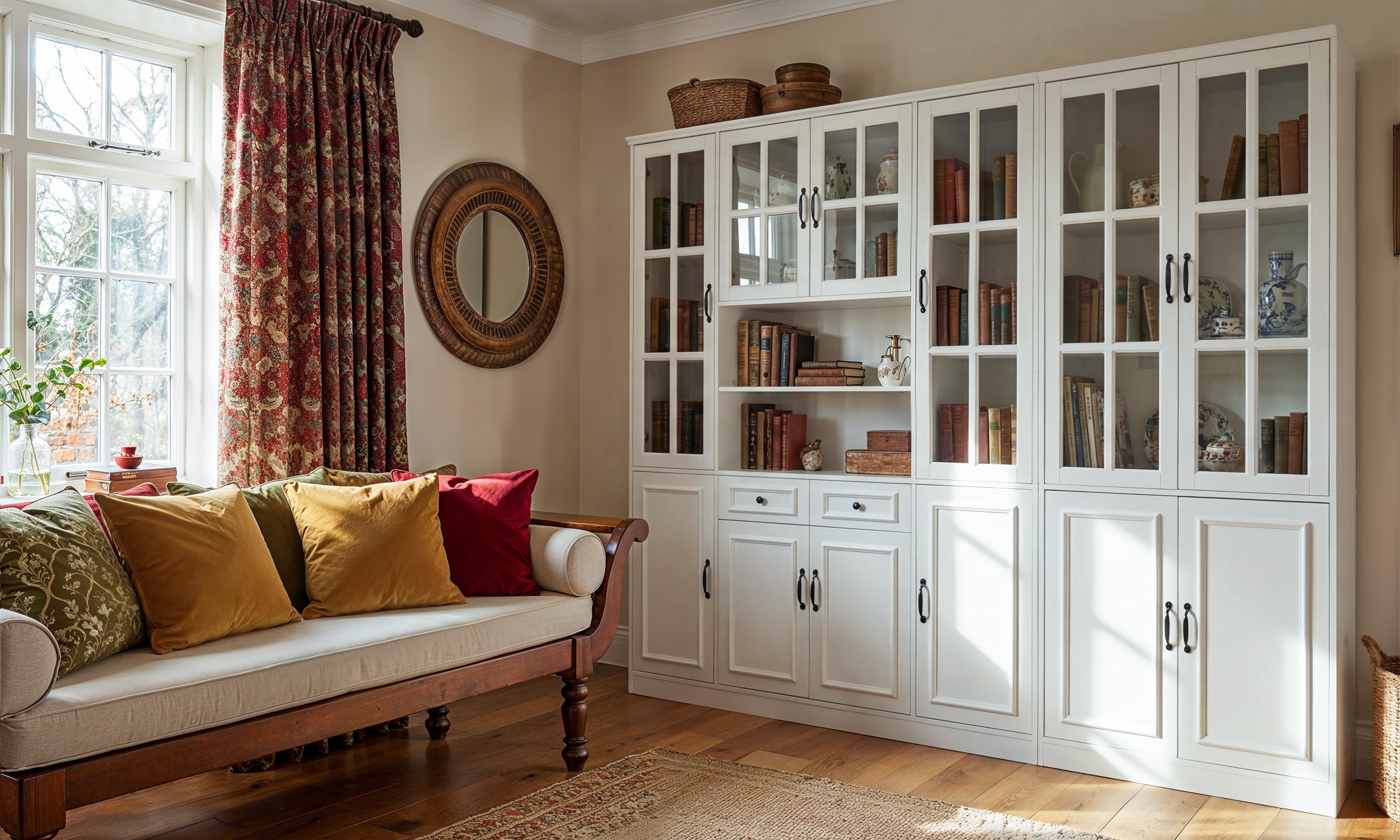




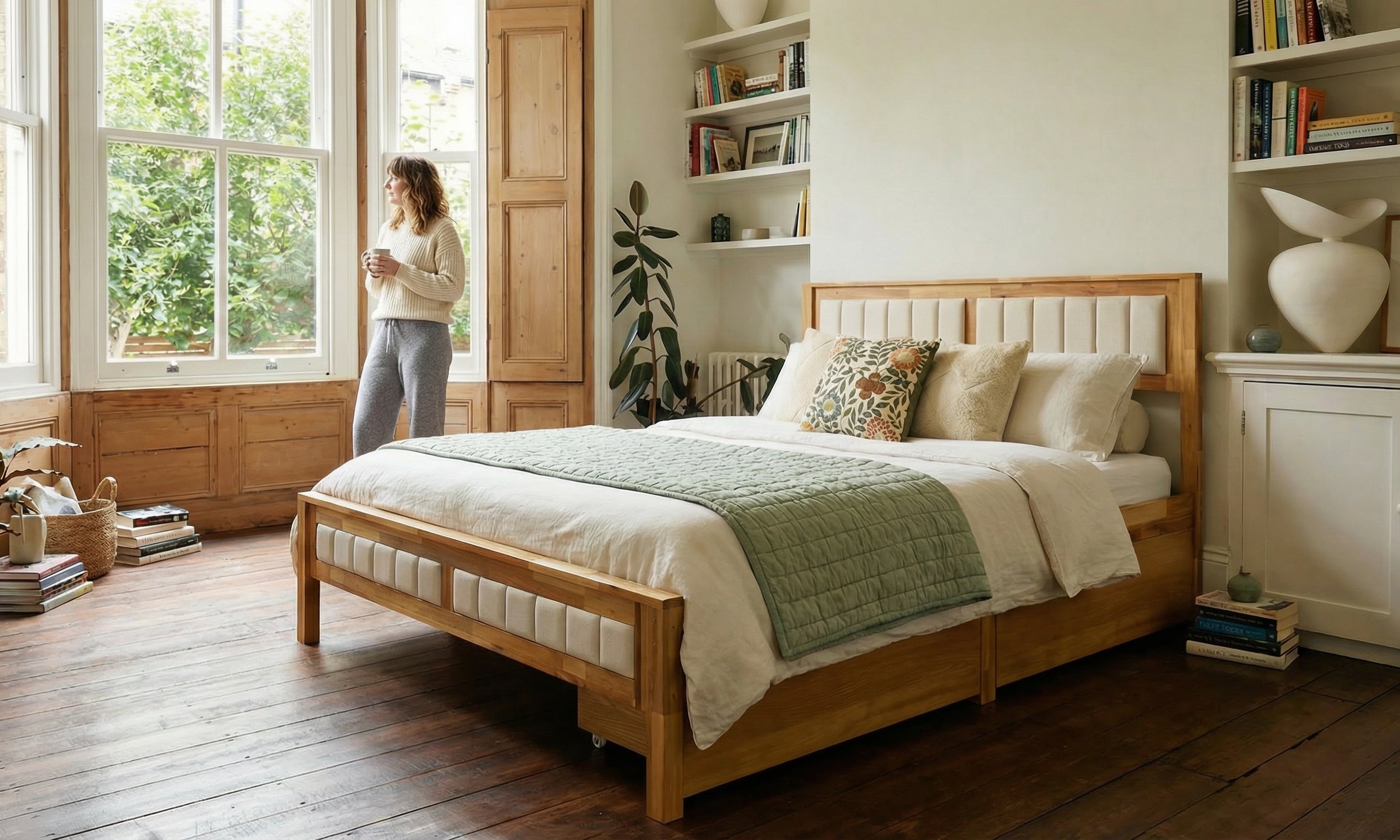
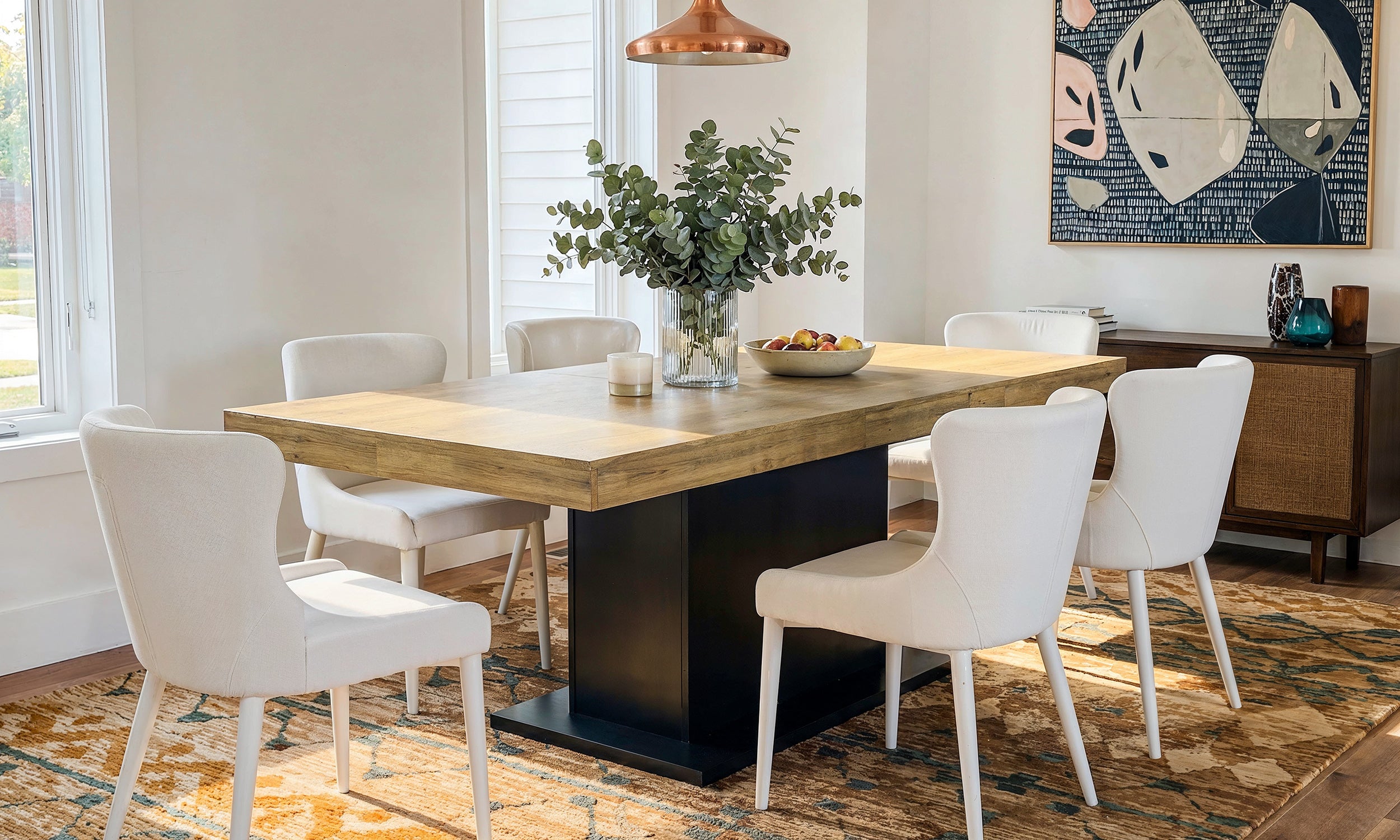
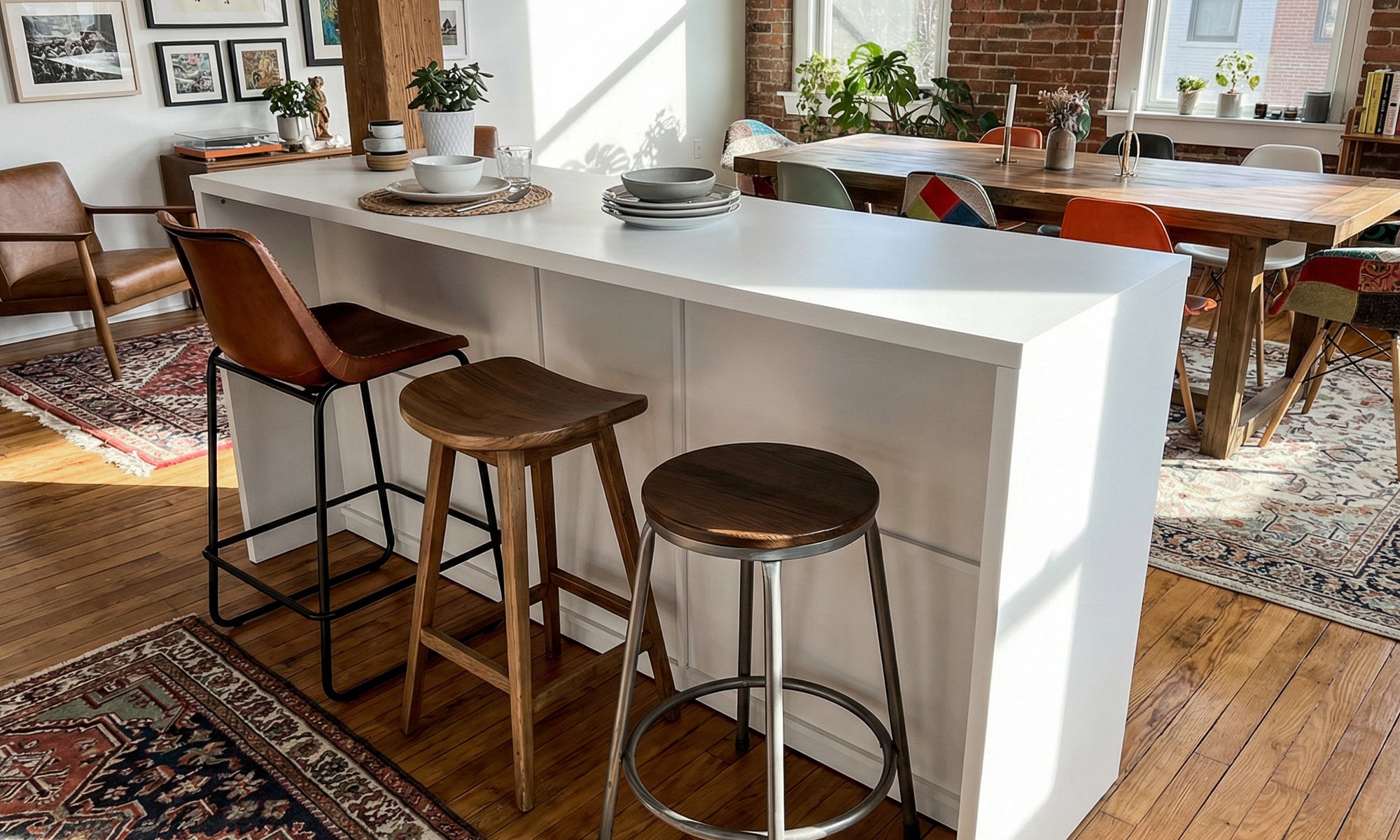




Every nail hole has a history. Every grain line survived a century. Here's how to bring that kind of story into your home — and why it might be the smartest furniture purchase you make.
There's a certain quality that no factory can produce and no finish can replicate. It's the silvery patina of barn wood that spent a hundred years under prairie sun. The dense, resin-rich grain of old-growth pine pulled from a nineteenth-century textile mill. The faint sweetness still trapped in oak staves from a retired bourbon barrel.
Salvaged wood — also called reclaimed wood — carries the unmistakable presence of time. And in 2026, it's no longer a niche material for rustic farmhouses. It has become one of the most sought-after elements in modern interior design, showing up in sleek live-edge dining tables, minimalist floating shelves, sculptural console tables, and refined bedroom furniture. The aesthetic has evolved far beyond the reclaimed-barn-door look that dominated a decade ago. Today's salvaged wood furniture is as likely to appear in a contemporary loft as it is in a countryside retreat.
This guide covers where to find it, what to look for, what to avoid, and why a piece of salvaged wood furniture may be the best long-term investment in your home.
What Is Salvaged Wood, Exactly?
Salvaged wood is any wood that has been recovered from a previous use rather than harvested from a living tree. The sources are remarkably varied:
Structural timber from demolished buildings. This is the most common source. When old barns, factories, warehouses, schools, and homes are torn down, the heavy beams, joists, and floor planks can be recovered, de-nailed, cleaned, and remilled into furniture-grade material. Wood from pre-1900 structures is especially prized because it often comes from old-growth forests — trees that grew slowly over centuries, producing timber that is denser, more stable, and more beautifully grained than anything available from modern plantations.
Industrial salvage. Railroad ties, shipping crates, wine and whiskey barrels, factory pallets, and even decommissioned boats yield wood with unique characteristics — chemical staining from industrial use, salt exposure from maritime service, or charring from cooperage processes.
Fallen and storm-damaged trees. Urban salvage programs in many cities now recover wood from trees that have fallen due to storms, disease, or municipal removal. This "urban lumber" is often milled into slabs for live-edge furniture, keeping valuable hardwood out of landfills and chippers.
Renovation remnants. Old hardwood flooring, wainscoting, doors, and window frames removed during home renovations can be repurposed into smaller furniture pieces, shelving, and decorative elements.
The common thread is that none of this wood was harvested for the purpose of becoming furniture. It has already served one life — sometimes several — and is being given another.
Why It's Worth the Investment
Salvaged wood furniture typically costs more than mass-produced alternatives, and it should. Here's why the premium is justified — and why it often represents better value over time.
1. Superior Material Quality
This is the most underappreciated argument for salvaged wood. Much of the reclaimed timber available today — particularly structural beams and floor planks from the nineteenth and early twentieth centuries — comes from old-growth trees. These trees grew in dense, undisturbed forests for 100 to 300 years before being harvested. The result is wood with a tighter grain, greater density, and superior dimensional stability compared to plantation-grown lumber, which typically comes from trees harvested after 20 to 40 years.
In practical terms, this means that a dining table made from a reclaimed old-growth oak beam is likely harder, more resistant to warping, and more structurally sound than a table made from new oak of the same species. You're not just buying the aesthetic of age — you're buying genuinely better raw material.
2. Irreplaceable Character
Every piece of salvaged wood is unique. The nail holes, saw marks, weathering patterns, color variations, and surface texture are physical records of a specific history — and they cannot be authentically reproduced. Factories have tried: "distressed" and "antiqued" finishes are everywhere, and they consistently fail to convince anyone who has seen the real thing. Artificial distressing is uniform and repetitive; real patina is irregular, layered, and alive.
This uniqueness means your piece is genuinely one of a kind. No one else has a table with the same grain, the same marks, the same story. In a design landscape that increasingly values personal narrative over catalogue perfection, that matters.
3. Environmental Responsibility
The environmental case for salvaged wood is straightforward and compelling. Every piece of reclaimed furniture represents wood that was diverted from a landfill and wood that didn't need to be cut from a living forest. The carbon that was sequestered in the original tree remains locked in the timber rather than being released through decomposition or burning. And the energy-intensive processes of logging, transportation, and initial milling are entirely bypassed.
The global eco-friendly furniture market is growing rapidly — projected to reach roughly $84 billion by 2030 — and reclaimed wood is a major driver of that growth. Choosing salvaged isn't just an aesthetic decision. It's one of the most concrete environmental actions a homeowner can take.
4. Long-Term Value Retention
Mass-produced furniture depreciates the moment you bring it home. A particle-board bookshelf from a big-box retailer will be worth nothing in five years and will likely be in a landfill in ten.
Salvaged wood furniture moves in the opposite direction. Well-made pieces maintain or increase in value over time, particularly as the supply of genuine old-growth reclaimed timber continues to shrink. A custom dining table built from century-old heart pine isn't just functional — it's an asset. And unlike most furniture, it can be sanded, refinished, and reconfigured for a new life if your tastes or needs change, rather than being replaced entirely.
5. Craftsmanship by Default
Because salvaged wood is irregular — variable in dimension, density, moisture content, and condition — it cannot be processed on high-speed automated production lines. It requires skilled hands: someone who knows how to read the grain, identify structural weaknesses, remove embedded hardware without damaging the wood, and build joinery that accommodates the material's quirks.
This means that most salvaged wood furniture is made by small workshops and independent artisans rather than factories. When you buy it, you're not just purchasing a product — you're supporting a craft tradition and a local economy. The piece was touched by human hands at every stage of its creation, and that shows in the finished product.
Where to Find Salvaged Wood Furniture
Architectural Salvage Yards
These are the original source and still the best for serious buyers. Architectural salvage yards specialize in recovering materials from demolished and renovated buildings — everything from massive structural beams to delicate trim pieces, old doors, mantels, and flooring.
Many salvage yards now employ in-house woodworkers who transform raw reclaimed material into finished furniture, or they can connect you with local craftspeople who do. Visiting a salvage yard is an experience in itself: the inventory changes constantly, and the best finds go to those who visit regularly and build relationships with the staff.
Notable examples exist across the country. Searching "architectural salvage" plus your city or region will typically surface several options. If you're in a major metro area, you may have multiple yards to choose from, each with different specialties and price points.
Best for: One-of-a-kind pieces, raw material for custom projects, unusual finds with serious provenance.
Expect to pay: Highly variable. Raw beams and planks can be surprisingly affordable; finished pieces range from moderate to premium depending on the wood species, age, and craftsmanship.
Specialty Reclaimed Furniture Makers
A growing number of small studios and workshops specialize exclusively in building furniture from salvaged wood. These makers typically source their own timber — often maintaining relationships with demolition companies, barn deconstruction crews, and urban forestry programs — and build everything in-house or with a small team.
Companies like Urban Wood Goods, What WE Make, Elsie Green, and dozens of regional artisans operate in this space. Many offer both standard designs and full custom work, allowing you to specify dimensions, wood species, finish, and base style. Lead times for custom pieces typically run four to twelve weeks.
Best for: Dining tables, desks, shelving, bed frames, and other substantial pieces where you want to choose the specific wood and dimensions.
Expect to pay: $800–$3,000 for smaller pieces (coffee tables, shelving); $2,000–$8,000+ for large dining tables and custom work.
Curated Online Marketplaces
Several online platforms have become reliable sources for salvaged wood furniture, each serving a slightly different market.
Etsy is the broadest marketplace, with thousands of artisans offering reclaimed wood pieces at every price point. Quality varies enormously — from exceptional one-person workshops to mediocre drop-shippers using faux-distressed imported wood. The key is to read seller reviews carefully, ask about wood provenance, and request detailed photographs.
1stDibs occupies the luxury end. Their reclaimed and salvaged wood furniture category includes over 4,000 pieces, vetted by the platform and sourced from established dealers worldwide. Prices reflect the premium positioning, but the quality and provenance are generally reliable.
Chairish sits between Etsy and 1stDibs — a curated marketplace where listings are reviewed before being published. It's particularly strong for vintage furniture that incorporates reclaimed or antique wood elements. Their 48-hour return policy provides some buyer protection.
Facebook Marketplace and Craigslist are the wild cards. You can find remarkable deals on genuine reclaimed pieces from homeowners, estate sales, and small-time makers — but there's no curation or quality control. Inspect in person before purchasing whenever possible.
Best for: Browsing from home, comparing styles and prices across multiple makers, finding both budget and luxury options.
Expect to pay: Ranges from under $200 for small accent pieces on Etsy to $20,000+ for museum-quality live-edge tables on 1stDibs.
Major Retailers with Reclaimed Lines
Several mainstream furniture retailers now offer reclaimed wood collections, making salvaged wood accessible to buyers who prefer the convenience and return policies of established brands.
Pottery Barn carries a reclaimed wood line featuring dining tables, media consoles, and bed frames built from salvaged pine. West Elm offers pieces made from reclaimed and certified-sustainable wood. Restoration Hardware (RH) has long featured salvaged wood in its collections, though at a significant premium.
The tradeoff with major retailers is consistency versus character. Their pieces are well-made and reliably finished, but the wood is typically processed to be more uniform — much of the wild character that makes salvaged wood special may be sanded, stained, or sealed into a more predictable appearance.
Best for: Buyers who want the warmth of reclaimed wood with the convenience, warranty, and consistent quality of a major retailer.
Expect to pay: $500–$4,000 depending on size and brand.
Direct from Demolition and Deconstruction
For the most adventurous buyers, sourcing directly from demolition sites or deconstruction crews offers the lowest prices and the most authentic material. Many demolition companies are happy to sell or even give away salvageable timber rather than paying to haul it to a landfill.
This approach requires more effort — you'll need to de-nail, clean, and possibly kiln-dry the wood before it's usable, or find a local workshop willing to work with your material. But the result is a piece with provenance you can trace to a specific building, sometimes in your own neighborhood.
Best for: DIY-inclined buyers, those working with a local craftsperson, and anyone who wants to know the exact origin story of their wood.
Expect to pay: Often just the cost of labor to remove and transport the wood, plus the cost of milling and fabrication.
What to Look For (and What to Avoid)
Signs of Quality
Provenance. A reputable seller should be able to tell you where the wood came from — not just "a barn in Pennsylvania" but ideally the approximate age, species, and original use. Documented provenance isn't just interesting; it's the difference between genuine reclaimed wood and artificially distressed new lumber.
Sound joinery. Look for traditional construction methods — mortise-and-tenon joints, dovetails, and solid wood-to-wood connections. These indicate a maker who respects the material enough to build furniture that will last as long as the wood itself. Screws and brackets alone, without proper joinery, suggest a piece built for appearance rather than longevity.
Appropriate finish. The best salvaged wood furniture uses finishes that protect the wood without burying its character. Look for natural oils, hard wax, matte polyurethane, or low-sheen lacquer. Avoid heavy-gloss finishes that make reclaimed wood look like it's encased in plastic, defeating the entire purpose.
Structural integrity. Inspect for cracks, splits, and checks that go all the way through the wood (surface checks are normal and add character; structural splits compromise strength). Check that the piece sits level and that joints are tight. Wobble in a new piece will only get worse over time.
Red Flags
"Reclaimed look" without verification. If a seller can't tell you where the wood came from or hedges when asked directly, the wood may be new lumber that has been artificially distressed. This is increasingly common and essentially amounts to paying a premium for a cosmetic effect.
Strong chemical odors. Salvaged wood should smell like wood — maybe slightly musty if it's been stored. Strong chemical smells may indicate heavy pesticide treatment, toxic finishes, or wood sourced from industrial environments where it absorbed harmful substances.
Suspiciously low prices on "reclaimed" pieces. Genuine reclaimed wood furniture involves significant labor — sourcing, transporting, de-nailing, cleaning, milling, building, and finishing. If a large piece is priced like mass-produced furniture, it probably is mass-produced furniture with a distressed finish.
No information about the maker. The best salvaged wood furniture comes from identifiable humans — people with workshops, portfolios, and reputations. Anonymous "reclaimed wood" pieces sold through generic online stores deserve extra scrutiny.
How to Style Salvaged Wood in a Modern Home
The days when reclaimed wood meant "rustic farmhouse" are over. In 2026, salvaged wood is being used across every design style, from minimalist to industrial to organic modern. The key is context.
With Modern Materials
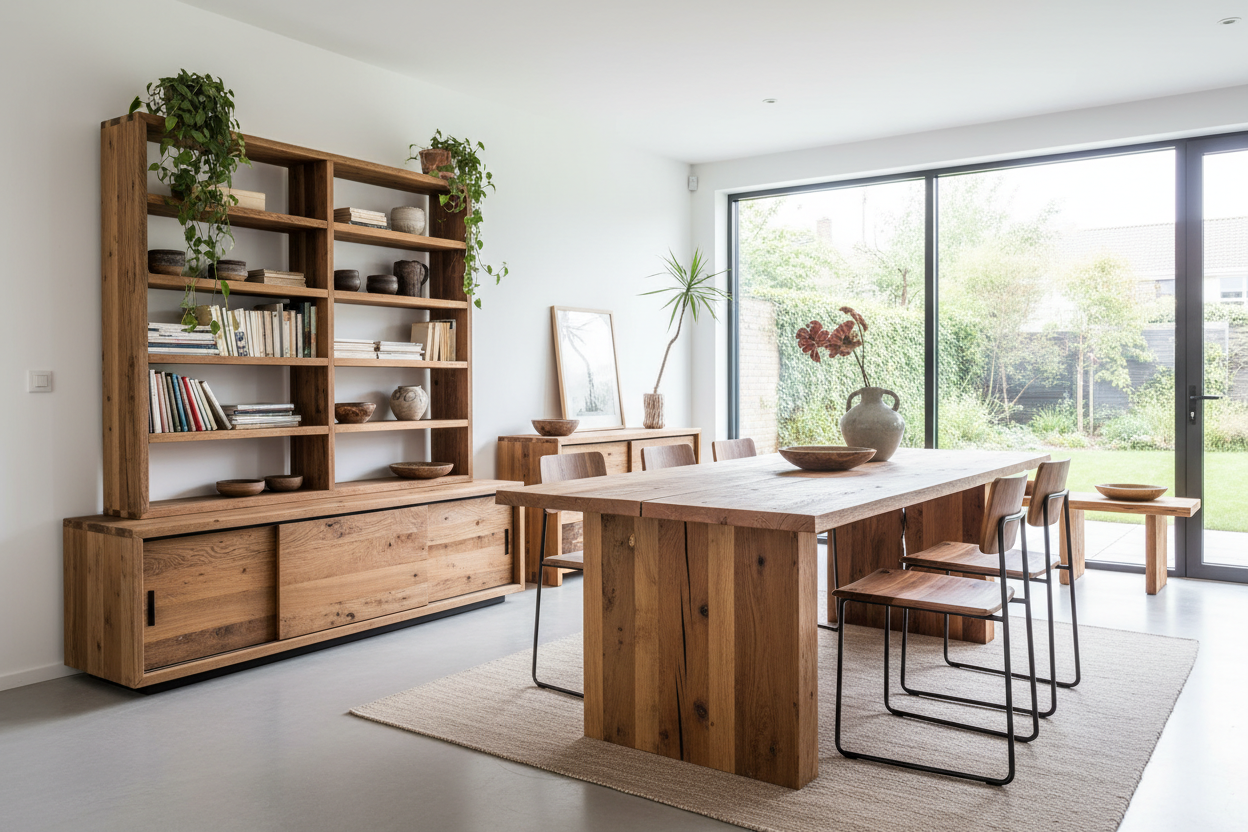
Salvaged wood gains energy from contrast. A reclaimed beam shelf against a smooth plaster wall. A live-edge dining table on a polished concrete floor. A weathered-oak console beneath a contemporary abstract painting. The juxtaposition between old and new, rough and refined, is where the visual tension lives — and it's that tension that makes a room feel dynamic rather than thematic.
With Warm Neutrals
Salvaged wood is a natural partner for the warm neutral palettes dominating 2026 interiors. The golden and brown tones in aged oak, pine, and chestnut harmonize with wall colors like beige, taupe, warm gray, and soft cream. The combination creates rooms that feel layered and enveloping without the visual noise of competing colors.
As a Single Statement
One of the most effective approaches is restraint — using a single substantial piece of salvaged wood furniture as the room's anchor. A reclaimed dining table. A live-edge headboard. A massive floating mantel above a fireplace. When the piece is allowed to be the focal point rather than one of many reclaimed elements, its character reads as intentional rather than themed.
With Textiles and Soft Goods
Natural textiles amplify salvaged wood's warmth. Linen, wool, cotton, jute — these fibers share the same organic vocabulary. A reclaimed wood bench with a linen cushion. A salvaged-oak desk paired with a wool runner. The combination engages touch as well as sight, creating spaces that feel as good as they look.
Caring for Salvaged Wood Furniture
Reclaimed wood is, by definition, durable — it has already survived decades or centuries. But proper care ensures it continues to age gracefully in your home.
Daily care is simple: dust regularly with a soft, dry cloth. Use coasters and placemats to prevent water rings, especially on oil-finished surfaces.
Periodic maintenance depends on the finish. Oil-finished pieces benefit from a fresh coat of natural furniture oil once or twice a year — a process that takes about thirty minutes and makes the wood look freshly alive. Hard-wax and polyurethane finishes require less frequent attention; a wax refresh every year or two is usually sufficient.
The golden rule for reclaimed wood: don't stress about minor dings, scratches, or marks. On new furniture, a scratch is damage. On salvaged wood, it's just another line in a story that's already a century long. The wood was imperfect when you bought it, and that imperfection is the point. Let it live.
The Bigger Picture
In a furniture market dominated by pieces designed to last three to five years before replacement, salvaged wood furniture offers something fundamentally different: permanence. A table built from a two-hundred-year-old beam isn't going to wear out in your lifetime, or your children's lifetime, or their children's.
That permanence carries a sustainability argument that goes beyond the recycled-material story. The most sustainable piece of furniture is the one you never have to replace. When you invest in a piece of salvaged wood furniture, you're not just buying something beautiful — you're stepping off the cycle of disposable consumption entirely.
The nail holes, the saw marks, the weathered grain, the faint scent of another era — these aren't cosmetic details. They're evidence that this material has already proven itself. It has stood for a century, been taken apart with care, and been reassembled with skill into something new. There is no better testament to the enduring value of real materials, honest craftsmanship, and the simple decision to choose well once rather than replacing often.


Leave a comment
This site is protected by hCaptcha and the hCaptcha Privacy Policy and Terms of Service apply.