

















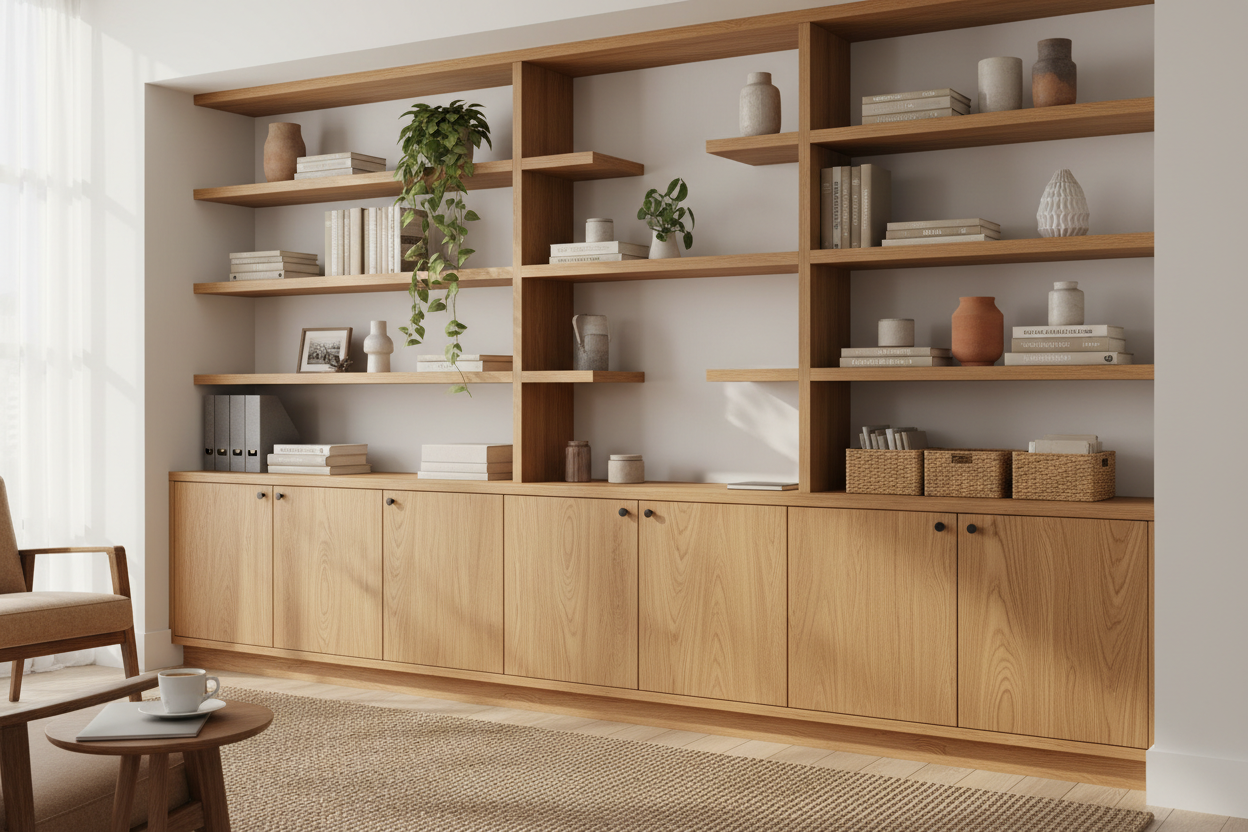
Effective home organization relies on a strategic balance between concealment and display. The most functional spaces typically utilize a hybrid approach, blending closed cabinetry to hide visual clutter with open shelving to maintain an airy, accessible atmosphere. Choosing the right combination depends entirely on your specific inventory—items you use daily should be easy to grab, while seasonal or unsightly goods belong behind solid doors. Understanding this workflow is the first step before you even pick up a drill or browse a catalog.
The Reality of Living with Open vs. Closed Storage
I learned the hard way that aesthetic trends often clash with practical living. A few years ago, caught up in the farmhouse design craze, I tore down the upper cupboards in my kitchen and replaced them with thick, reclaimed wood floating shelves. It looked incredible for exactly three days. By day four, I realized that my mismatched coffee mugs and plastic sippy cups didn't belong in a magazine spread. More importantly, the dust mixed with cooking grease created a grime on the plates I didn't use frequently. I spent more time cleaning the storage than using it.
This experience highlighted the crucial distinction between cabinets and shelving. Cabinets are the workhorses of the home. They provide a uniform look and, crucially, they shut. You can stash a blender, a stack of bills, or a tangle of charging cables inside, close the door, and the room instantly feels cleaner. They reduce what designers call "visual noise." If your brain has to process every label on every spice jar, the room feels chaotic.
Shelving, conversely, serves a different purpose. It opens up a room, making small footprints feel larger because the eye can travel all the way to the wall. It forces you to be curated. You place items there that bring you joy or that you use so rapidly they don't have time to gather dust. The magic happens when you stop viewing them as mutually exclusive and start integrating cabinets & shelving into a single system.
Strategic Placement for Different Zones
Every room has a different tolerance for clutter and a different requirement for accessibility. Designing a living room built-in requires a different logic than outfitting a garage workshop.
The Kitchen Ecosystem
In the kitchen, the lower zone is almost always best suited for drawers and cabinets. Heavy pots, pans, and small appliances are difficult to lift from high places and unsightly to leave out. Upper walls are where you can experiment. A popular modern configuration involves running cabinets up to the ceiling on one wall (the pantry wall) to handle the bulk storage, while using open shelving around the sink or window area. This prevents the "tunnel effect" that happens when a galley kitchen is lined with heavy boxes on both sides.
Living Areas and Home Offices
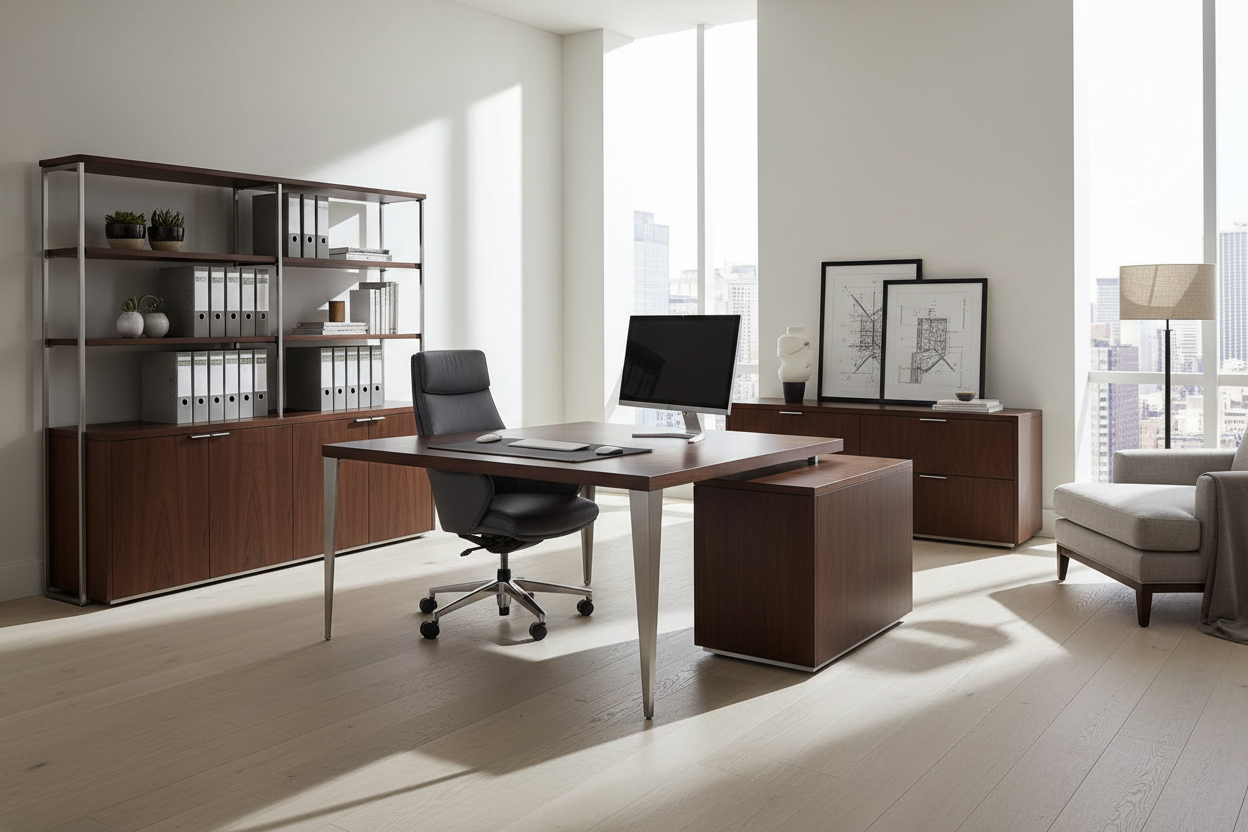
Living rooms demand a mix. Lower cabinets act as an anchor, hiding gaming consoles, routers, and board games. Above waist height, bookshelves allow for personality. This is where you display books, plants, and art. The combination of cabinets and shelving here serves an architectural purpose as well; it can frame a fireplace or a television, turning a blank wall into a focal point. In a home office, closed storage is vital for paperwork. Filing cabinets don't need to look industrial; they can be concealed behind beautiful wood doors, while shelves above hold reference materials.
Material Matters: Weight and Durability
A common mistake DIYers make is underestimating the weight of their possessions. Books, ceramic dishware, and canned goods are incredibly heavy. If you are installing long spans of shelving, the material choice dictates the structural integrity. Particle board, often found in budget-friendly flat-pack furniture, will sag over time if the span is too wide without support. It acts like a slow-motion hammock under the weight of hardcovers.
Plywood and solid wood offer superior rigidity. For cabinets & shelving intended to hold heavy loads, look for ¾-inch thickness as a standard. If you are building a custom unit, plywood with a solid wood face frame provides the best balance of cost and strength. Metal shelving units are the gold standard for garages and basements where humidity might compromise wood products, but they rarely fit the aesthetic of a main living space.
Installation and Safety Considerations
Gravity is constant, and leverage is powerful. Whether you are hanging a single floating shelf or a heavy wall cabinet, anchoring into studs is non-negotiable. Drywall anchors have their place for light picture frames, but they should not be trusted with cabinets and shelving that will hold breakable items or sit above head height.
When installing cabinets, the process usually starts from the high point of the floor (floors are rarely perfectly level) and uses shims to ensure the boxes are plumb and level. If the cabinets are twisted during installation, the doors will never sit right, and the hinges will bind. For shelving, particularly floating styles, the hardware must be robust. Steel rods drilled into the studs provide the invisible support needed to keep the shelf from tipping forward as soon as you place a vase on the front edge.
Styling Without the Clutter
Once the installation is complete, the challenge shifts to population. How do you fill shelves without creating a mess? The rule of thirds is a helpful guideline. One-third of the shelf should be books or storage items, one-third should be decorative objects, and one-third should be empty space. That negative space is what prevents the shelf from looking like a garage sale.
For the cabinets, internal organization is key. Just because you can close the door doesn't mean the inside should be a disaster. utilizing pull-out trays, lazy Susans, and vertical dividers maximizes the cubic footage inside the dark corners of a cabinet. This ensures that the items in the back are just as accessible as the items in the front.
Making the Decision
Assess your habits honestly. If you are naturally disorganized and hate dusting, lean 80% toward closed cabinets. If you have a collection you love and are disciplined about putting things back exactly where they belong, increase your ratio of open shelving. The goal is a home that functions for you, not one that forces you to change your behavior to suit the furniture.
Frequently Asked Questions
Is it cheaper to install open shelving or upper cabinets?
Open shelving is generally significantly cheaper than upper cabinets because it requires less material, no hardware (hinges/handles), and less labor to construct. However, you may spend more on decorative containers or matching dishware to make the open shelves look presentable.
How deep should shelves be compared to cabinets?
Standard upper wall cabinets are usually 12 inches deep, while lower base cabinets are 24 inches deep. Open shelving works best when it is slightly shallower than standard cabinets, often around 10 to 11 inches, to prevent items from getting lost in the back and to maintain a lighter visual profile.
Can I mix different finishes for my cabinets and shelving?
Yes, mixing finishes adds depth and character to a room. A common and attractive look involves painted cabinets (like navy or white) paired with natural wood stained shelves; this contrast highlights the wood grain and prevents the room from looking too monochromatic.

Leave a comment
This site is protected by hCaptcha and the hCaptcha Privacy Policy and Terms of Service apply.