

















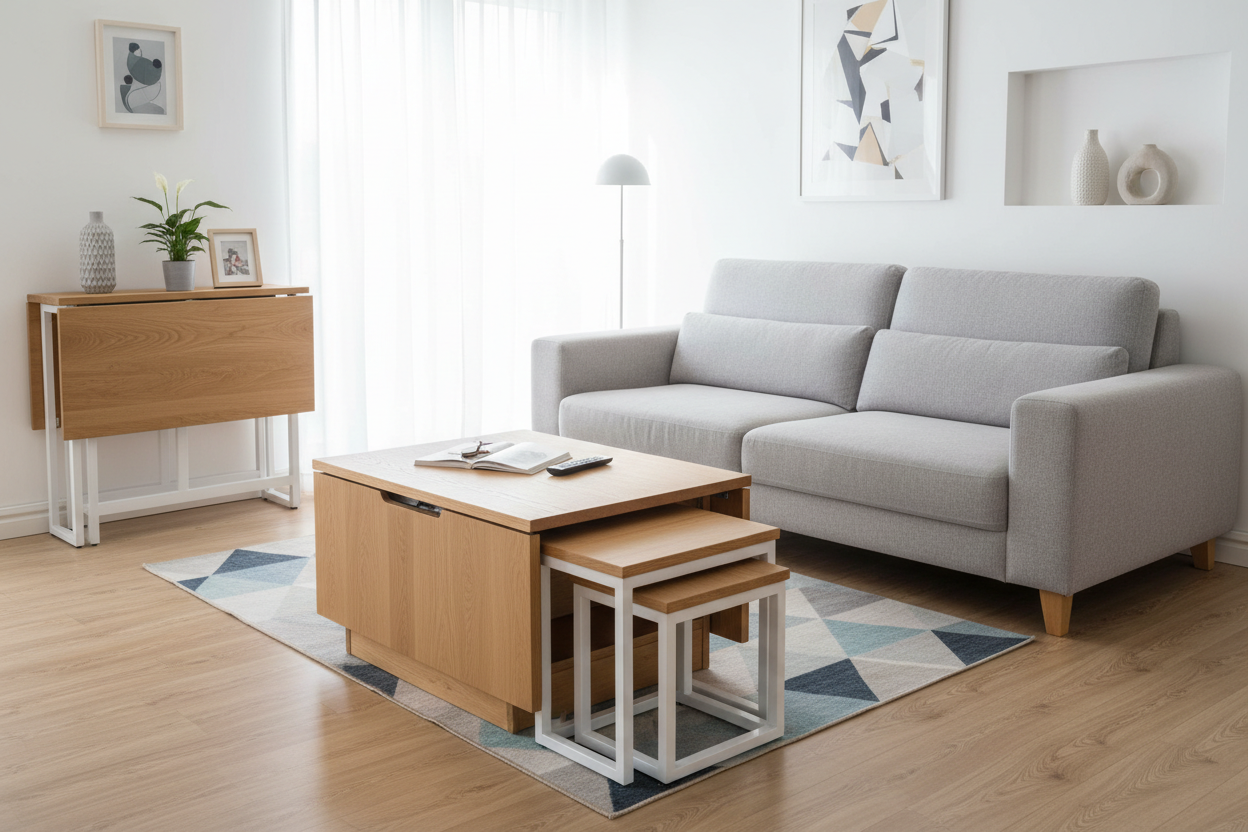
Living in a space that feels cramped often comes down to a simple mismatch between the things we own and the places we have to put them. We often treat surface area and storage space as two separate entities, buying a desk for working and a cabinet for filing. However, the most efficient way to maximize square footage without sacrificing aesthetics is by integrating storage and tables. This isn't just about hiding clutter; it is about reclaiming the functionality of your room. By choosing furniture that pulls double duty, you eliminate the need for bulky standalone bins and create a flow that feels intentional rather than chaotic.
I learned this lesson the hard way in my first studio apartment. It was a charming but tiny 400-square-foot space where every inch counted. Initially, I bought a sleek, minimalist coffee table with thin metal legs and a glass top. It looked airy in the store, but within a week, the floor underneath became a graveyard for magazines, remote controls, and unopened mail. The visual clutter through the glass made the room look messy even when it was clean. I eventually swapped it for a vintage trunk. Suddenly, my winter blankets had a home, my remotes vanished into a tray inside, and I could actually put my feet up without worrying about kicking a stack of papers. That shift in perspective—viewing furniture as a vessel rather than just a surface—changed how I approach interior design entirely.
The Living Room: More Than Just a Coffee Spot
The living room is usually the primary gathering spot, which means it is also the primary clutter magnet. Standard coffee tables often become catch-alls for items that don't have a designated home. This is where dedicated storage tables shine. The most versatile option in this category is the lift-top coffee table. These pieces feature a mechanism that raises the tabletop to dining or desk height, revealing a deep compartment underneath. It is an ideal solution for remote workers who want to work from the couch but need a place to stash their laptop when guests arrive.
If a lift-top mechanism feels too mechanical for your style, consider a table with storage under the main surface in the form of a lower shelf or drawers. A two-tiered design allows you to keep the top surface clear for drinks and decor while tucking books, board games, or baskets on the lower level. Using baskets on a lower shelf is a great design hack because it mimics the look of drawers while adding texture to the room. For households with children, round drum tables with removable lids offer a safe, corner-free option to quickly sweep toys out of sight before company comes over.
Entryways and Hallways: The Drop Zone
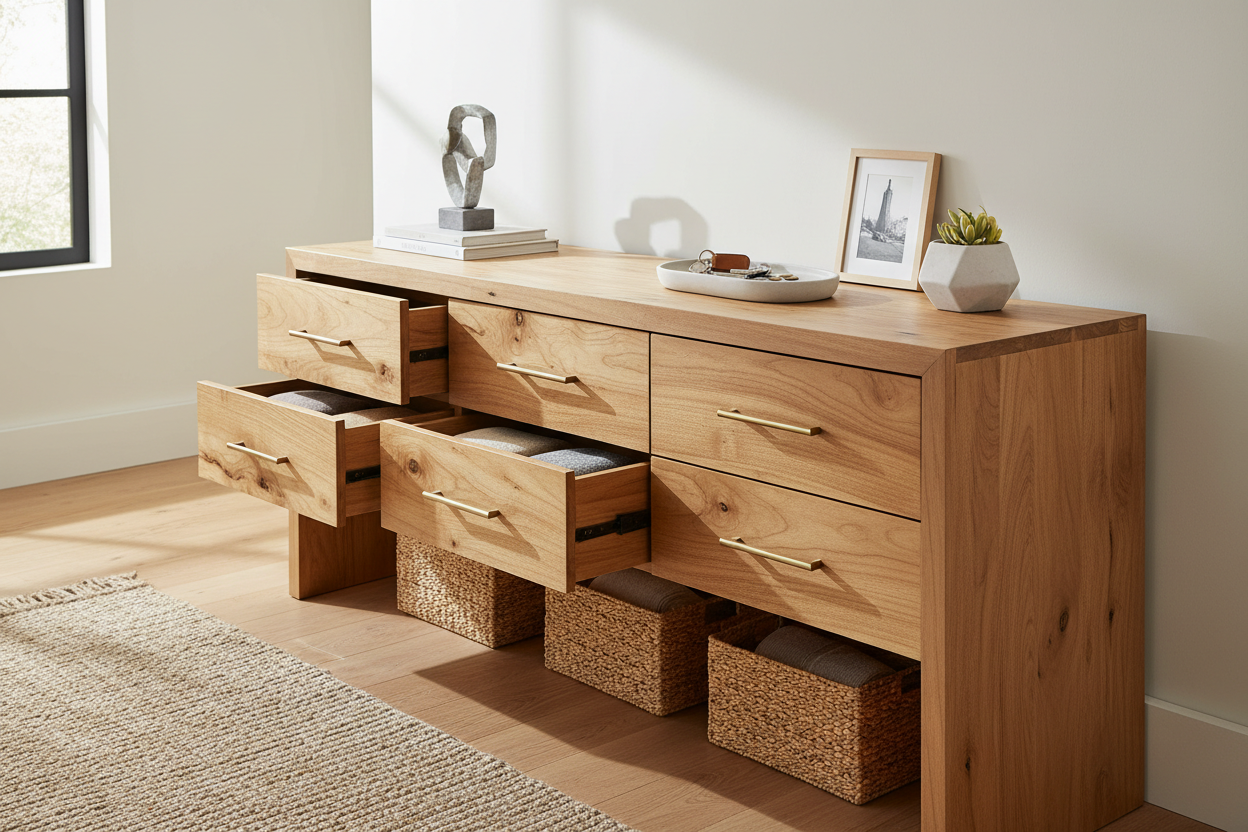
The entryway sets the tone for the rest of the home. If you walk in and immediately drop your keys on a precarious pile of mail, the stress of the day follows you inside. Console tables in this area need to function as organizer tables. A simple slab of wood on legs won't cut it here. You need drawers.
Look for narrow console tables equipped with shallow drawers. These are perfect for concealing keys, wallets, sunglasses, and outgoing mail. If the table is open at the bottom, utilize the vertical space by placing a bench or large woven bins underneath. This utilizes the "dead air" between the table legs and the floor, providing a spot for shoes or umbrellas that would otherwise trip you up. The goal is to create a system where every item that enters the house has an immediate landing pad that isn't the dining room table.
Dining Rooms: Hidden Compartments
Dining rooms often suffer from a lack of storage, usually requiring a separate buffet or china cabinet. However, many modern dining tables with storage built directly into the base can eliminate the need for extra furniture. Pedestal tables are excellent candidates for this. Some designs feature a hollow pedestal with a door, offering a surprising amount of vertical storage for table linens, special occasion serving ware, or bar supplies.
For smaller kitchen nooks, drop-leaf tables with center drawers or shelving units are invaluable. These tables allow you to fold down the sides when not in use, while the center section remains stationary, housing cutlery, napkins, or salt and pepper shakers. It keeps the essentials right where you need them, saving you a trip to the kitchen drawers every time you sit down to eat.
Choosing the Right Material for Heavy Use
When selecting furniture that involves moving parts—like drawers, hinges, or lift-tops—material quality becomes paramount. Particleboard might save money upfront, but screws tend to strip out of the soft material after repeated opening and closing. Solid wood or high-quality plywood with wood veneers will stand up much better to the daily wear and tear of accessing your stored items. If you are looking at a table with storage under it, check the weight capacity of the bottom shelf. You don't want the shelf to bow over time because you stacked too many heavy art books on it.
The Bedroom: Nightstands and Vanities
Bedside tables are notorious for becoming cluttered with charging cables, books, creams, and water glasses. A minimalist floating shelf might look trendy, but it offers zero concealment. A true storage nightstand should have at least one drawer and perhaps an open cubby. This combination allows you to hide the unsightly necessities while displaying a few calming items.
For those with limited closet space, consider a vanity table that doubles as a desk. Flip-top vanities are essentially storage tables for the bedroom. When closed, they are a flat writing surface. When opened, they reveal a mirror and compartments for makeup and jewelry. This dual functionality prevents the bedroom from feeling like a locker room, maintaining a serene atmosphere conducive to sleep.
Making the Investment
Switching to furniture that offers both surface area and containment is an investment in your peace of mind. It reduces visual noise and streamlines your daily routines. Whether you are looking for organizer tables for the hall or a robust coffee table that hides your winter throw blankets, the market is full of options that prove you don't have to choose between a beautiful home and an organized one.
Frequently Asked Questions
Are lift-top coffee tables safe for households with small children?
Yes, but you should look for models with safety hinges or hydraulic mechanisms that prevent the top from slamming shut. Soft-close features ensure that little fingers don't get trapped if the top is lowered accidentally.
How do I organize deep storage compartments in tables so they don't become messy bins?
The key is to use smaller internal organizers. Place square fabric bins, plastic trays, or dividers inside the deep compartment to categorize items like remotes, cables, and coasters, preventing them from becoming a jumbled pile.
Can I add storage to a table I already own?
Absolutely. If you have a table with open space underneath, you can add rolling drawers, wicker baskets, or stackable crates that fit the dimensions. This effectively turns a standard piece of furniture into a functional storage unit without buying something new.

Leave a comment
This site is protected by hCaptcha and the hCaptcha Privacy Policy and Terms of Service apply.