

















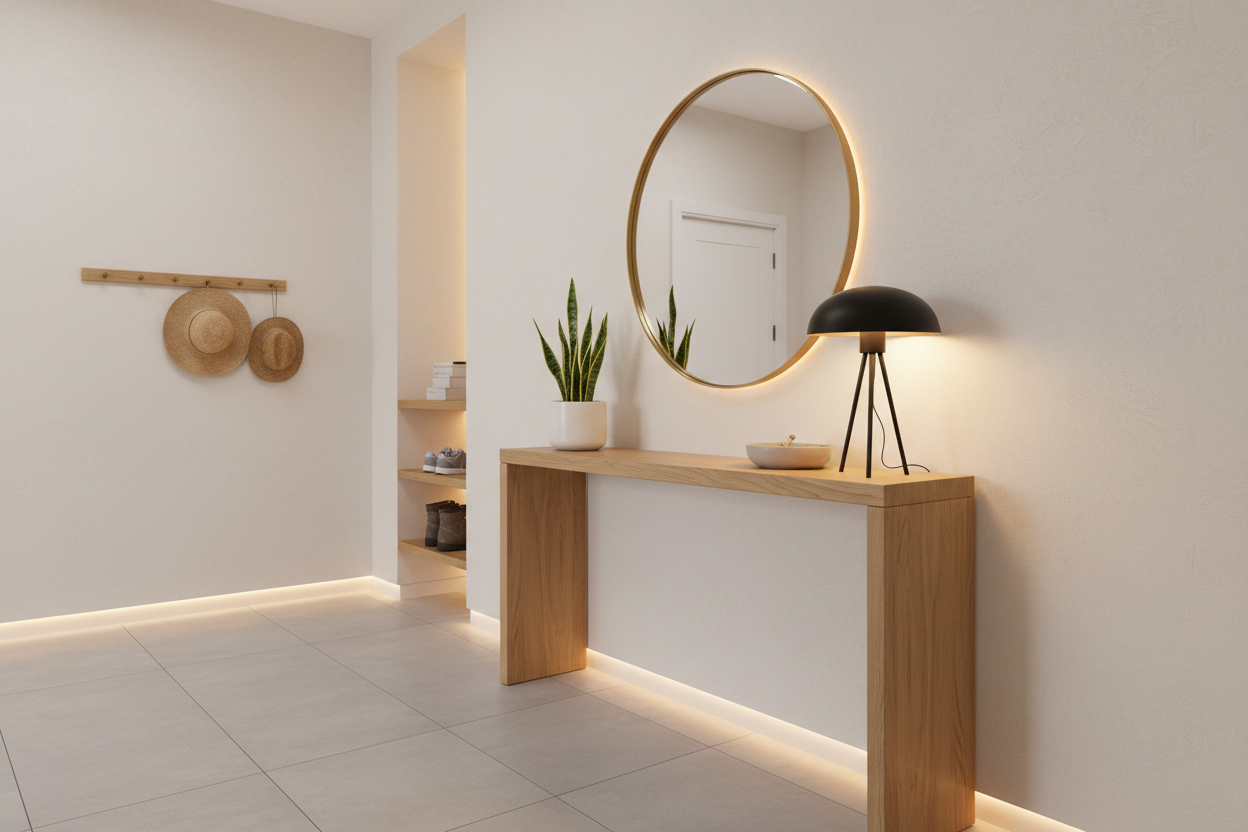
Entryways are often the most neglected spaces in a home, acting as dumping grounds for mail, keys, and shedding layers rather than welcoming transition zones. If you live in a home where the corridor feels more like a tunnel than a room, you face a specific challenge: you need functionality without sacrificing flow. The solution lies in selecting a console table that respects the limited footprint while working double-time to hide clutter. A properly chosen narrow hallway table with storage anchors the space, providing a designated spot for daily essentials without forcing you to turn sideways just to walk past it.
Many homeowners make the mistake of prioritizing width over depth. While the length of the table matters for proportion, the depth is the critical factor in a tight foyer. Standard console tables usually run between 14 to 18 inches deep. In a cramped hallway, those extra inches can make the difference between a comfortable walkway and a daily obstacle course. You generally want to aim for pieces that are 12 inches deep or less to maintain comfortable clearance.
Why I Swapped My Standard Console for a Slim Profile
I learned the importance of depth the hard way in my previous apartment. The hallway connecting the front door to the living room was notoriously tight, yet I insisted on using a vintage oak table I had inherited. It was beautiful, but at 16 inches deep, it became a hip-bruiser. Every time I came home with groceries, I had to angle my body to squeeze past. It wasn't until I downsized to a specifically designed hall table narrow with storage—a sleek 10-inch deep metal unit with two shallow drawers—that the hallway actually felt usable. Suddenly, the visual line of the corridor opened up, and I stopped dreading the walk to the front door. The drawers were small, but they were enough to hide the mail and spare keys, which was all I really needed to stop the clutter from accumulating.
Defining "Narrow" in the World of Furniture
When shopping for these specific pieces, the numbers on the spec sheet matter more than the photos. A true narrow table typically falls between 8 and 12 inches in depth. Anything under 8 inches is often custom-made or requires wall-mounting to prevent tipping, while anything over 12 inches enters the territory of standard furniture.
You also need to account for your baseboards. If a table has legs that sit flush against the wall, a thick baseboard will push the table surface out another inch or two into the walkway. Tables with recessed back legs or floating wall-mounted consoles often solve this geometry puzzle better than four-legged designs.
Calculating Walkway Clearance
Interior design standards suggest maintaining at least 36 inches of walking path for a comfortable flow. If your hallway is 48 inches wide, a 12-inch table leaves you exactly that amount. If your hallway is tighter, say 40 inches, you are looking for an ultra-slim profile, likely around 8 or 9 inches. This math ensures that the furniture serves you rather than obstructing you.
Storage Configurations That Maximize Utility
A flat surface is great for a lamp, but a flat surface alone invites mess. To actually organize a small space, the storage configuration is key. The type of storage you choose should depend entirely on what you tend to drop when you walk in the door.
The Drawer Dilemma
Drawers are the best friends of the disorganized. They hide unsightly items like bills, dog leashes, and loose change. However, on a narrow hallway table with storage, drawers will be shallow. Do not expect to store bulky items here. These drawers are catch-alls for flat objects. Look for drawers with stops so you don't accidentally pull them all the way out when rushing out the door.
Open Shelving vs. Closed Cabinets
If you need to store shoes, a table with a bottom shelf is invaluable. You can place wicker or wire baskets on the lower tier to hold footwear, keeping them off the main floor path. This visual trick keeps the area looking tidy while maximizing vertical space. Closed cabinets in narrow tables are rarer because the hinge mechanisms take up internal space, but drop-down doors (similar to shoe cabinets) are becoming a popular feature in modern slim furniture.
Material Choices and Visual Weight
In a small area, how the furniture looks is just as important as how it functions. Heavy, dark woods can make a narrow hall feel claustrophobic. If your goal is to make the space feel larger, consider materials that have little "visual weight."
Acrylic or glass tables are excellent for this. They provide the surface area and potentially the shelving you need but disappear visually, allowing the eye to travel all the way to the wall. If you need a warmer aesthetic, look for light woods or metal frames with thin legs. A hall table narrow with storage made of open metalwork tends to feel airier than a solid block of wood.
Securing Your Furniture
Physics dictates that a tall, shallow piece of furniture is less stable than a deep one. This is a safety issue that cannot be ignored, especially in high-traffic zones where a bag might snag on a corner, or in homes with children and pets. Regardless of the design, securing a narrow table to the wall is mandatory. Most reputable furniture comes with anti-tip kits. If yours didn't, a simple L-bracket attached to a stud or using proper drywall anchors will keep the console rigid and safe. This also prevents the annoying wobble that often occurs with lightweight, slim furniture on uneven floors.
Styling Without Re-Cluttering
Once you have the table in place, the styling should reinforce the sense of space. A large mirror hung directly above the console is the oldest trick in the book for a reason: it bounces light around and doubles the perceived width of the hall. Flank the mirror with wall sconces instead of placing lamps on the table to save that precious surface area for your keys and wallet.
Use a small tray to corral loose items. It sets a boundary for clutter—if the items don't fit in the tray, they don't belong on the table. This discipline keeps your narrow entryway functional and welcoming, proving that you don't need a grand foyer to have a grand entrance.
Frequently Asked Questions
How deep should a hallway table be for a very narrow corridor?
For tight corridors, aim for a depth of 8 to 10 inches. This allows for a functional surface without encroaching on the necessary 36 inches of walking clearance required for comfortable movement.
Can I use a shoe cabinet as a hallway table?
Yes, slim shoe cabinets with drop-down drawers are excellent alternatives. They are typically designed to be very narrow (often 9-12 inches deep) and offer significant storage capacity while providing a top surface for decor and keys.
What is the best way to stop a narrow table from wobbling?
Because they have a high center of gravity and a narrow base, these tables must be anchored to the wall using L-brackets or anti-tip straps. You can also use shims under the legs if your floor is uneven to ensure a solid footing.

Leave a comment
This site is protected by hCaptcha and the hCaptcha Privacy Policy and Terms of Service apply.