

















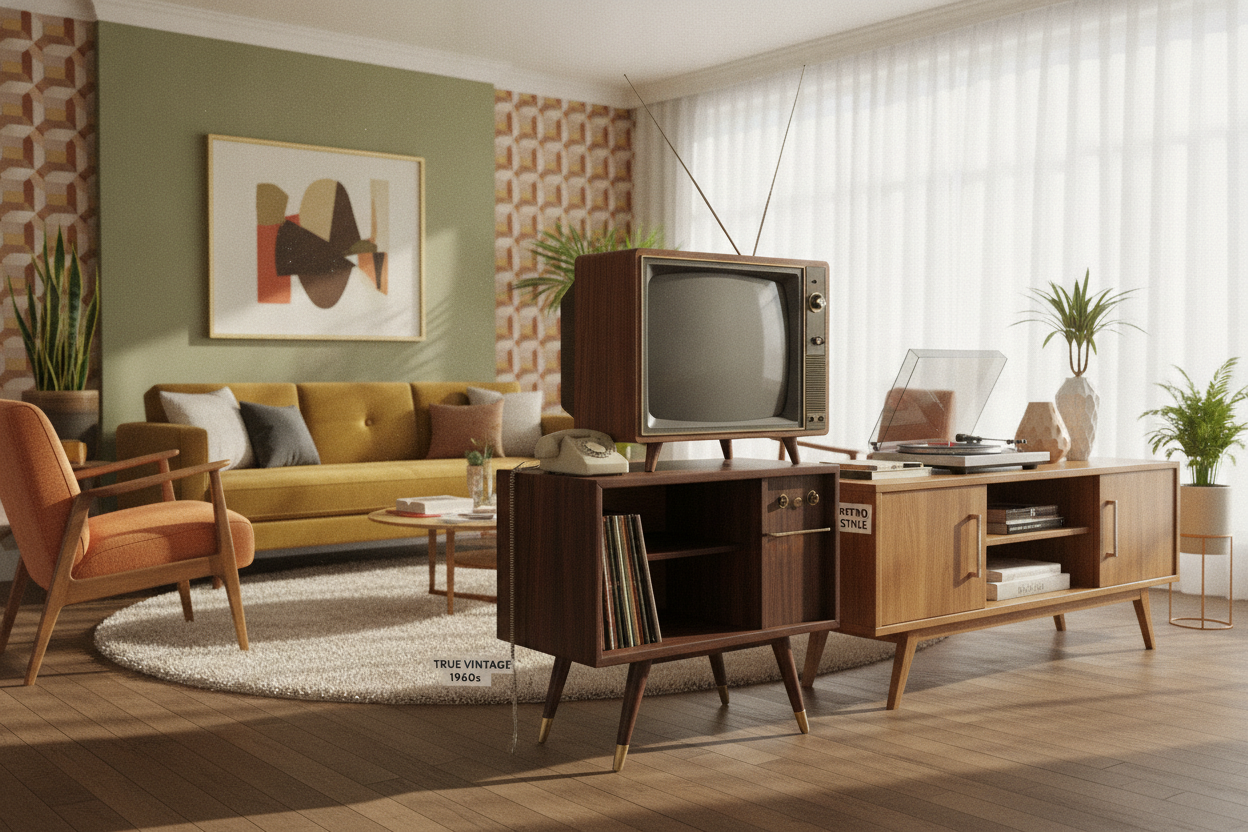
I’ve spent far too many Saturdays in the back of dusty estate sales, praying that the gorgeous teak credenza I just found would actually fit my 65-inch TV. We’ve all been there: staring at a screen that’s 20 inches wider than the furniture it’s supposed to sit on, wondering if we can just 'make it work.' It’s that 1 AM browser-tab spiral where you’re convinced a delicate nightstand can somehow double as a media hub.
The truth is, buying a 1960s tv stand is a high-stakes game of physics and aesthetics. You want that sleek, tapered-leg look, but you don't want your expensive OLED to end up in a heap on the floor because a 60-year-old glue joint finally gave up the ghost. It’s a balance of honoring the past and not letting your living room look like a cable-management crime scene.
Quick Takeaways
- Authentic 60s pieces often lack the depth needed for modern TV legs; measure twice, buy once.
- Solid wood is great, but aging veneers can peel if they get too hot from your gaming console.
- Weight limits are real—vintage pieces were built for heavy tube TVs, but the weight was distributed differently.
- Modern replicas solve the 'wire spaghetti' problem with pre-drilled holes and ventilation.
The Romantic Idea vs. The Cable-Tangled Reality
We all want that Don Draper living room vibe. A genuine 60s tv stand has a soul that modern flat-pack furniture just can't mimic. The grain of the wood, the smell of old Danish oil, the way the light hits the brass hardware—it's intoxicating. But then you bring it home and realize that your 65-inch TV overhangs the sides by four inches on each end. It looks like a giant lollipop stuck on a toothpick.
And then there are the cords. In 1964, a 'media setup' was a radio and maybe a record player. Today, you’ve got a soundbar, a PlayStation, a router, and a mess of HDMI cables that look like a nest of snakes. Trying to shove all that behind a solid-back vintage cabinet is a recipe for frustration. You end up with a three-inch gap between the furniture and the wall just to accommodate the plugs, which completely kills the 'sleek' look you were going for.
I once tried to force a massive surge protector into a tiny cubby of a vintage sideboard. Not only did it not fit, but the heat from the power brick started to dry out the wood finish. If you’re going vintage, you have to be prepared to get creative—or prepared to accept that your tech might actually ruin your furniture.
Will an Authentic 1960s Entertainment Center Actually Hold Your Tech?
There is a common myth that 'they don't build things like they used to.' While that’s often true, it doesn't mean a 1960s entertainment center is invincible. Most high-end 60s pieces were made with a lumber core or high-quality plywood topped with a thin veneer. Over sixty years, the glue holding those layers together can dry out and become brittle. If you place a heavy modern TV right in the center of a long, unsupported span, you’re going to see a 'smile'—and not the good kind. That sag can eventually lead to the veneer cracking or the legs splaying outward.
Weight distribution is the secret. Old console TVs were heavy, but they usually sat on the floor or had internal frames that supported the load. Modern TVs have small feet that concentrate all that weight into two tiny points. If you're going to use an older piece, I highly recommend adding a center support leg if it doesn't have one. It’s a $15 fix that saves a $500 cabinet. You also need to learn how to style retro furniture today so it doesn't look like a cluttered museum exhibit. Keep the top clear of heavy tchotchkes if the TV is already pushing the weight limit.
I’ve seen stunning walnut pieces from the late 60s that were essentially early particle board. They look great from five feet away, but the moment you try to tighten a screw or move them, they crumble. Check the undersides. If you see 'oatmeal' texture instead of solid wood or layered plywood, walk away. That piece isn't going to survive another decade of heavy use.
The Wire Management Nightmare (And How to Fix It)
If you find a 1960s tv cabinet that you absolutely love, you’re going to have to perform surgery. These pieces were never meant to breathe. Modern electronics, especially gaming consoles, generate a massive amount of heat. If you shut your Xbox inside a solid wood cabinet from 1968, you’re basically putting it in an oven. I’ve seen more than one high-end console die an early death because it couldn't get enough airflow.
The solution is a hole saw and some courage. I know, it feels like sacrilege to drill into a vintage piece. But if you do it right, it’s actually a service to the furniture. Use a 2-inch Forstner bit to create clean, splinter-free holes in the back panel. This allows for both cable routing and airflow. If the back panel is thin plywood, it won't hurt the structural integrity or the resale value much—most collectors understand the need for modern utility.
Pro tip: buy some plastic or brass grommet covers to line the holes. It makes the 'hack' look intentional and professional. Just make sure you aren't drilling through a structural support beam. I once accidentally hit a vertical divider in a mid-century hutch because I didn't measure the interior properly. It was a painful, permanent mistake that I had to hide with a stack of records for three years.
When to Skip the Antiques and Buy a 60's Style TV Stand Instead
Sometimes, the hunt isn't worth the headache. If you have a massive 75-inch screen or a mountain of gaming gear, a modern 60's style tv stand is almost always the better call. Replicas are designed with the 21st century in mind. They have the tapered legs and the acorn finishes we love, but they also have reinforced tops that won't bow under a 100-pound TV. They come with pre-cut cable channels and, crucially, ventilation slots that keep your gear from melting.
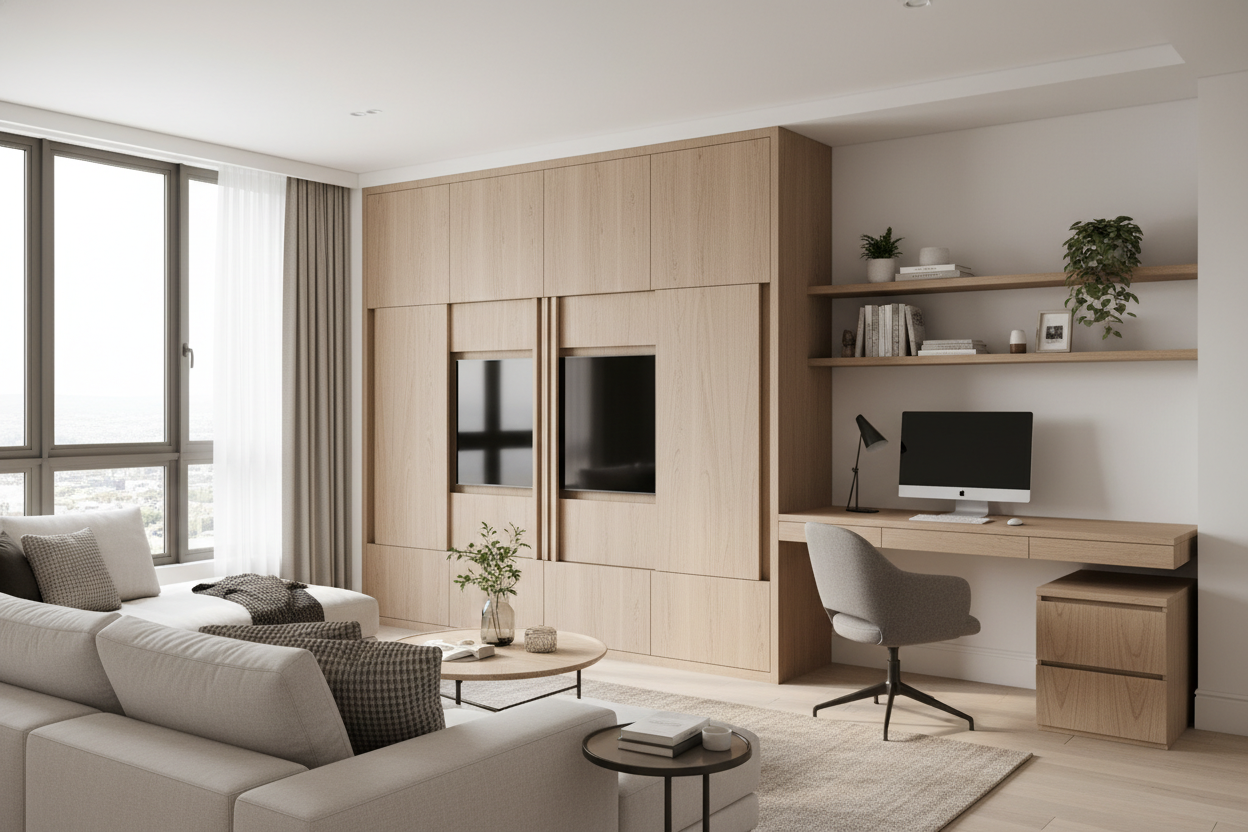
There are even high-tech options now that would have looked like science fiction in 1965. For example, you can get an electric vertical lift TV cabinet that hides your screen entirely when you aren't using it. It gives you that clean, retro look without having a giant black rectangle dominating the room 24/7. It’s the ultimate compromise for people who hate how TVs look but love watching them.
If you’re tired of measuring old credenzas and worrying about wood rot, just browse modern TV stands that offer that mid-century aesthetic with none of the structural drama. You get the look, the warranty, and a piece of furniture that doesn't smell like someone's basement. I’ve swapped several of my 'project' pieces for high-quality replicas, and my stress levels (and my TV's safety) have never been better.
Personal Experience: The Teak Tragedy
I once bought a 1966 Danish teak sideboard for $400. It was the pride of my living room. I put my vintage-style receiver on it, hooked up my speakers, and felt like a genius. Three months later, I noticed the sliding doors were sticking. The heat from the receiver had warped the top panel just enough to pinch the tracks. I had to sand down the top of the doors and refinish the whole piece. It was a hard lesson: vintage wood is a living thing, and it doesn't always play nice with modern heat-generating tech.
FAQ
Can I put a 65-inch TV on a 48-inch vintage stand?
Technically yes, if the weight is okay, but it looks terrible. You want at least 2-3 inches of 'breathing room' on either side of the TV screen so it doesn't look top-heavy and unstable.
How do I know if the wood is real or just a cheap veneer?
Look at the edges. If you see a consistent grain wrap around the corner, it's likely solid or high-quality veneer. If you see a 'seam' or what looks like a sticker peeling up, it's a cheap laminate over particle board.
Will drilling holes for cables ruin the value of my vintage piece?
If it's a museum-grade piece by a famous designer (like Wegner or Juhl), yes, don't touch it. If it's a standard, mass-produced 60s piece, a clean, professional-looking hole in the back won't hurt the value much and makes it usable for the next owner.


Leave a comment
This site is protected by hCaptcha and the hCaptcha Privacy Policy and Terms of Service apply.