

















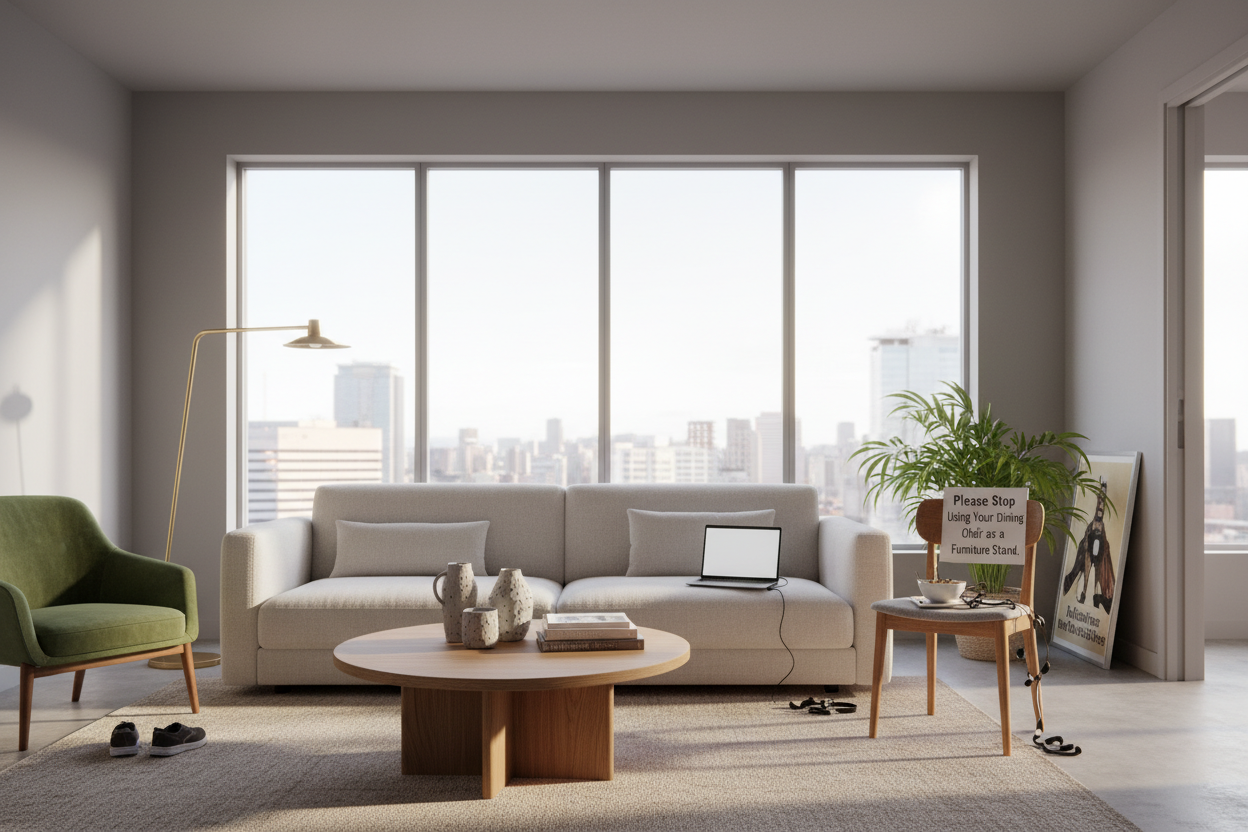
I spent three months last year using a stack of vintage National Geographics to hold up my $500 projector. It looked 'aesthetic' for about ten minutes until my cat decided it was a scratching post, sending the lens careening toward the floor. We have all been there—trying to make a furniture stand out of anything within arm's reach because we are too tired to shop for one more thing or we think we are being 'resourceful.'
But there is a thin line between resourceful and messy. When your apartment starts looking like a game of Jenga played with heirloom ceramics and expensive tech, it is time to admit you need a proper surface. A dedicated stand isn't just a place to put things; it is a signal that you actually care about your space.
- Dining chairs are for sitting, not for holding your 10-lb monstera.
- Intentionality makes a room feel finished, not like a temporary dorm.
- Sturdy bases prevent expensive tech from hitting the floor.
- Real stands offer cable management that a milk crate never will.
The 'Makeshift Pedestal' Epidemic Must End
Walk into any first apartment and you will see it: the wobbly stool acting as a plant holder, the milk crate supporting a record player, or the classic spare dining chair that has been drafted into service as a bedside table. We call it 'boho chic' to make ourselves feel better, but deep down, we know the truth. It looks cluttered. It looks like you just moved in last Tuesday, even if you have lived there for three years.
The problem with using a chair as a stand is that it occupies a footprint without providing the utility of a real piece of furniture. A chair has a backrest that blocks visual flow. A stack of books is a dust magnet that makes cleaning a nightmare. I once used an old apple crate to hold my printer, and every time the tray kicked in, the whole thing rattled like a freight train. It is not just about the look; it is about the structural integrity. If your 'stand' can be knocked over by a rogue vacuum cleaner or a heavy breeze, you are living dangerously. We need to stop treating our belongings like they are on display at a flea market and start giving them the stable foundations they deserve.
Why a Real Furniture Stand Actually Matters
There is a psychological shift that happens when you replace a temporary fix with a permanent one. When a piece of furniture has a dedicated purpose, the entire room feels more grounded. It stops being a collection of 'stuff' and starts being a curated environment. An intentional stand provides clear boundaries. It tells the eye where to look and, more importantly, where to stop looking.
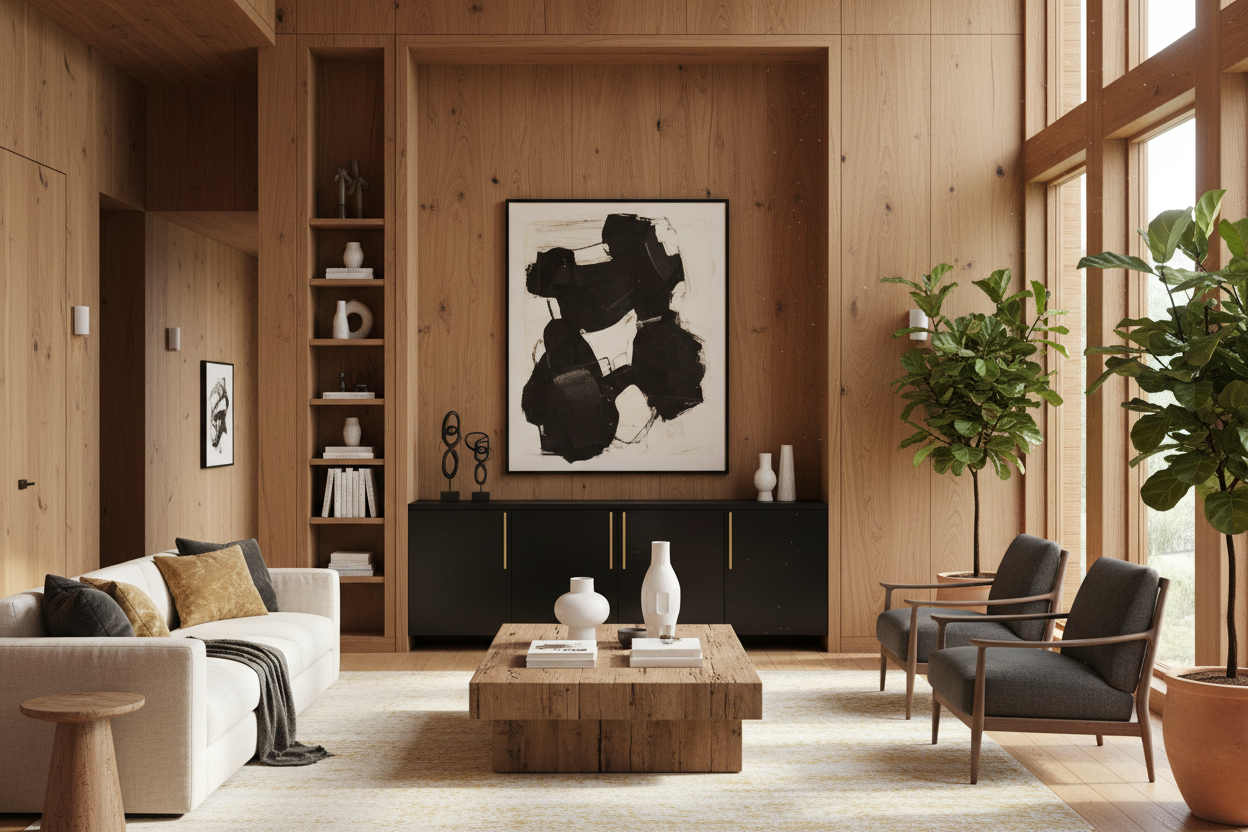
When you choose to style retro furniture today, you start to see how much thought went into the height and scale of mid-century pieces. They weren't just flat surfaces; they were designed to lift objects to a specific sightline. A real stand often features tapered legs or slender frames that let light pass underneath, making a small room feel larger. Contrast that with a bulky dining chair or a solid crate that eats up floor space and blocks the light. A dedicated stand also allows you to play with textures—think warm walnut, powder-coated steel, or fluted glass—that add layers to your decor rather than just blending into the background noise of a mismatched room. It is the difference between a house that happened to you and a home you actually built.
The Tech Conundrum: Projectors and Record Players
Tech is the biggest offender in the makeshift stand world. We spend hundreds, sometimes thousands, on high-fidelity audio or 4K projectors, only to balance them on a $10 side table from a garage sale. I’ve seen record players sitting on top of subwoofers (a vibrations nightmare) and projectors balanced on literal shoe boxes. If your tech has a motor or a lens, it needs a level, vibration-dampening surface.
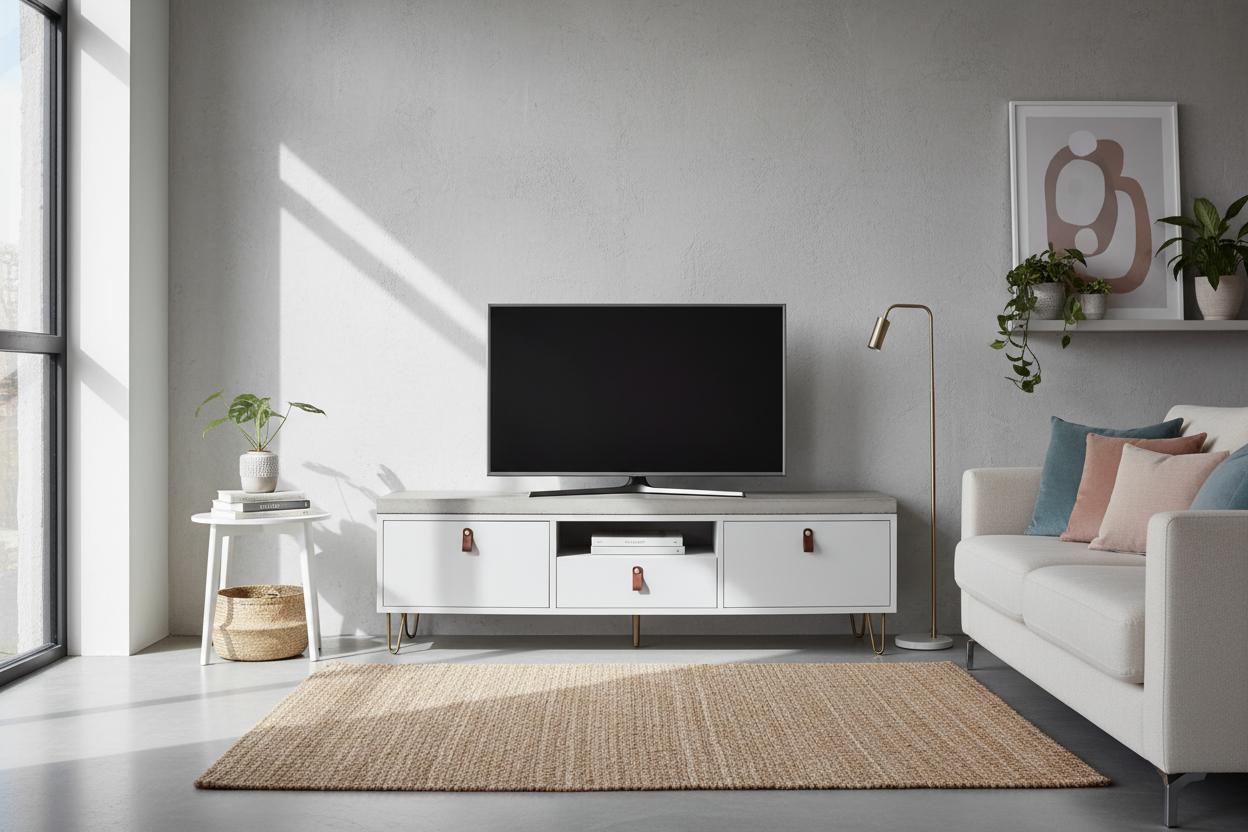
Most side tables are built for a lamp and a coffee mug, not a 15-pound receiver. If you are dealing with a heavy setup, you need something with a weight capacity that won't bow over time. For those with a growing collection of consoles, vinyl, and speakers, a small pedestal won't cut it. You might need to scale up to a mid-century modern TV stand. These pieces are engineered to handle the weight and, crucially, the heat. Putting a gaming console inside a wooden crate is a recipe for a melted motherboard. A real stand offers ventilation and cable management holes, so you don't have a 'rat's nest' of black wires trailing down the side of your furniture. It is about protecting your investment while keeping your sanity intact.
Wait, Should I Just Use a Desk?
The temptation to use a desk as a catch-all stand is real, especially in small apartments. You think, 'I have five feet of desk space, surely the record player can live on the corner.' Don't do it. Mixing your work zone with your relaxation or hobby zone is a recipe for burnout. I tried keeping my large indoor fern on the edge of my workspace, and I spent half my day worried I’d knock it over with my mouse pad.
Your sit stand up desk should be strictly reserved for actual work and movement. When you start crowding your workspace with decorative stands or tech that isn't part of your workflow, the desk loses its utility. You need space to spread out, to move from sitting to standing without catching a projector cord or tipping over a vase. A dedicated stand elsewhere in the room allows your desk to breathe. It creates a physical 'off' switch—when you walk away from the desk to the record player stand, you are officially off the clock. Keep the zones separate, and your brain will thank you.
Rules for Styling a Small Stand (Without Cluttering It)
Once you finally buy a real stand, the urge to cover every square inch of it is overwhelming. Resist that urge. A small stand should be a highlight, not a junk drawer with legs. First, follow the rule of three: group objects in odd numbers to create visual interest. A plant, a small tray, and a single book look like a choice; five random items look like a mess.
Second, vary your heights. If everything on the stand is the same height, it looks flat and boring. Use a small pedestal or a thick book to give one item a boost. Third, manage your 'negative space.' Leave at least 30% of the surface empty. This allows the eye to rest and makes the objects you do display feel more important. Finally, consider the 'back-of-the-stand' view. If your stand is floating in the room rather than against a wall, make sure it looks good from all angles. Hide those cords with adhesive clips along the legs. A clean, styled stand is the quickest way to make a $200 piece of furniture look like it cost $2,000.
Personal Experience: The Decorative Ladder Disaster
I once thought I was a genius for using a decorative leaning ladder as a multi-tiered plant stand. It looked great in the Instagram photo. In reality? The rungs weren't perfectly level, leading to a slow, agonizing leak from a drainage tray that I didn't notice for a month. By the time I moved the ladder, I had a permanent black ring on my hardwood floors. I replaced it with a metal-framed stand with a sealed stone top. No wobbles, no leaks, and no more floor damage. Learn from my expensive mistake: buy the right tool for the job.
How tall should a furniture stand be?
It depends on what it is holding. For a projector, it should be at lens-level with your screen. For a plant, vary the height so it is not hidden behind the sofa. Generally, 24 to 30 inches is the 'sweet spot' for most accent stands.
Can I use a nightstand as a stand in the living room?
You can, but check the back. Many nightstands have unfinished plywood backs because they are meant to be against a wall. If it is going to be visible from all sides, look for a 'fully finished' accent table or pedestal.
What material is best for a heavy record player?
Solid wood or heavy-duty MDF is best. Avoid thin glass or light plastic, as they can vibrate and cause your records to skip. You want something with some 'heft' to ground the turntable.

Leave a comment
This site is protected by hCaptcha and the hCaptcha Privacy Policy and Terms of Service apply.