

















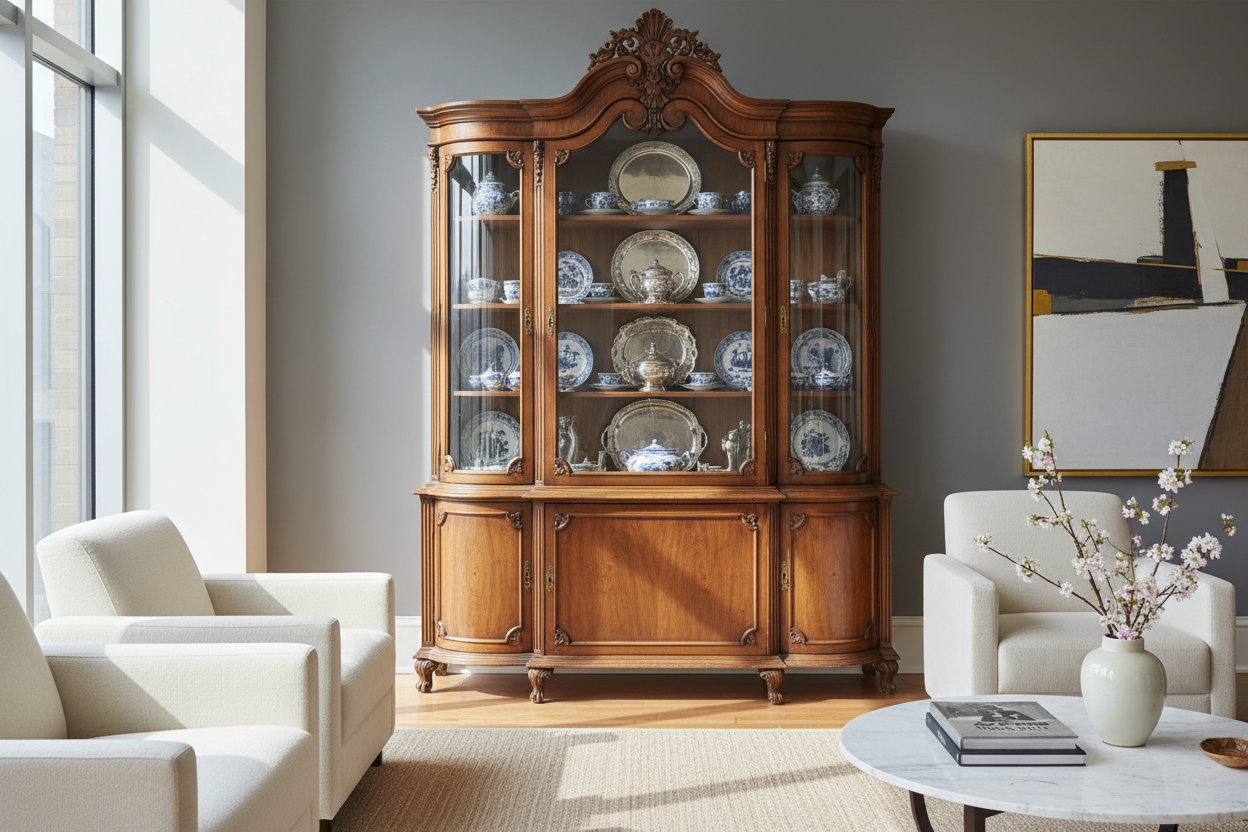
I remember walking into a client's new-build home last year. The space was all clean lines and neutral tones, but in the corner of the dining room sat her grandmother's ornate china cabinet. It was a beautiful, hand-carved piece from the 1920s, but she was convinced it looked like a relic from another era. 'I love it,' she told me, 'but it feels wrong here.' That's a story I've heard over 200 times in my 15+ years designing homes. The desire to blend heritage with contemporary living is real, and it's absolutely possible.
Quick Takeaways
- An ornate cabinet is defined by intricate carvings, decorative hardware, and often a darker, formal finish.
- Balance is key: pair the cabinet's visual weight with minimalist furniture and simple decor.
- Consider refinishing. A lighter stain or a painted interior can modernize the look while keeping its soul.
- Placement matters. Use it as a deliberate focal point, not tucked away where it feels heavy.
What Makes a China Cabinet 'Ornate' — And Why It Matters
When I say 'ornate,' I'm talking about specific features that give a cabinet its formal, detailed character. Think intricate scrollwork or floral carvings on the crown and legs, often made from solid woods like oak or mahogany. Look for decorative hardware: brass or porcelain knobs, keyhole escutcheons, and maybe even glass that's beveled or has a subtle pattern. The proportions tend to be grand—a typical antique piece might stand 7 feet tall and 4 feet wide, with a deep, substantial presence.
These features matter because they create visual weight. In a modern room with a 96-inch low-profile sofa and simple shaker cabinets, an ornate piece can feel loud and disjointed. The challenge isn't hiding it, but letting it sing without overpowering the room's harmony. When assessing any piece, I always advise clients to look beyond the ornate details to the quality of construction. My display cabinet selection guide dives into what to look for, like dovetail joints and kiln-dried hardwood frames, which are signs of a piece worth designing around.
The Modern Mix: Blending Ornate with Contemporary
The secret is contrast. I never pair an ornate china cabinet with other heavily detailed furniture. Instead, I let it be the star. In a minimalist dining room, I might place it against a wall painted in a soft, neutral tone like Sherwin-Williams 'Repose Gray.' Around it, I'd use a simple, 8-foot farmhouse table with clean lines and upholstered chairs in a solid fabric. The goal is to create a 36-inch clear walkway around it so it feels intentional, not cramped.
For transitional spaces, which blend traditional and modern, I might introduce texture. A sleek, wool area rug in a solid color under the cabinet can ground it. Inside, how you style it is crucial. Instead of filling every shelf with patterned china, I use a mix. I might place a few heirloom plates next to a set of modern, white ceramic vases. For more ideas on creating visual interest inside the cabinet, check out my tips on china display techniques.
Color Strategy for Ornate Pieces
Color is your most powerful tool to modernize an ornate piece. If the cabinet has a dark, reddish mahogany stain, you don't have to strip it. First, consider the room's palette. A dark cabinet can look stunning against light, airy walls. For a more dramatic update, painting the interior of the cabinet is a game-changer. I've used a high-gloss white or a soft sage green inside to reflect light and make the contents pop, while leaving the exterior wood stained to preserve its character. If you do paint the whole piece, choose a color with depth, like a charcoal or navy, not a flat white, to honor its detailing.
Placement That Balances Drama
Where you put the cabinet dictates its impact. In a standard 12x14 foot dining room, placing it centered on the longest wall creates a natural focal point. Ensure there's at least 18 inches of clearance from any doorway so it doesn't block traffic flow. In an open-concept living/dining area, use it to define the dining zone. I once used a client's large, ornate cabinet as a visual divider between a seating area and the dining table. For smaller spaces, like a condo dining nook, a grand cabinet can overwhelm. In those cases, I've recommended a corner china cabinet option as a space-saving solution that still offers display.
Authentic Antique vs. Vintage Reproduction
Knowing what you have informs how you treat it. A genuine antique china display cabinet (often pre-1950) will have signs of age: slight unevenness in the carving from hand tools, variations in the wood grain, and sometimes older, non-standard screw types or joinery like mortise-and-tenon. The wood may have a patina you can't replicate. A vintage reproduction from the 1970s or 80s might mimic the style but often uses plywood for secondary parts, has more uniform machine-made carvings, and a more consistent factory-applied finish.
The design consideration? Authentic antiques have a soul and irregularity that I work with—I'm less likely to modify them drastically. A quality reproduction gives you more freedom to update with paint or hardware without guilt. Both can work beautifully; it's about respecting the piece's integrity while making it work for you.
Modern Alternatives When Ornate Isn't Right
Sometimes, after all the strategies, a client realizes the ornate look just isn't for their space. That's okay. The goal is a home that feels right. For those who love the display concept but need cleaner lines, there are excellent contemporary options. A modern white display cabinet with simple, flat-front doors and LED lighting can give you that curated display feel without any visual fuss. For more drama without carving, I love the sleek look of black glass door cabinets. They offer a bold, graphic element that feels current and lets your collections take center stage.
Personal Experience: The Honest Downside
I won't sugarcoat it. Incorporating a large, ornate piece requires commitment. In my own home, I have a vintage display china cabinet from an estate sale. It's gorgeous, but it's a dust magnet. All those carvings need careful, regular cleaning with a soft brush. It also can't be shoved against just any wall; it needed a dedicated place where its scale made sense. But the payoff is immense. It holds not just my dishes, but stories and a warmth that a flat-pack unit never could. It makes my modern space feel layered and personal.
FAQ
Can I put an ornate china cabinet in my kitchen?
Absolutely. In a kitchen with plain, slab-style cabinets, an ornate piece can add wonderful character as a pantry or dish storage. Just ensure your walkways are at least 36 inches wide for functionality.
What if my ornate cabinet is really dark and my room is very light?
Embrace the contrast! The dark cabinet will anchor the light space. Add a couple of darker accents elsewhere in the room—like picture frames or a lamp base—to create cohesion.
Is it wrong to remove the original glass from an antique cabinet?
If the glass is wavy, beveled, or has a unique pattern, I advise keeping it—it's part of the charm. If it's plain, single-pane glass that's damaged, replacing it with new, clear glass for safety and clarity is perfectly acceptable.
How do I light an ornate china cabinet?
Internal LED strip lights (warm white, around 2700K) are best. They're low-heat and can be discreetly installed at the top of each shelf to illuminate your items without highlighting every speck of dust on the ornate frame.

Leave a comment
This site is protected by hCaptcha and the hCaptcha Privacy Policy and Terms of Service apply.