

















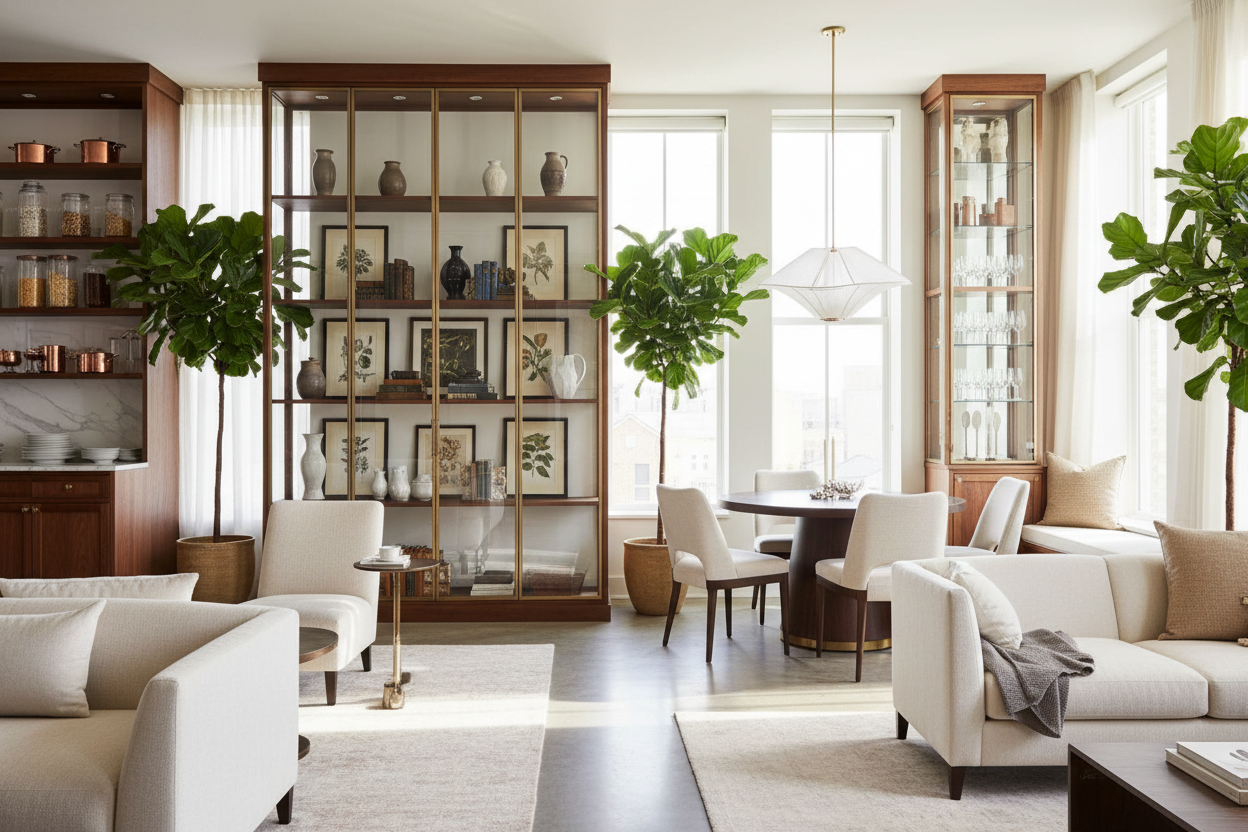
I spent three years living the Pinterest dream with thick oak open shelves in my kitchen. They looked incredible for exactly forty-five minutes. Then I actually cooked a meal. Within a week, my 'aesthetic' stack of white ceramic bowls was coated in a film of sticky, gray kitchen grease that acted like a magnet for cat hair and dust. I found myself washing dishes before I used them, which is the ultimate sign of a failed organizational system.
Last month, I finally snapped. I ripped down the shelves, patched the drywall, and brought in a proper enclosed display case. It was the best decision I have made for my sanity and my cleaning schedule. If you are currently a slave to your dusting wand, it is time we talk about the glass-fronted alternative.
Quick Takeaways
- Open shelving in kitchens is a trap; grease and dust create a 'glue' that is impossible to maintain.
- An enclosed case offers the same visual 'airiness' without the weekly scrub down.
- Glass doors protect expensive glassware from accidental chips and pet-related disasters.
- Modern styling—like leaning art and stacking plates—keeps these cabinets from looking like your grandmother's heirloom collection.
The Dirty Secret About Open Shelving (It's Exhausting)
Let's be honest: open shelving is a performance. It requires you to own only matching, pristine dishware. It demands that you stack your cereal bowls with surgical precision. But the real kicker is the grime. In a kitchen or dining area, microscopic oil particles from cooking travel through the air and settle on every exposed surface. On a countertop, you wipe it up. On a shelf ten feet high? It sits there and hardens.
I got tired of the 'curation pressure.' I wanted to be able to put a mismatched mug away without it ruining the entire vibe of the room. I also realized that my favorite wine glasses were constantly covered in a fine layer of grit. Unless you enjoy the taste of dust with your Pinot Noir, open shelving is a logistical nightmare for anything you don't use every single day.
The mental load is real, too. Every time a guest walked into my kitchen, I felt like my shelves were a direct reflection of my character. If a stack was slightly crooked, I felt disorganized. With a cabinet, there is a boundary. It is a frame, not a stage.
Enter the Glass Enclosed Display Case
When I started looking for a glass enclosed display case, I wanted something that felt substantial but didn't swallow the room. The beauty of glass is that it tricks the eye. You still see the back wall, you still see your beautiful things, but they are behind a protective barrier. It is the 'look but don't touch' of interior design, and it is glorious.
I spent a lot of time debating glass versus acrylic cases for my dining room. While acrylic is lighter and harder to shatter, it scratches if you even look at it wrong. For a high-traffic area where I am constantly grabbing plates, real tempered glass is the only way to go. It wipes clean with a bit of vinegar and water and doesn't get that cloudy, static-heavy look that plastic does over time.
The protection factor cannot be overstated. I have a cat who thinks every high surface is a personal challenge. On open shelves, he was a wrecking ball. Behind glass? He just stares at the bowls with confusion. My 1950s cocktail coupes are finally safe.
Could a Window Display Case Work Better?
If your room feels a bit dark, a window display case style is a total cheat code. These are designed with glass on multiple sides—sometimes even the back—to let light pass through entirely. I placed mine near a south-facing window, and the way the sun hits my glassware in the afternoon is genuinely better than any 'mood lighting' I could have installed. It keeps the furniture from feeling like a heavy wooden block in the corner of the room.
How to Evade the 'Grandma's China Cabinet' Look
The biggest fear people have with enclosed storage is that their house will suddenly feel like a Victorian museum. I get it. We all remember the mahogany monsters filled with porcelain dolls and 'fine china' that no one was allowed to touch. But modern styling has changed the game.
Start with a clean slate. A white display case with glass doors acts as a neutral gallery space. Instead of lining up plates like soldiers, stack them in casual, uneven piles. Lean a piece of modern art or a framed photo against the back wall behind your glasses. Mix in a few oversized cookbooks or a trailing plant like a Pothos. The goal is to make it look like a collection of things you actually use, not a shrine to the past.
Don't overfill it. Negative space is your friend. If you cram every shelf to the brim, it looks cluttered and heavy. Leave some breathing room around your favorite items. If you are worried about the footprint, think about where to put a big glass display case so it doesn't overwhelm the flow. Putting it on a shorter wall or nesting it into a recessed nook makes it feel built-in rather than just 'dropped' there.
My Favorite Modern Cases for the 'Anti-Open Shelf' Vibe
If you are ready to make the switch, look for pieces with clean lines and minimal hardware. I am currently obsessed with the glass door display case with LED light. Having integrated lighting means your 'display' works as secondary ambient lighting at night. It turns a storage unit into a focal point that makes the whole room feel more expensive than it actually was.
For those of us living in apartments where every square inch is a battle, a corner display case is a lifesaver. It utilizes that dead space in the corner of a breakfast nook that usually just collects dust bunnies. You get all the storage of a full-sized cabinet with about half the floor-space commitment.
My personal unit is a simple black metal frame with glass on three sides. It’s sturdy, it doesn't wobble when I walk past it, and most importantly, I haven't had to wash a 'clean' bowl in over six months. That is a win in my book.
My Personal Experience: The 'Wobble' Test
I'll be honest: my first attempt at buying a display case was a disaster. I bought a cheap, flat-pack unit from a big-box store because it was $150. As soon as I loaded it with my heavy stoneware plates, the whole thing leaned three degrees to the left. I spent three nights terrified it would tip over. I eventually returned it and invested in a unit with a reinforced metal frame and adjustable feet. Lesson learned: check the weight capacity of those glass shelves before you buy. Most tempered glass shelves can handle 15-20 lbs, but the cheap ones will bow under the weight of a full dinner set.
FAQ
Is glass furniture hard to keep clean?
Actually, no. It’s much easier than cleaning individual items on an open shelf. A quick spray of glass cleaner on the outside once a week takes thirty seconds. The inside stays clean because, well, it’s closed!
Can I put a display case in a small kitchen?
Absolutely. Look for 'tall and skinny' rather than 'short and wide.' A vertical tower takes up very little floor space but can hold an entire set of dishes and glassware.
How do I stop the glass from rattling?
Cheap cabinets often have loose glass panels. You can fix this easily by placing tiny clear silicone bumpers (the kind you use for cabinet doors) in the corners of the frame where the glass sits. It makes the whole piece feel much higher quality.

Leave a comment
This site is protected by hCaptcha and the hCaptcha Privacy Policy and Terms of Service apply.