

















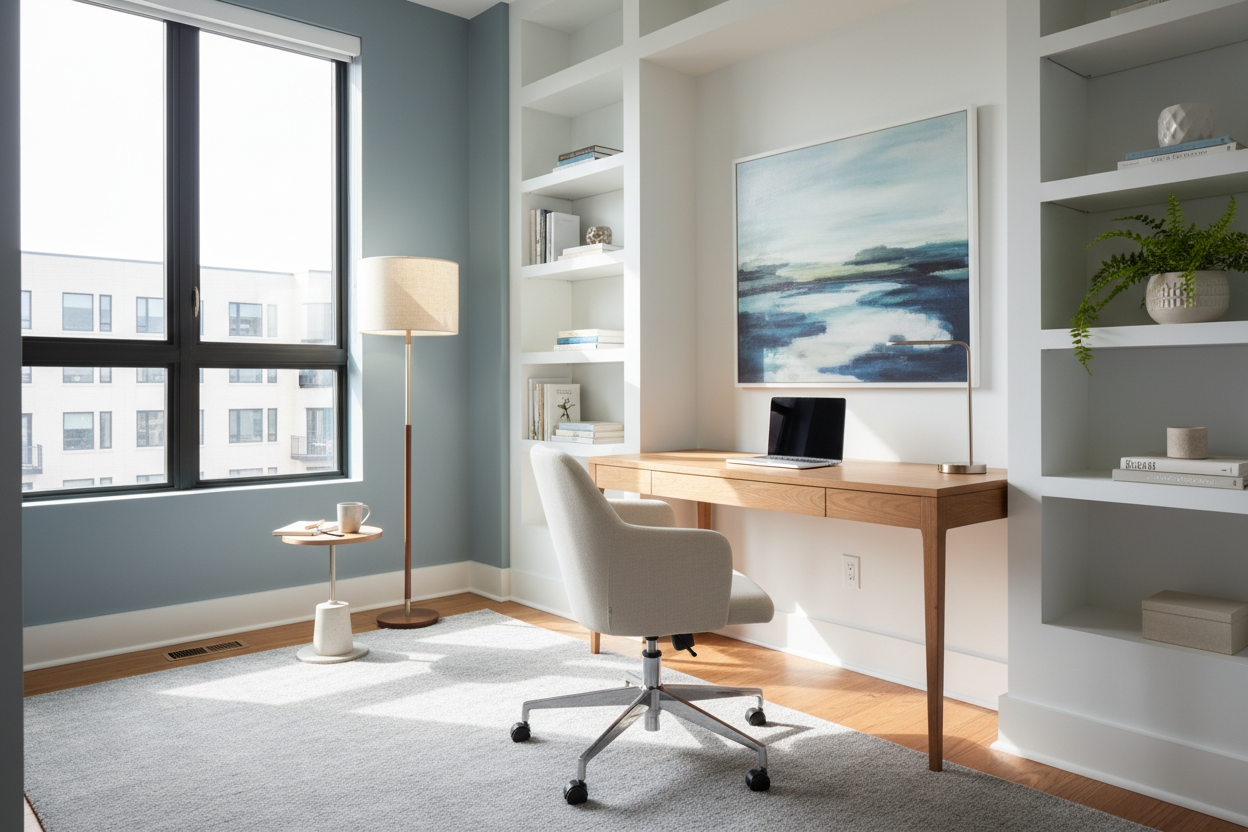
We've all been there: you buy a beautiful mid-century desk, shove it against the wall of your spare bedroom, and suddenly the room feels like a storage closet. A poorly planned workspace doesn't just look awkward; it actively drains your energy.
If you are planning an office redesign, the goal isn't just to make the room look ready for a magazine spread. It is about creating a functional zone that supports your daily workflow without clashing with the rest of your home. In this guide, I will walk you through the structural rules of space planning, ergonomics, and visual balance so you can get it right the first time.
Quick Decision Guide
- Float the desk if possible: Facing a wall limits your visual depth and can feel claustrophobic. Leave at least 36 inches behind the desk for your chair.
- Prioritize ergonomics over aesthetics: That rigid wooden dining chair will ruin your back. Invest in a chair with adjustable seat depth and lumbar support.
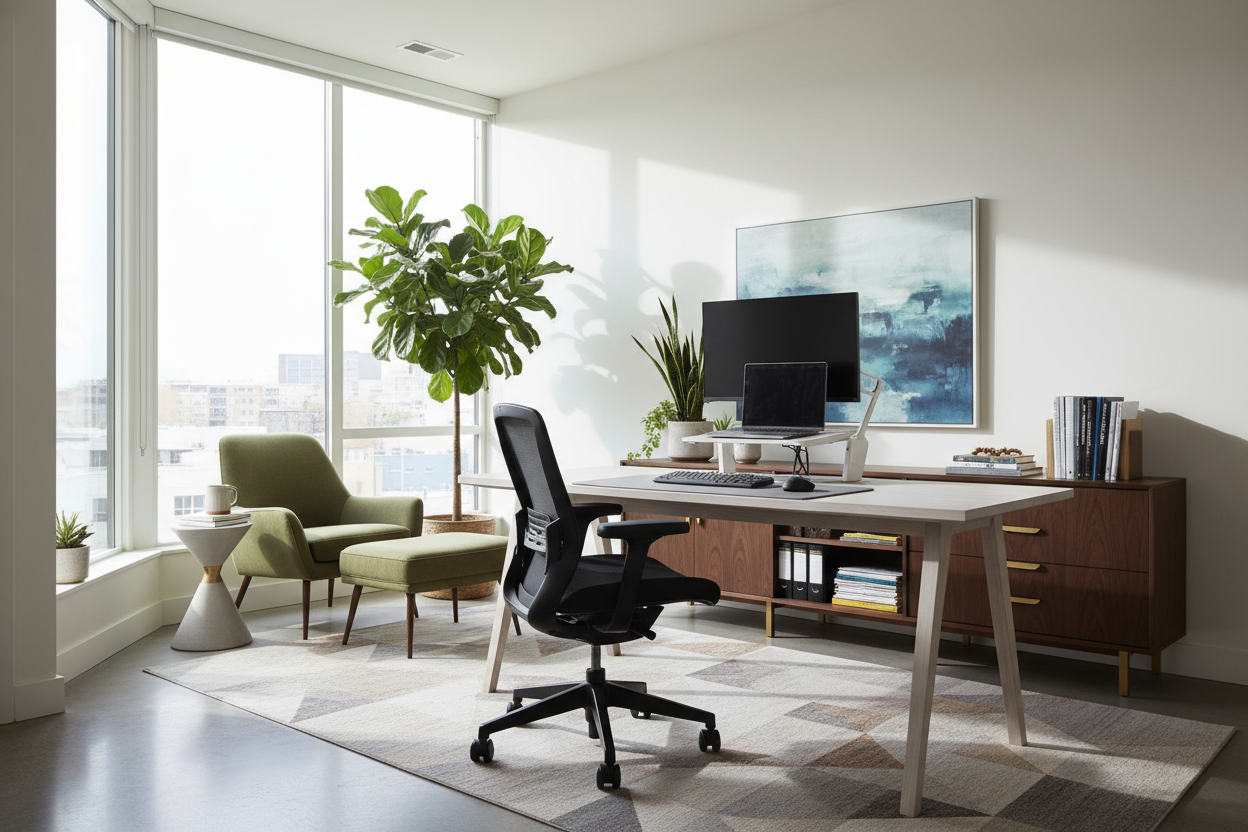
- Control visual weight: Balance heavy, solid pieces (like a filing cabinet) with lighter silhouettes (like a glass or open-frame desk) to keep the room breathing.
- Plan your lighting in layers: Relying solely on a harsh overhead fixture causes eye strain. Combine ambient room lighting with a dedicated, adjustable task lamp.
Mastering the Floor Plan
When you start redesigning office space, the biggest hurdle is usually the room's footprint. Most North American home offices are carved out of secondary bedrooms, typically hovering around 10x10 or 10x12 feet.
Clearance and Flow
Do not just measure the desk; measure the negative space around it. You need a minimum of 36 inches from the edge of your desk to the wall (or nearest piece of furniture) to comfortably roll your chair in and out. If you plan to have guest seating or a reading nook, ensure there is a clear 30-inch walkway through the room so you aren't constantly bumping your shins against a bookshelf.
Prioritizing Your Posture
It is incredibly easy to get swept up in the look of a sleek, minimalist setup. But if you spend eight hours a day at a desk, physical comfort dictates how much you will actually use the room.
Desk Height and Chair Support
Standard desk height is about 29 to 30 inches, which is actually too high for many people unless they use a keyboard tray or raise their chair and add a footrest. Before buying a desk, sit in your current chair at its most comfortable height. Measure from the floor to your elbows—that is your ideal keyboard height. If you are investing heavily in one item during this process, make it an ergonomic chair. Look for high-density foam cushions that won't flatten out after six months of daily use.
Balancing Professional and Personal Style
Your home office shouldn't feel like a sterile corporate cubicle, but it also shouldn't feel exactly like your cozy living room. Finding the middle ground is key.
Visual Weight and Clutter Control
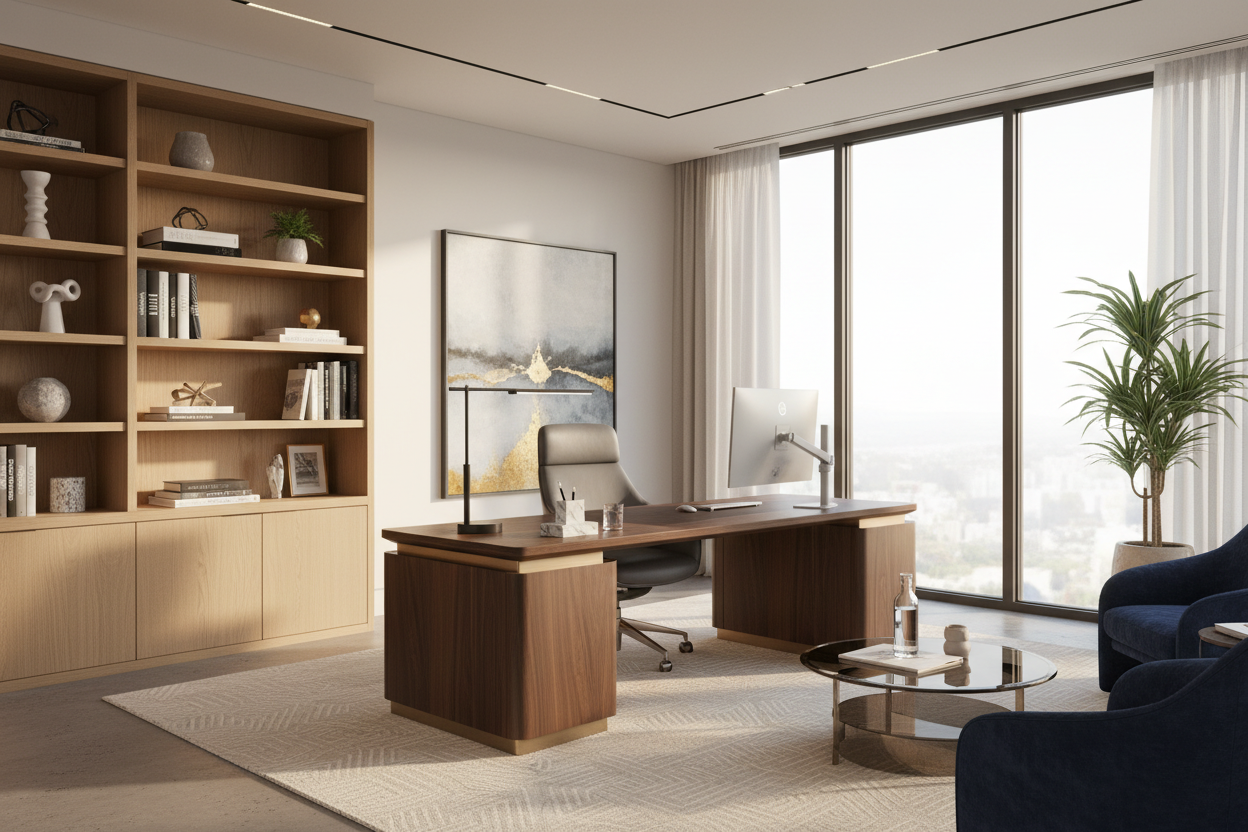
If your home leans heavily into transitional or modern farmhouse styles, a heavy oak executive desk might dominate the space. Instead, mix materials. Pair a solid wood desk with a metal-framed shelving unit to distribute the visual weight. Use closed storage for unsightly items like printers and loose cables, and reserve open shelving for curated books and decor. This keeps the space feeling intentional rather than chaotic.
Designer's Honest Take
About five years ago, I designed my own home office. I fell in love with a stunning, vintage teak credenza and a matching oversized desk. I forced both pieces into a 9x11 room because I was convinced I needed maximum surface area.
I learned the hard way that filling every square inch of a room suffocates the space. The room felt so heavy and cramped that I ended up working from my dining table most afternoons. I eventually sold the massive desk, replaced it with a slimmer writing table, and instantly felt my productivity return. The lesson? Don't let your love for a specific piece of furniture override the practical limitations of your floor plan.
Frequently Asked Questions
Where do I start when redesigning office space?
Start with your floor plan and power sources. Figure out where your outlets are, as this often dictates desk placement unless you want to run extension cords across the room. Always place your desk perpendicular to a window if possible to avoid screen glare.
How do I make a small office look bigger?
Utilize vertical space and choose furniture with exposed legs. A desk that sits on slender metal or wood legs allows light to pass underneath, creating the illusion of more floor space. Paint the walls a light, reflective color and use a large area rug to anchor the room.
Is a standing desk worth the investment?
Yes, but only if you actually use the standing feature. If you buy a standing desk, pair it with an anti-fatigue mat. The motors on cheaper models tend to burn out or get stuck, so it is worth spending a bit more on a dual-motor frame with a solid warranty.

Leave a comment
This site is protected by hCaptcha and the hCaptcha Privacy Policy and Terms of Service apply.