

















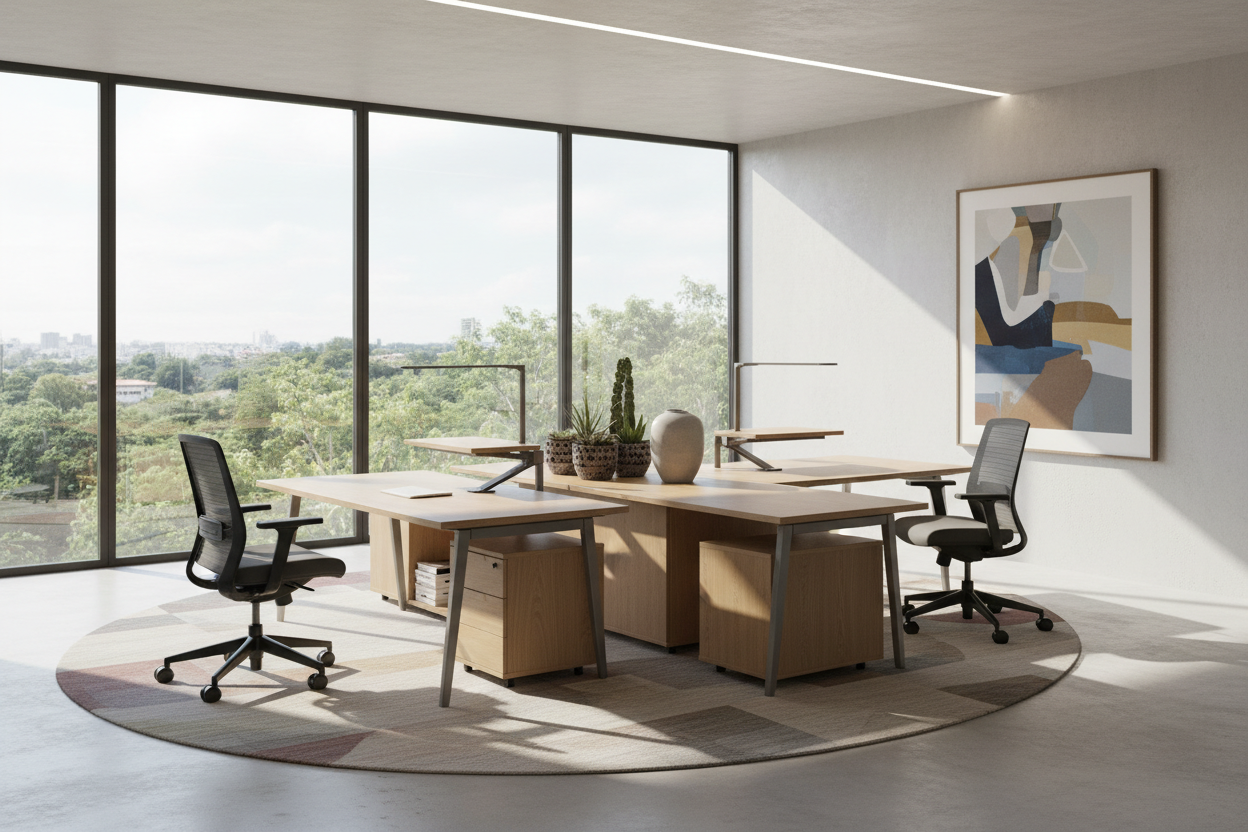
There is a distinct psychological shift that happens when you enter a workspace that feels intentional. A room cobbled together with a hand-me-down table and a mismatched chair often leads to a disjointed workflow. Conversely, a cohesive environment anchors your focus. This is the primary argument for investing in a curated office furniture set. As a designer, I don't just see these as matching items; I see them as a foundational tool for spatial harmony and professional efficiency. Whether you are outfitting a corner of your living room or a dedicated executive suite, selecting the right collection requires looking beyond the aesthetic and understanding the structural and functional nuances.
Key Features to Look For
- Material Integrity: Distinguish between solid wood, high-grade veneers, and thermal-fused laminate (TFL) for longevity.
- Ergonomic Compatibility: Ensure desk heights align with chair clearances within the suite.
- Storage Integration: Look for office package furniture that offers lateral filing and cable management solutions.
- Modular Flexibility: Choose sets that allow for future expansion or reconfiguration.
- Hardware Quality: Check for full-extension drawer slides and soft-close hinges.
Defining Your Material Palette
The durability and visual weight of your workspace depend entirely on the materials you choose. When evaluating office desks sets, the finish dictates the maintenance level. High-end office furniture suites often feature wood veneers—thin slices of real wood bonded to a stable core. These offer the warmth and grain of solid wood without the susceptibility to warping. However, they require coasters and care.
For high-traffic zones or homes with children, I often recommend high-pressure laminate. Modern laminates have evolved significantly; they can mimic the texture of reclaimed oak or walnut while being virtually scratch-resistant. Avoid paper-based foils often found in budget desk furniture set options, as these will peel at the edges within a year.
Spatial Planning and Layout
A common error I see is purchasing a complete office furniture set that physically fits in the room but chokes the flow of movement. You must account for the "negative space"—the empty area around the furniture.
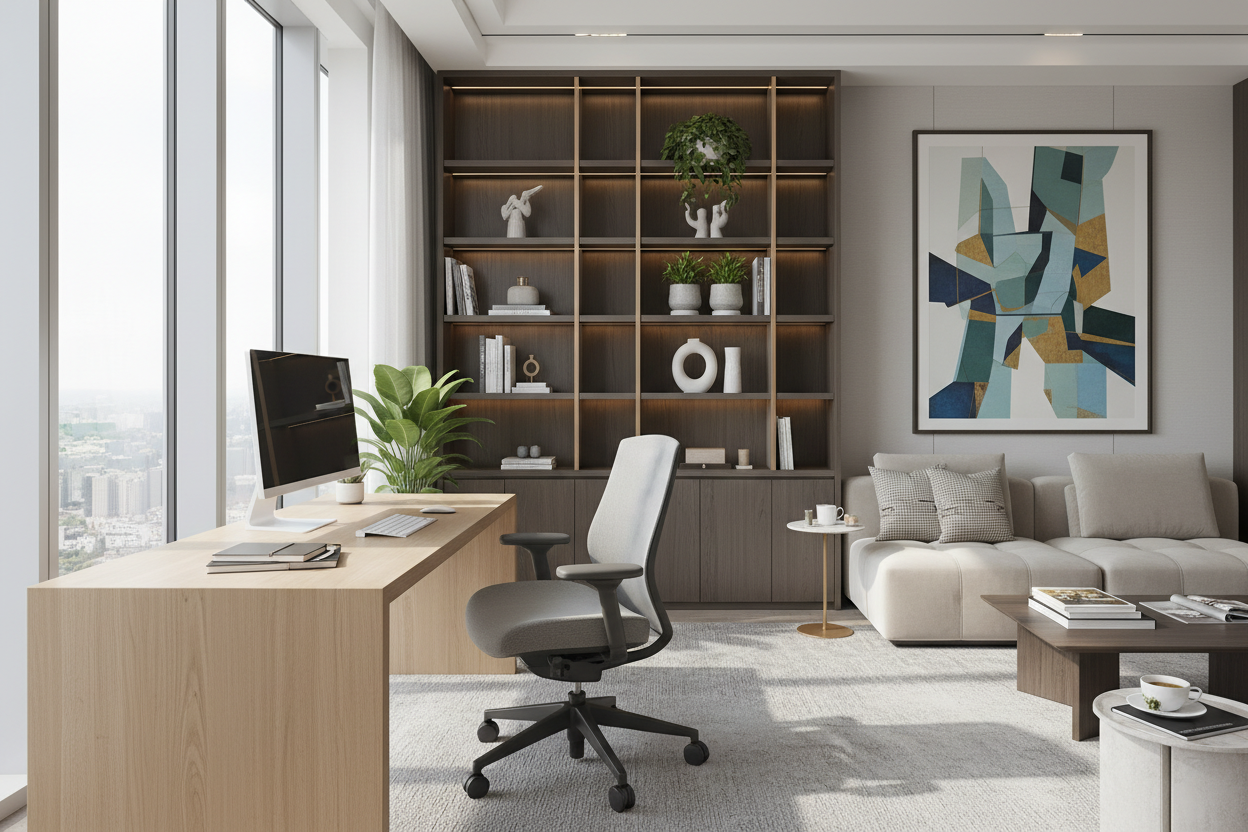
For a standard executive setup, allow at least 42 inches behind the desk for chair movement. If you are looking at office sets for the desk that include a credenza or hutch, ensure the vertical height doesn't overwhelm the room's ceiling height. In smaller rooms, opt for desk suites with open leg silhouettes (like metal frames) rather than solid modesty panels, which can make the space feel boxy and claustrophobic.
Visual Balance and Style
Cohesion does not mean everything must look identical, but it does require a shared language. If your architecture is traditional, a heavy mahogany set adds gravitas. For contemporary spaces, look for clean lines and mixed materials, such as glass tops paired with brushed steel.
When selecting office package furniture, consider the hardware as the "jewelry" of the piece. Brushed brass handles can warm up a cool grey finish, while matte black pulls offer a modern, industrial edge. Ensure the finish of the furniture complements the ambient lighting in your room; dark woods absorb light and may require additional task lighting, while lighter maples reflect it.
Lessons from My Own Projects
I learned the hard way about the importance of "touchability" in a project I designed a few years ago. I specified a stunning, high-gloss black lacquer suite for a client who wanted a 'Mad Men' aesthetic. visually, it was a masterpiece. Practically? It was a nightmare.
Within a week, the client called me. Every fingerprint, every speck of dust, and the micro-scratches from his laptop caused a visual distraction. We ended up having to cover that beautiful surface with a custom leather desk blotter just to make it usable. Now, whenever I recommend a darker finish, I always steer clients toward matte or satin finishes with a bit of wood grain texture. That texture hides the reality of daily use—dust and oils—much better than a flat, glossy surface ever will. It’s a small detail, but it saves you from wiping down your desk five times a day.
Conclusion
Investing in a coordinated suite is about more than just buying a table and a shelf; it is about creating an ecosystem for your best work. By prioritizing material quality and respecting the spatial limits of your room, you can select a suite that elevates your home's value and your daily productivity.
Frequently Asked Questions
How do I maintain a wood veneer office set?
Dust regularly with a microfiber cloth and use a specific wood cleaner free of silicone or wax, which can build up over time. Always use coasters, as veneer is susceptible to water rings and heat damage.
Can I fit a full furniture set in a small 10x10 room?
Yes, but scale is critical. Look for an L-shaped corner desk configuration to maximize floor space, and utilize vertical storage (tall hutches) rather than wide lateral file cabinets to keep the footprint minimal.
Is it better to buy a set or mix and match pieces?
Buying a set ensures the wood stains and hardware finishes match perfectly, which is difficult to achieve when sourcing separately. It also typically ensures that desk and return heights are ergonomically aligned.

Leave a comment
This site is protected by hCaptcha and the hCaptcha Privacy Policy and Terms of Service apply.