

















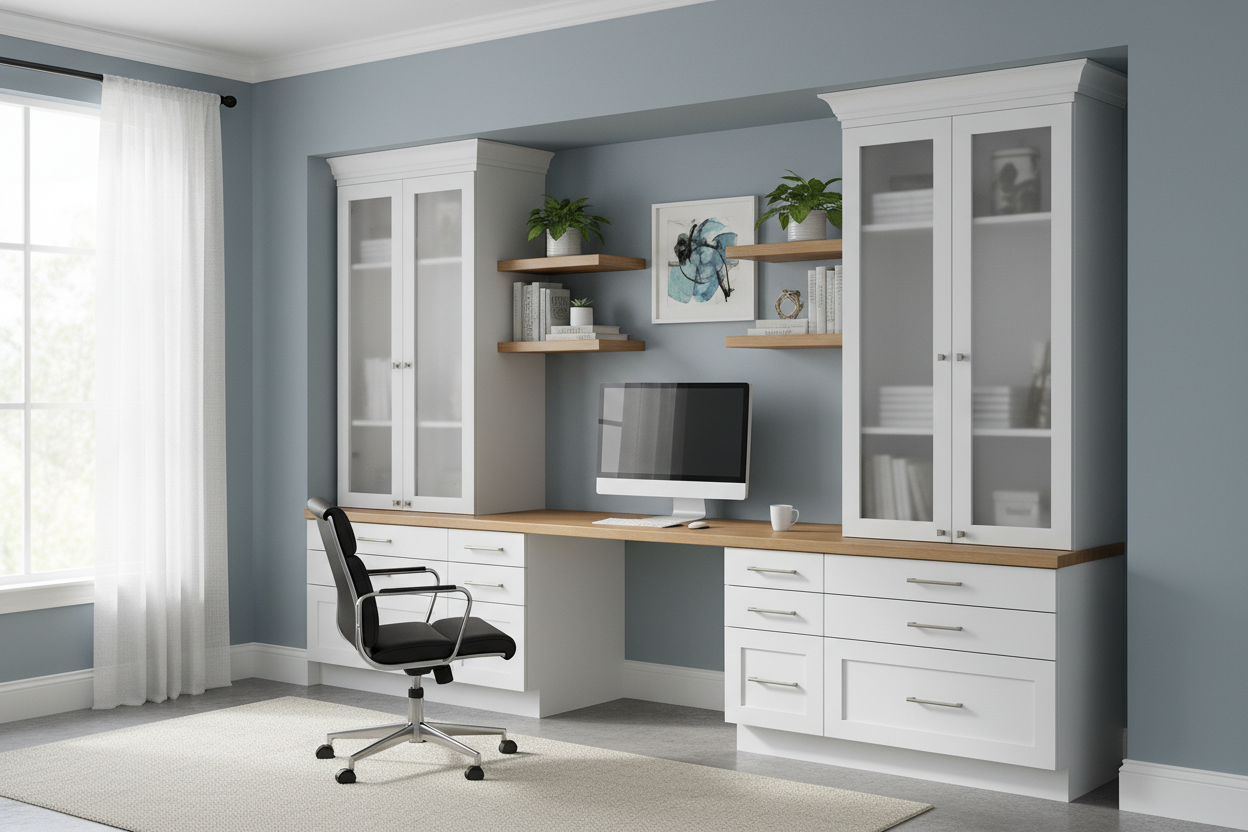
It usually starts with a simple realization: your home office feels less like a productive sanctuary and more like a chaotic storage room. Whether you are working from a converted guest bedroom or a dedicated study, managing paper clutter, printers, and tech accessories is a constant battle. The default solution is often a flimsy bookshelf, but if you want to achieve a polished, built-in aesthetic without the jaw-dropping cost of custom millwork, looking into office cabinets home depot is a surprisingly smart move.
With the right approach to sizing, hardware, and installation, big-box store cabinetry can look entirely bespoke. In this guide, I will walk you through exactly how to select, style, and install these pieces so they add serious value and function to your workspace.
Quick Decision Guide
- Measure twice, buy once: Always account for baseboards and wall trim when calculating your wall space for flush installations.
- Prioritize closed storage: Hide the visually heavy items (printers, shredders, routers) behind solid doors to maintain a calm environment.
- Check the drawer glides: Opt for units that feature full-extension, soft-close hardware, or plan to upgrade the tracks yourself for a premium feel.
- Consider the finish: Primed or unfinished wood options offer the most flexibility if you plan to color-match your existing room trim.
Maximizing Space and Layout
The Magic of Desk Level Storage
One of the most effective ways to make a room feel larger is to keep furniture below eye level. Incorporating desk height cabinets home depot allows you to extend your functional work surface. By placing two identical base cabinets a few feet apart and topping them with a solid wood butcher block or quartz slab, you instantly create a custom double-desk setup. This layout provides massive amounts of hidden storage while keeping the visual weight of the room grounded.
If you are working with a tight corner, look for modular home depot desk cabinets that offer file drawer configurations. Ensuring your printer and hanging files are within an arm's reach of your chair drastically improves daily ergonomics.
Quality Check: Materials and Hardware
Upgrading the Details
Let's be realistic: a standard home depot office cabinet is often constructed from MDF or particleboard with a melamine veneer. While this makes it affordable and resistant to minor scratches, it can look undeniably commercial straight out of the box. The secret to bridging the gap between budget and luxury lies in the hardware.
Throw away the generic plastic or hollow metal pulls that come in the box. Swap them for solid brass, matte black, or polished nickel hardware. This simple tactile change tricks the brain; when a cabinet door feels heavy and substantial to open, the entire unit feels significantly more expensive.
Styling for a High-End Aesthetic
Blending with Your Home's Architecture
To prevent your workspace from looking like a corporate cubicle, you need to integrate your home depot office storage into the room's existing architecture. If you are stacking upper and lower units to create a wall of storage, add a simple crown molding at the ceiling and wrap your room's baseboard around the bottom of the cabinets. This eliminates the awkward dust-catching gaps and creates a seamless, built-in silhouette.
When arranging your home depot office storage cabinets, balance closed base units with open shelving above. Use the open space for curated art, trailing plants, and attractive books, leaving the messy reality of office life hidden behind closed doors below.
Lessons from My Own Projects
A few years ago, I designed a shared home office for a couple transitioning to permanent remote work. The budget was tight, so we used stock cabinetry from the aisles of Home Depot to build a wall-to-wall credenza. We painted them a moody, dark green and added unlacquered brass cup pulls. Visually, it was a massive success.
However, I learned a hard lesson about weight limits. The adjustable shelves inside these stock units are typically 5/8-inch particleboard. After loading one shelf with heavy architectural sample books, it developed a noticeable bow within three weeks. I had to go back, cut custom 3/4-inch plywood shelves, and reinforce the backs of the cabinets. If you plan to store heavy paper reams, books, or bulky equipment, do not trust the factory shelves. Upgrade them immediately to prevent sagging.
Frequently Asked Questions
Are these cabinets difficult to assemble and install?
Most stock cabinets come pre-assembled, which saves hours of frustration compared to flat-pack furniture. However, installing them securely requires finding the wall studs, leveling the bases with shims, and securing them properly to ensure they don't tip.
Can I paint laminate or melamine cabinets?
Yes, but preparation is non-negotiable. You must lightly scuff the surface with fine-grit sandpaper and use an extreme-bond primer (like a shellac-based primer) before applying your cabinet paint. Skipping the primer guarantees the paint will peel within months.
How do I make stock cabinets look built-in?
The trick is trim. Secure the cabinets to the wall, add filler pieces to close any gaps between the cabinet and the side walls, and install baseboards along the bottom toe-kick area to match the rest of the room.


Leave a comment
This site is protected by hCaptcha and the hCaptcha Privacy Policy and Terms of Service apply.