

















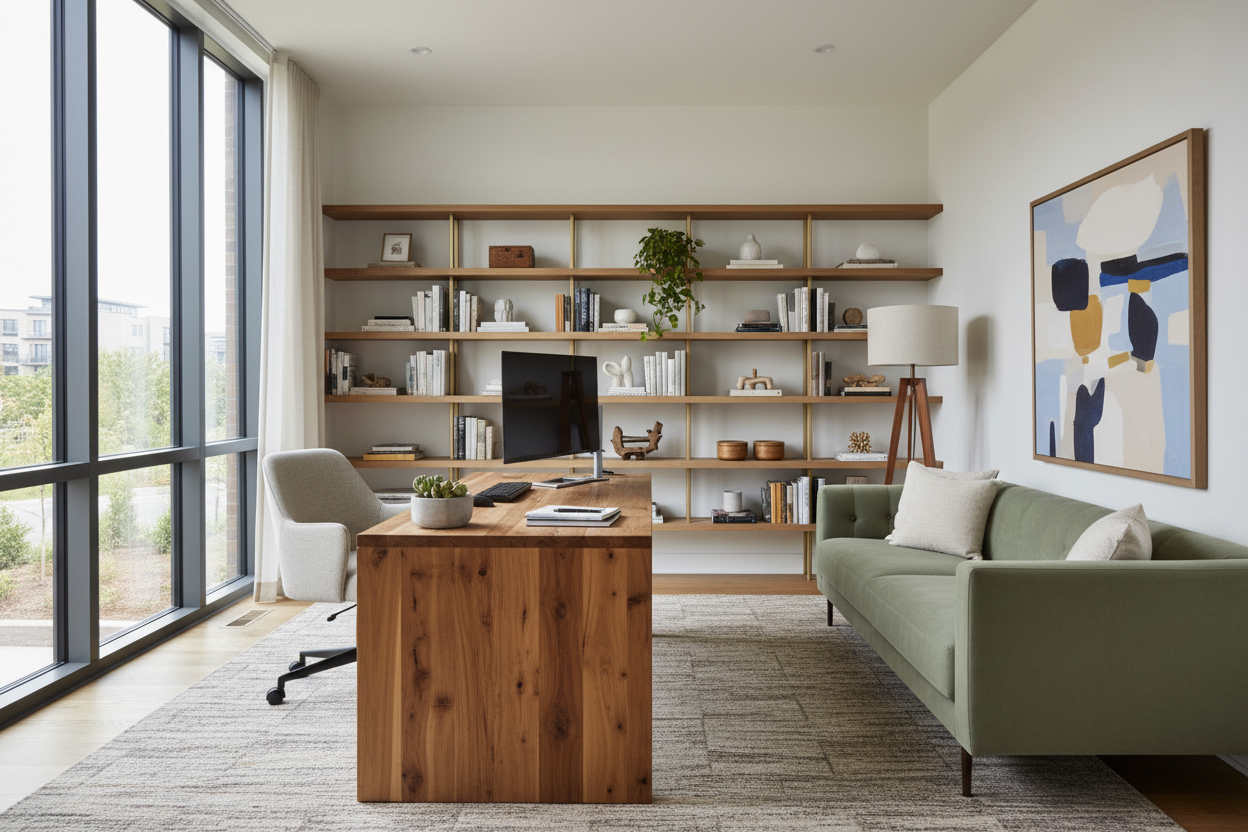
We have all experienced it: you walk into a room, sit down to tackle a major project, and immediately feel cramped, distracted, or uninspired. Often, the culprit is not the furniture itself, but how it relates to the room. If your desk is shoved into a dark corner or facing a blank wall, you are working against your own psychology. Implementing thoughtful office arrangement ideas is the fastest way to fix a stagnant layout.
Whether you are outfitting a spare bedroom or rethinking a corporate suite, the way you position your desk, lighting, and storage dictates how you feel and function throughout the day. In this guide, we will break down the layout rules that actually matter, helping you build a room that supports deep focus and looks incredibly put together.
Quick Decision Guide
- Command position is non-negotiable: Place your desk so you have a clear view of the door without being directly in line with it.
- Float the furniture: Pulling your desk away from the wall immediately makes the room feel larger and more intentional.
- Mind the glare: Position screens perpendicular to windows to avoid harsh backlighting and eye strain.
- Zone your activities: Separate your computer work area from a reading or brainstorming zone to create physical boundaries.
- Prioritize circulation: Leave at least 36 inches of clearance behind your desk chair for comfortable movement.
Mastering Your Room's Layout
The Power of the Command Position
The most common mistake I see in residential and corporate setups is pushing the desk flush against a wall. While this might seem like a great way to save floor space, it creates a claustrophobic environment. Instead, anchor your layout around the command position. This means sitting with a solid wall behind you and a clear line of sight to the entrance. It is a foundational concept in office space ideas for work because it subtly reduces anxiety and puts you in a position of control.
Navigating Clearances and Flow
Good office designs respect the physical dimensions of the room. You need breathing room. Always allow a minimum of 36 inches behind your desk chair so you can slide out without hitting a wall or a credenza. If you are incorporating guest seating or a secondary reading chair, leave a 24-inch walkway between pieces. When brainstorming office set up ideas at work or at home, tape out the dimensions on the floor before moving heavy furniture.
Creating Visual Harmony
Balancing Tech and Texture
A workspace can quickly feel cold if it is dominated by monitors, cables, and metal filing cabinets. To counter this, introduce organic textures. A natural wool rug, a solid walnut desk, or linen drapery softens the hard edges of technology. When clients ask for nice office designs, my first step is usually replacing sterile, matching furniture sets with curated, mixed materials that feel collected over time.
Lighting as a Layout Tool
Your furniture arrangement should always respond to the natural light in the room. If you have a beautiful window, do not face your monitor directly toward it (the glare will ruin your vision) or put your back to it (you will look like a shadow on video calls). Position your desk perpendicular to the light source. This simple shift is one of the most effective office design ideas for work you can implement.
Building a Supportive Environment
The Foundation of Focus
A successful office setup design goes beyond aesthetics; it requires rigorous attention to ergonomics. The height of your desk and the depth of your chair must align. Standard desks sit at 29 to 30 inches high, which is actually too tall for many people without an adjustable chair and a footrest. Pair your arrangement with storage that sits within arm's reach. If you have to stand up and walk across the room every time you need a pen, your layout is broken.
Lessons from My Own Projects
Early in my career, I designed what I thought was the ultimate executive suite. I used a massive, custom glass desk floating in the center of the room, facing a floor-to-ceiling window. It looked incredible in photographs and perfectly fit the client's request for office front design ideas that would impress visitors.
The reality? It was a daily nightmare for the client. The glass surface showed every single fingerprint and dust particle. Worse, because the desk floated in the center of the room, cable management became an expensive, complicated headache involving floor trenching. I learned the hard way that good office design ideas must prioritize daily function over a single dramatic focal point. Now, I always specify desks with built-in modesty panels or wire-management channels if they are going to float in the room, and I strongly caution against clear glass work surfaces for heavy daily use.
Frequently Asked Questions
How do I arrange a small office?
In tight quarters, vertical space is your best asset. Use tall bookshelves instead of wide credenzas. If you cannot float the desk due to square footage, try positioning it perpendicular to the wall rather than facing it directly. This keeps the room open while maximizing your workspace design ideas.
Where should my desk face?
Ideally, your desk should face the center of the room with a view of the door, while remaining perpendicular to any large windows. This arrangement minimizes glare on your screen and provides a psychological sense of security, which is a staple of effective work office design ideas.
How do I hide cables if my desk is in the middle of the room?
If you do not have floor outlets, run a high-quality, braided extension cord under a strategically placed area rug. You can also route cables down the back leg of your desk using zip ties or a cable sleeve. For office designs for work, investing in a desk with a built-in cable management tray is absolutely worth the upfront cost.

Leave a comment
This site is protected by hCaptcha and the hCaptcha Privacy Policy and Terms of Service apply.