




I've helped clients furnish over 200 homes, and I've seen it all—the entertainment center that looked stunning online but arrived with wobbly shelves, the unit that fit the TV perfectly but left cables snaking across the floor, the beautiful piece that just felt 'off' in the room. When I say a nice entertainment center, I'm not just talking about something pretty. I mean a piece that truly works for your life. Let's talk about how to find one.
Quick Takeaways
- A truly nice entertainment center balances three things: how it looks, how it functions, and how well it's built.
- Proportion is key—a unit should be about two-thirds the width of your wall and sit 4-6 inches below your mounted TV.
- Look for functional details like built-in cable management channels and adjustable shelves that hold at least 50 lbs.
- Check construction you can't see, like dovetail or mortise-and-tenon joinery, which lasts decades longer than staples.
Beyond Aesthetics: The Three Pillars of a Truly Nice Entertainment Center
When a client asks for a 'nice' entertainment center, they usually mean 'not ugly.' But after placing hundreds of them, I define 'nice' by three pillars working together. First, visual appeal: it should complement your room's style. Second, functionality: it must organize your tech and media effortlessly. Third, construction quality: it needs to feel solid and last. A piece can be beautiful but fail if the shelves sag under your game console or the finish chips in a year. I always remind clients to assess value holistically, as discussed in our article, Is A Tv Stand And Entertainment Center Worth The Space.
The Visual Checklist: What Makes an Entertainment Center Look 'Nice'
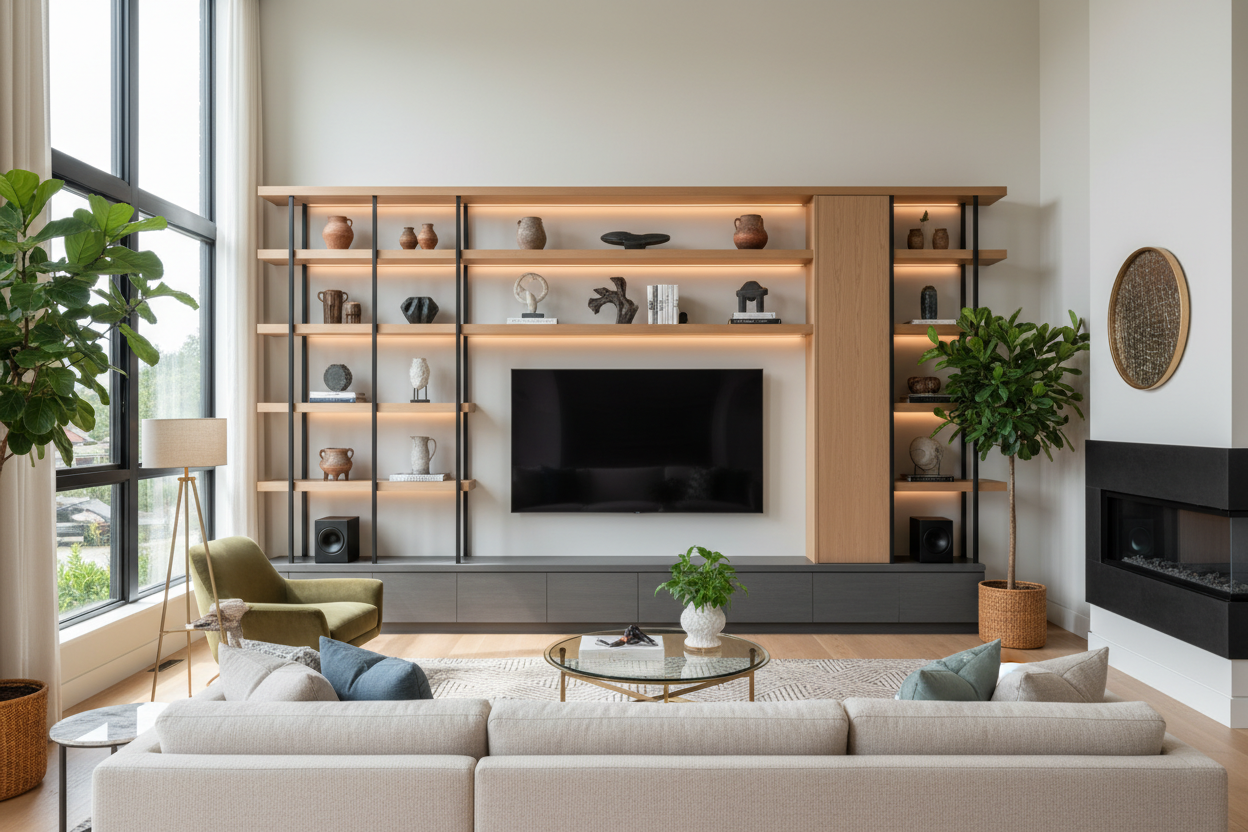
Visual appeal is the first thing you notice. It's not just about a trendy color; it's about harmony. Does the style—modern, rustic, traditional—match your existing furniture? Is the finish consistent, without blotches or rough edges? Are the hardware pieces (knobs, handles) cohesive and feel substantial, not plasticky? A unit that looks 'nice' feels intentional, like our Stylish Black Tv Stand Entertainment Center, where the clean lines and matte finish create a polished, integrated look.
Proportion and Scale: Getting the Size Right
This is where most mistakes happen. For a balanced look, your entertainment center should be roughly two-thirds the width of the wall it's on. If your TV is 65 inches, aim for a unit at least 60 inches wide. Height matters too: if mounting the TV above, leave 4 to 6 inches of clearance so it doesn't feel crammed. In a standard 12x14 living room, a unit deeper than 18 inches can eat up precious walkway space—keep main pathways at least 36 inches clear.
Finish and Details: The Devil's in the Design
Run your hand along the edges. Are they smooth, or can you feel the laminate lifting? Check corners: mitered joints look cleaner than simple butt joints. Open a door—does it close quietly with a soft-close mechanism, or does it slam? Hardware should feel weighty; I prefer solid metal over coated plastic. Look at the back panel: is it finished, or just raw particleboard? These small details separate mass-produced items from thoughtfully designed pieces.
Functionality That Feels Nice: Smart Storage and Tech Integration
A nice entertainment center makes your life easier, not more cluttered. It needs accessible storage: open shelves for daily items, doors to hide less-used media. I look for adjustable shelves—this lets you customize for a soundbar, gaming console, or tall books. Cable management is non-negotiable; built-in channels or rear cutouts keep wires out of sight. Ventilation is crucial for electronics; ensure at least 2 inches of clearance around components like receivers. Our Four Door Wood Grain Color Entertainment Center excels here with its mix of concealed and display storage.
Construction Quality: What You Can't See But Definitely Feel
This is the pillar you feel every time you open a drawer. Knock on the sides: solid wood or plywood (at least ¾-inch thick) sounds dense; thin particleboard sounds hollow. Check the joinery: dovetail joints in drawers are a sign of quality, while stapled corners often loosen. Weight capacity matters—shelves should hold at least 50 pounds. Pull out a drawer and look at the glide system; full-extension, ball-bearing glides operate smoothly for years. A well-built unit feels substantial when you move it, not like it might tip over.
Putting It All Together: Your Nice Entertainment Center Selection Guide
Here's my step-by-step approach from the showroom floor. First, measure your space and TV. Second, assess your storage needs—count your devices and media. Third, examine candidates in person if possible: open every door, test every drawer, check the weight. Ask: What's the primary material? How are the joints constructed? Is there a warranty? Fourth, visualize it in your room—does the scale work? Finally, explore options with these criteria, like our Entertainment Center Collection. Once you've chosen, consider Styling A Bookcase And Entertainment Center for that finished look.
Personal Experience: The One That Got Away
Early in my career, I specified a gorgeous, budget-friendly entertainment center for a client's modern loft. It looked perfect online—sleek, white, minimalist. When it arrived, the cardboard-thin back panel bowed immediately, and the drawer glides jammed within a month. We replaced it with a simpler piece made with plywood box construction. It cost 30% more but lasted through two moves and a toddler. The lesson? What you save upfront often costs in frustration later.
FAQ
How deep should an entertainment center be?
Most are 16 to 20 inches deep. This accommodates most components while leaving room for decor on top. Go deeper only if you have a large room or need to store oversized items.
Can I use an entertainment center with a wall-mounted TV?
Absolutely. It becomes a media console. Ensure the unit is substantial enough (both visually and physically) to anchor the space below the TV. The top is great for styling with books, plants, or a soundbar.
What's better: open shelves or closed cabinets?
I recommend a mix. Open shelves (about 30-40% of the unit) are perfect for items you use daily or want to display. Closed cabinets hide clutter like game cases, remotes, and cables, keeping the look clean.
How do I protect my entertainment center from sunlight?
Direct sunlight can fade finishes. Use UV-filtering window film or position the unit away from direct rays. For wood units, regular dusting and occasional polish with a manufacturer-recommended product help maintain the finish.

Leave a comment
This site is protected by hCaptcha and the hCaptcha Privacy Policy and Terms of Service apply.