

















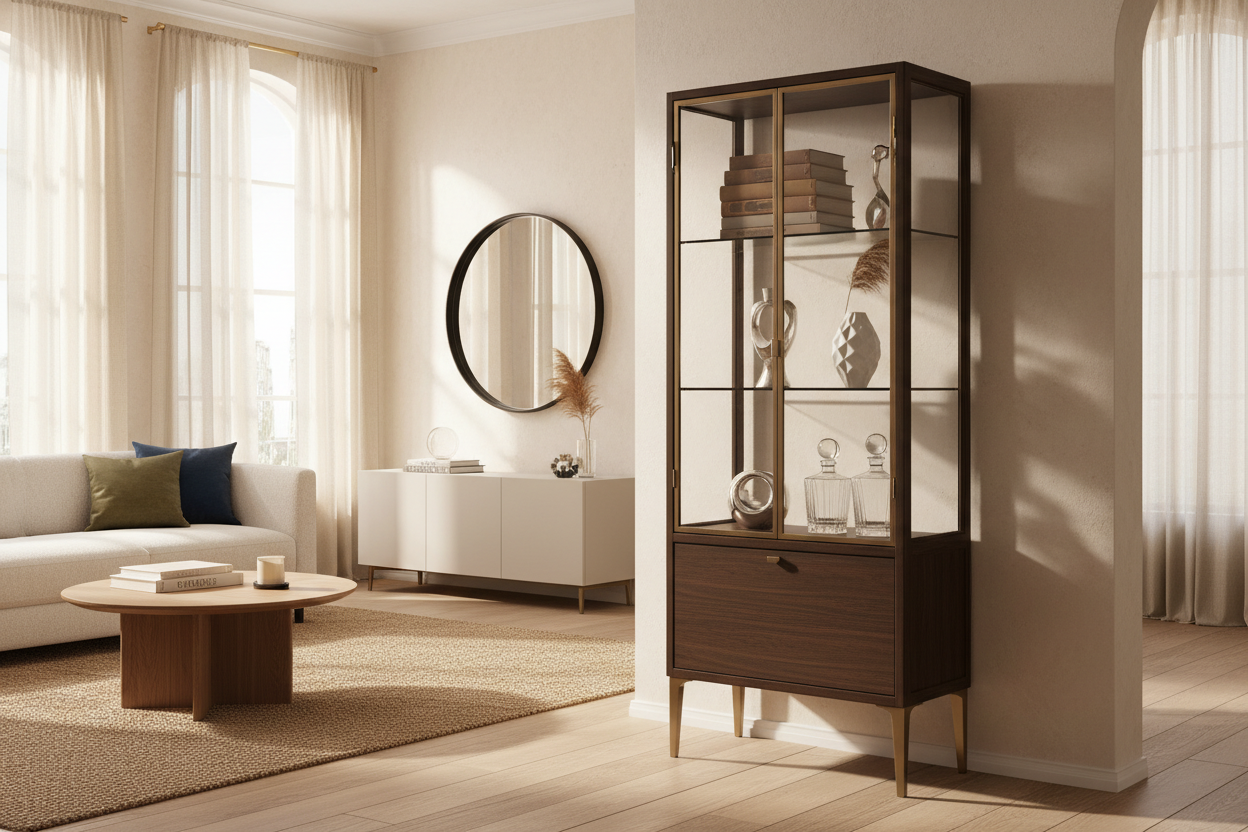
We have all seen it happen. You spot a gorgeous glass-front piece online, bring it home, and suddenly your living room feels like a cluttered thrift shop. The piece that was supposed to anchor the room now completely overwhelms it. Figuring out how to select and curate your next display cabinet is one of the most common design hurdles I tackle in residential projects.
Whether you are dealing with an open-concept suburban home or a compact city apartment, a display piece should act as a curated focal point, not a catch-all storage bin. Here is how to get the scale, materials, and styling exactly right so your space feels intentional and balanced.
Quick Decision Guide
- Scale matters: Leave at least 36 inches of walking clearance between your cabinet and any opposing seating.
- Visual weight: Choose glass-front or open-sided cabinets if your room lacks natural light; solid wood bases work better in larger spaces.
- Lighting is crucial: Built-in LED channel lighting makes a massive difference in highlighting decor and adding evening ambiance.
- The curation rule: Aim for a 60/40 ratio of positive (objects) to negative (empty) space on your shelves.
Sizing Up Your Space and Layout
The 36-Inch Clearance Rule
A beautiful cabinet loses its charm if you have to squeeze past it every day. In standard North American living and dining rooms, you need a minimum of 36 inches of clear walkway around the piece. If you are placing it behind a floating sofa, ensure there is enough room to fully open the cabinet doors without hitting the upholstery.
Vertical vs. Horizontal Proportions
Tall, narrow cabinets draw the eye upward, making standard 8-foot ceilings feel slightly higher. However, if you have a long, empty wall in a dining room, a wider, lower cabinet balances the negative space much better than a single, towering piece. Always measure your wall and tape out the dimensions on the floor before ordering.
Mastering the Art of Shelf Styling
The 60/40 Principle
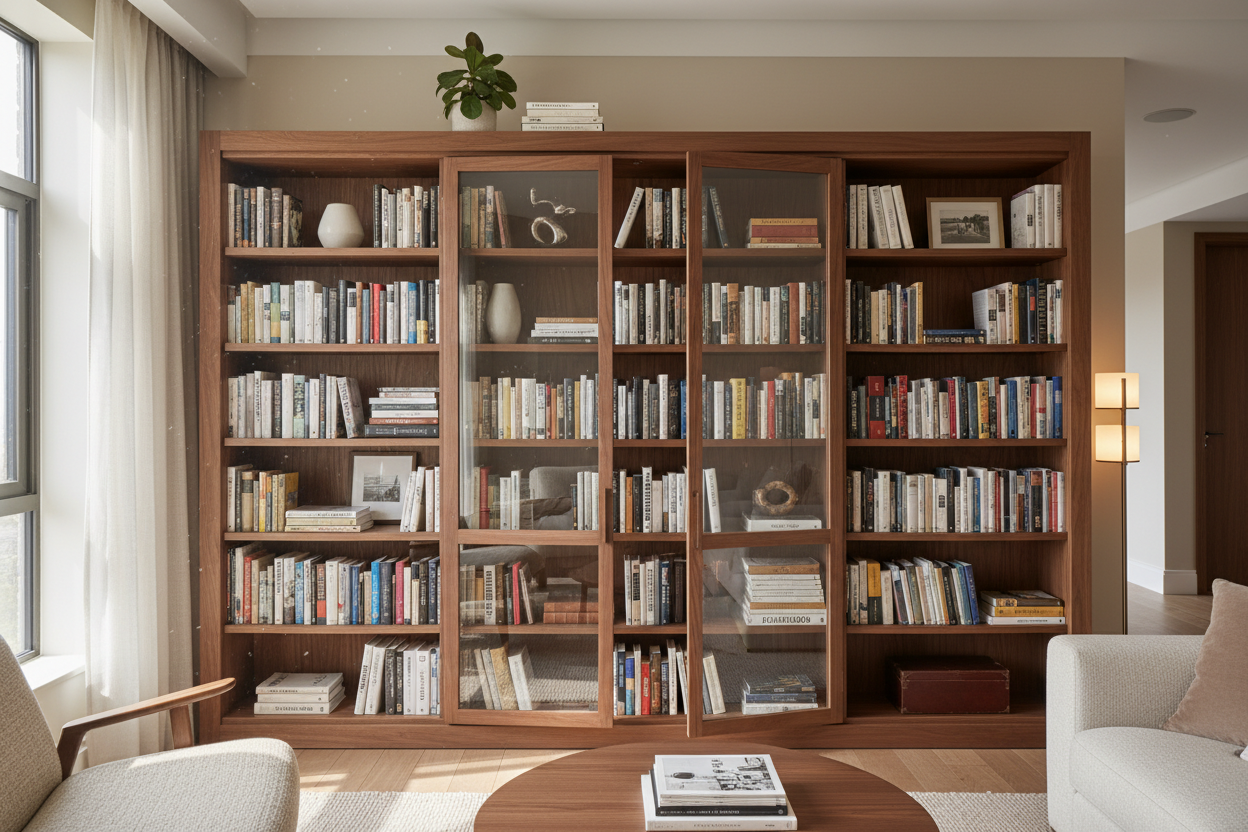
The fastest way to ruin the look of a high-quality cabinet is to pack it full. I always tell my clients to follow the 60/40 rule: 60 percent of the shelf should hold your styled objects, while 40 percent should remain empty. This negative space allows the eye to rest and makes the items you do display feel important.
Layering Textures and Tones
Avoid lining up items of the exact same height like soldiers on parade. Create small groupings using a mix of materials. Pair a rough ceramic vase with a stack of smooth, linen-bound books, or place a metallic brass sculpture next to a matte wooden bowl. Varying the heights and textures creates a dynamic, layered silhouette.
Assessing Materials and Longevity
Solid Wood vs. Engineered Wood
If you are investing in a piece that will hold heavy ceramics or large books, pay close attention to the shelf construction. Solid oak or walnut will resist bowing over time, but they come with a hefty price tag. High-quality engineered wood with a real wood veneer is often a smarter, more climate-stable choice for homes with dramatic seasonal humidity shifts.
Designer's Honest Take
Early in my career, I specified a stunning, matte black metal cabinet with fully tempered glass shelves for a client's sun-drenched living room. It looked incredible on installation day. Then, I learned the hard way just how high-maintenance that combination is.
Within a week, every single speck of dust and fingerprint was illuminated by the afternoon sun. The client hated it, and I had to swap the glass shelves for warm walnut ones at my own expense. If you are putting a cabinet in direct sunlight or have young kids, avoid clear glass shelves. Stick to wood or frosted glass unless you genuinely enjoy dusting every other day.
Frequently Asked Questions
What size cabinet do I need for my living room?
It depends on your wall size, but a good rule of thumb is that the cabinet should not take up more than two-thirds of the wall's width. Leave at least 12 to 18 inches of breathing room on either side so the piece does not look crammed into the space.
How do I clean a glass display cabinet safely?
Skip the harsh ammonia-based cleaners, which can degrade wood finishes around the glass. Use a simple mixture of distilled water and white vinegar applied with a microfiber cloth. Spray the cloth, not the glass, to prevent drips from seeping into the cabinet joints.
Can I put a display cabinet in a hallway?
Yes, provided the hallway is wide enough. You need at least 36 inches of clear walking path after the cabinet is installed. For narrow corridors, look for a shallow profile cabinet—anything under 14 inches deep—to avoid creating a bottleneck.


Leave a comment
This site is protected by hCaptcha and the hCaptcha Privacy Policy and Terms of Service apply.