

















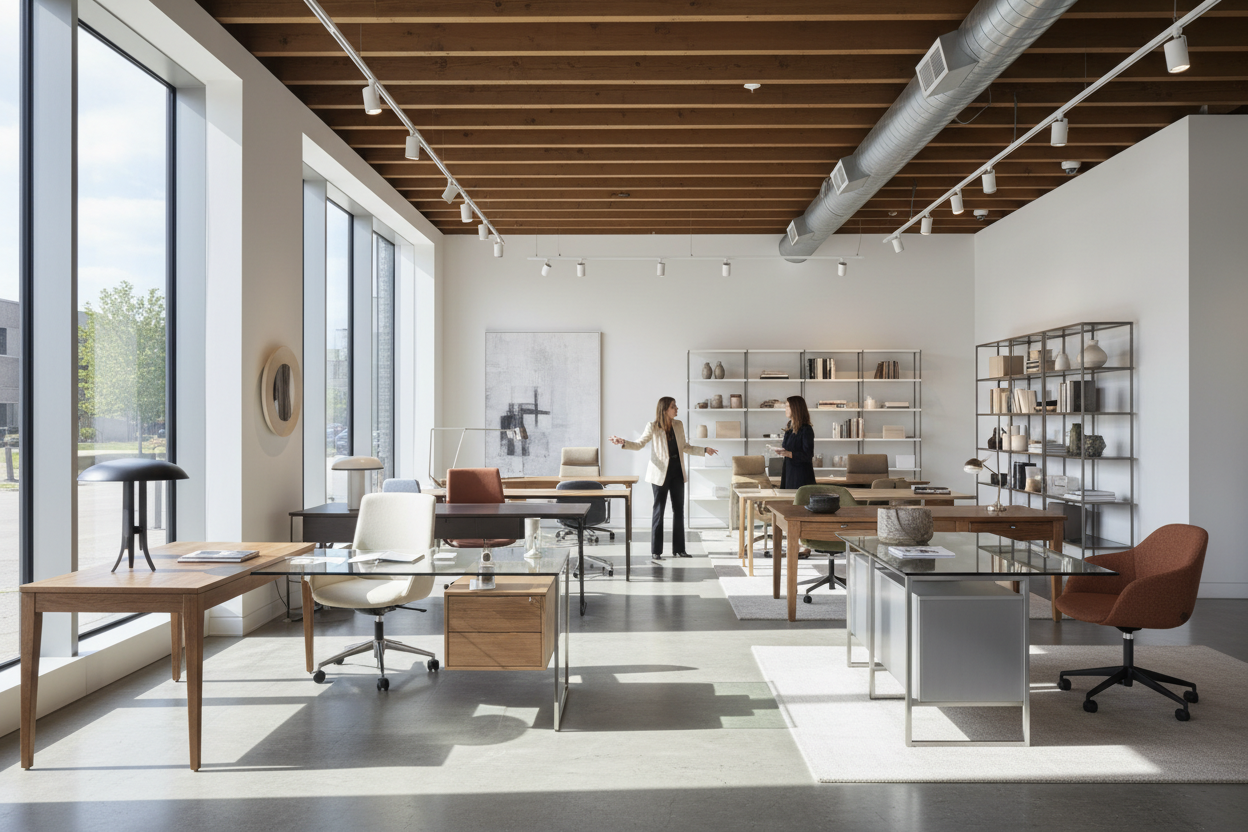
Walking into a showroom can be visually overwhelming. You are met with a sea of finishes, silhouettes, and price points, making it difficult to distinguish between a piece that will last a decade and one that will wobble within a month. As a designer, my goal is to help you look past the staging and lighting to assess the structural integrity of the piece. Before you visit local desk furniture stores to make a purchase, you need a strategy that prioritizes function as much as aesthetic appeal.
Key Features to Look For
- Joinery Techniques: Look for dovetail or mortise-and-tenon joints rather than staples and glue.
- Material Composition: Distinguish between solid hardwoods, high-grade veneers, and particle board.
- Hardware Quality: Test drawer glides for full extension and soft-closing mechanisms.
- Ergonomics: Verify the clearance height for your legs and office chair arms.
- Finish Durability: Check for commercial-grade sealants that resist coffee rings and heat.
Assessing Material Integrity
When curating a home office, the material dictates the longevity of the investment. In a high-end desk furniture store, you will typically encounter three main categories: solid wood, wood veneer, and laminate.
Solid Wood vs. Veneer
While solid wood is often touted as the gold standard for its ability to be refinished, do not dismiss high-quality veneers. A thick walnut veneer over a stable plywood core can actually resist warping better than solid wood in climates with fluctuating humidity. However, ensure the edge banding is substantial; thin banding is the first place to chip and reveal the substrate beneath.
The Tactile Test
Run your hand across the surface. A superior finish should feel satin-smooth with no roughness (grain raising). If the desk has a lacquer finish, it should be consistent without bubbling. This tactile experience is something you cannot get online, which is why visiting a showroom is crucial.
Space Planning and Visual Weight
A common error homeowners make is misjudging scale. A heavy, double-pedestal executive desk requires a room with substantial volume to avoid feeling claustrophobic. For smaller, multi-purpose rooms, look for a writing desk with a "leggy" silhouette. This allows light to pass through and underneath the furniture, maintaining a sense of openness and flow.
The Floating Desk Layout
If you plan to "float" the desk in the center of the room rather than pushing it against a wall, you must inspect the back panel (modesty panel). Many desks are unfinished on the back. Ensure the piece is fully finished 360 degrees so it creates a striking focal point from every angle.
My Personal Take on Desk Furniture Stores
I have spent countless hours with clients in showrooms, and there is one "unpolished" test I perform that always embarrasses the sales staff but saves my clients money: The Shake Test.
I will stand at the corner of a floor model and give it a firm, lateral shove. If the desk racks (wobbles side-to-side), I walk away immediately. I once fell in love with a stunning mid-century modern reproduction in a boutique showroom. It had beautiful brass ferrules and a rich teak finish. However, when I sat down to simulate typing, the monitor vibration was unbearable because the legs lacked cross-bracing. Another detail I always check is the underside of the desktop. I’ve ruined too many pairs of trousers and stockings on rough, unfinished wood staples hiding underneath. A true quality piece is finished even where you can't see it.
Conclusion
Your workspace should be a marriage of utility and inspiration. By focusing on joinery, material stability, and proper scale, you ensure that your new desk serves as a reliable foundation for your best work, rather than just another surface to collect dust.
Frequently Asked Questions
What is the standard height for a desk?
Most standard desks sit between 29 and 30 inches high. However, if you are shorter or taller than average, test the desk with a chair similar to yours to ensure your elbows rest at a 90-degree angle.
Should I buy a desk with integrated cable management?
Absolutely. In modern design, visible cords ruin the visual lines of the furniture. Look for desks with grommets, hidden channels, or hollow legs that allow you to route power cords invisibly.
Is a glass desk a good idea for a home office?
Glass desks offer excellent visual lightness for small spaces, but they are high-maintenance regarding fingerprints and dust. They also lack the warmth and sound-dampening qualities of wood, which can make a room feel "cold" acoustically.

Leave a comment
This site is protected by hCaptcha and the hCaptcha Privacy Policy and Terms of Service apply.