

















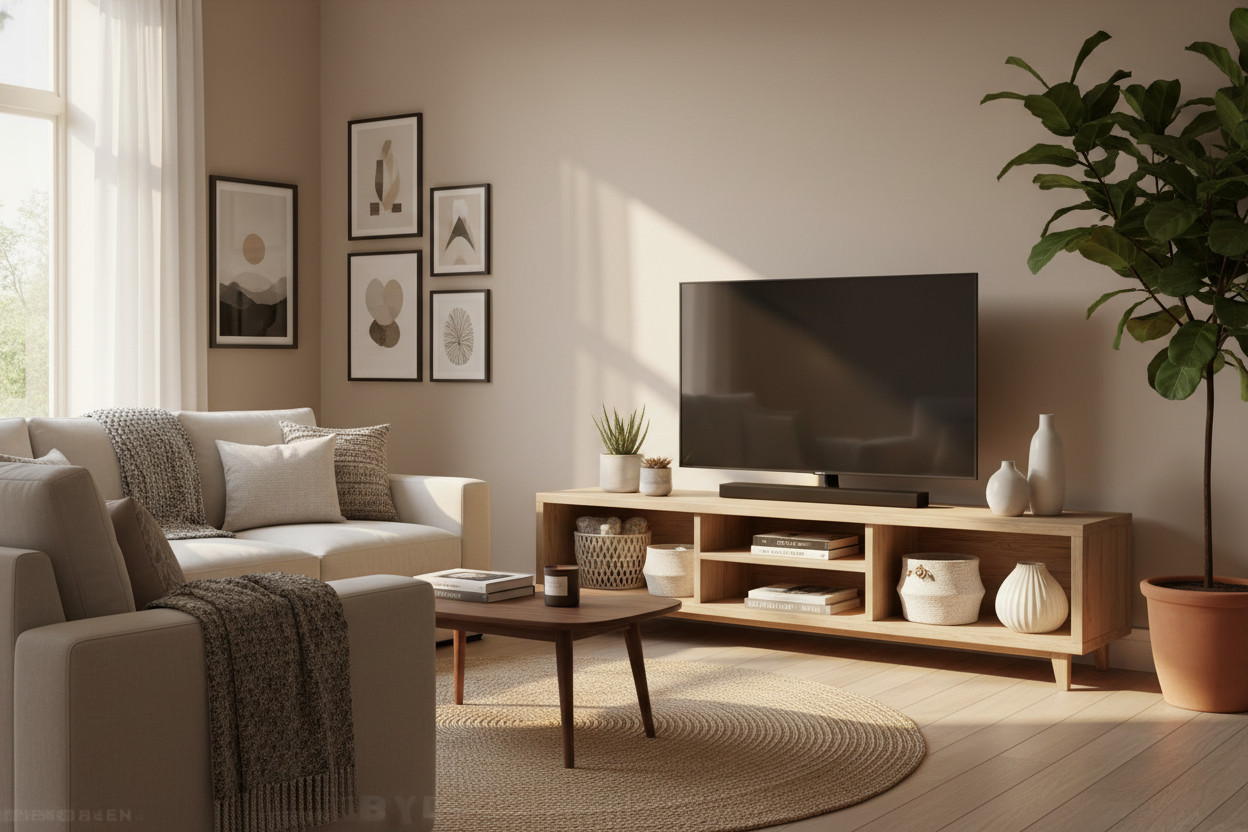
I once spent nearly a thousand dollars on a 'designer' media console that arrived with a hairline fracture and doors that never quite closed straight. It was a wake-up call. I realized that for something that literally just sits against a wall holding a screen, I was overpaying for a name rather than quality. Now, when I'm staging homes or helping friends, I focus exclusively on finding tv stands under $300 because the quality difference between $250 and $800 is often non-existent.
Staring at 50 different tabs of media units at 2 AM is a rite of passage for any renter, but you don't have to settle for something that wobbles if you sneeze on it. I've built enough flat-pack furniture to know which ones will survive a move and which ones will end up on the curb.
Quick Takeaways
- Weight capacity is the truest measure of build quality; aim for 100 lbs or more.
- Avoid 'high-gloss' finishes in this price range; they look like plastic and scratch instantly.
- Always check the back panel material—sturdy MDF is better than folded cardboard.
- A hardware swap is the fastest way to make a $200 piece look like a $700 custom build.
Why I Stopped Recommending Splurges on Media Consoles
There was a time when I thought a media center had to be an 'investment piece.' I was wrong. Unlike a sofa or a mattress, you aren't putting your body weight on a TV stand every day. It doesn't need to be kiln-dried oak to do its job. In fact, spending $1,200 on a console often leaves you with a beautiful piece of furniture that is technologically obsolete in five years when TVs get even bigger or thinner.
Setting a strict budget is actually liberating. When you stop looking at the four-figure options, you start noticing that the mid-range pieces often use the exact same cam-lock connectors and hardware as the luxury brands. I'd rather spend $250 on the stand and put the remaining $750 toward a better soundbar or a rug that actually feels good underfoot. It’s about prioritizing the items you touch and sit on over the ones you just look at.
The $150 to $300 'Sweet Spot' Explained
There is a massive jump in quality once you move past the rock-bottom budget items. While finding an ultra-cheap tv stand is possible, those sub-$100 units usually use paper-thin veneers that peel if you set a damp coaster on them. They feel hollow because they are.
The $150 to $300 range is the sweet spot. When you're looking for a tv stand under $250, you're usually getting thicker MDF (medium-density fiberboard) and hinges that actually have some tension to them. These pieces have enough heft to stay put when you're plugging in HDMI cables. I've found that units in this price tier can easily survive two or three moves if you don't drag them across the floor by the top shelf. You get the look of a high-end piece without the 'custom furniture' markup that usually just pays for a fancy showroom's rent.
The 3 Details That Give Away Cheap Furniture (And How to Avoid Them)
When browsing modern tv stands, the photos are designed to lie to you. You have to look at the specs. First, check the weight. If a 60-inch console weighs less than 50 pounds, it's made of air and hope. You want something with some density. A sturdy piece should feel substantial when you try to slide it into place.
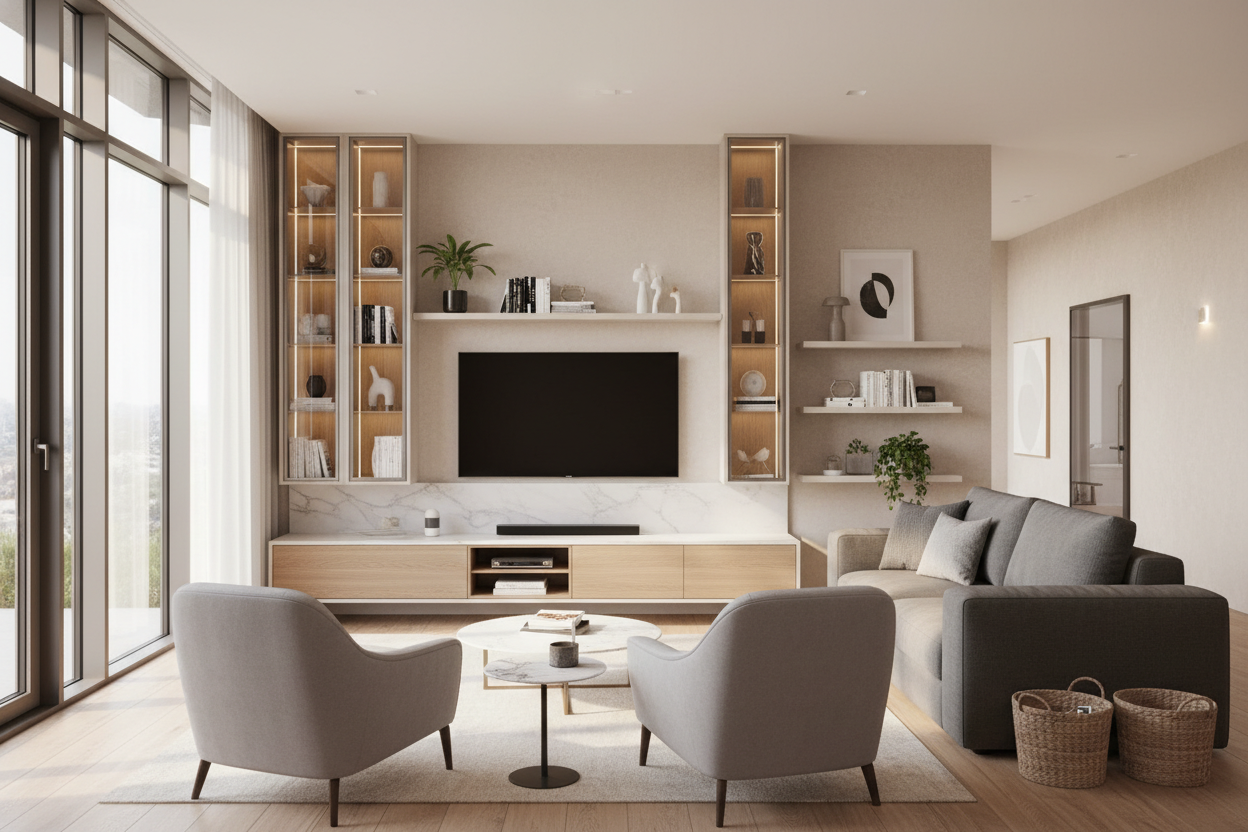
Second, look at the 'wood' grain. If it's perfectly uniform and shiny, it's a cheap paper wrap. Look for 'textured' or '3D' wood grain finishes that have a matte look. These mimic the feel of real timber and don't reflect your TV's glare. Third, look for hidden storage. A storage credenza with sliding glass doors is a pro move because it hides the inevitable mess of wires and gaming controllers while still letting your remote signals pass through. It creates a clean, custom look that masks the price tag perfectly.
My Go-To Styles That Always Look Expensive
If you want your budget find to look like a high-end import, stick to certain silhouettes. Mid-century modern is the most forgiving style for your wallet. A mid century modern tv stand with tapered legs and slatted doors creates a sense of 'airiness' in a small living room. The slats provide visual interest that makes the piece look more architectural and less like a big box from a warehouse.
Minimalist, low-profile designs also work well. I usually tell clients to avoid the 'farmhouse' look at this price point because the fake 'distressed' finishes often look muddy and cheap. Stick to solid, matte colors like charcoal, forest green, or a clean walnut finish. These colors absorb light and hide the fact that the material isn't solid hardwood. A well-chosen tv stand under $300 can easily pass for a designer piece if you style it with a few heavy coffee table books and a ceramic vase.
The Hardware Swap Hack
Here is my favorite trick: throw away the knobs that come in the box. Most budget-friendly options come with generic, lightweight plastic or zinc pulls that feel terrible to touch. Spend $20 at a hardware store on some heavy, solid brass or matte black steel knobs. It is the single most effective way to upgrade a piece of furniture in under five minutes.
It sounds small, but your brain associates the weight and temperature of the metal with quality. When you pull a heavy handle to open a cabinet door, the whole unit feels more substantial. It’s the easiest way to take a mass-produced piece and make it feel like a curated statement piece. I've done this on almost every budget unit I've owned, and people always ask where I 'commissioned' the piece.
FAQ
Can a budget TV stand hold a 65-inch TV?
Usually, yes. Just don't guess. Check the weight capacity in the product description. Most 65-inch TVs weigh between 45 and 60 pounds, so look for a stand rated for at least 75 pounds to be safe.
Is MDF actually okay for a TV stand?
MDF gets a bad rap, but high-density MDF is actually more stable than solid wood in humid environments. It won't warp or crack. Just keep it dry—don't let water sit on the surface, and it will last a decade.
How do I hide cables if the stand is open?
Look for units with 'cable management' holes. If the one you love doesn't have them, you can easily use a 2-inch hole saw bit on a drill to create your own in the back panel before you push it against the wall. A few velcro ties will do the rest.

Leave a comment
This site is protected by hCaptcha and the hCaptcha Privacy Policy and Terms of Service apply.