

















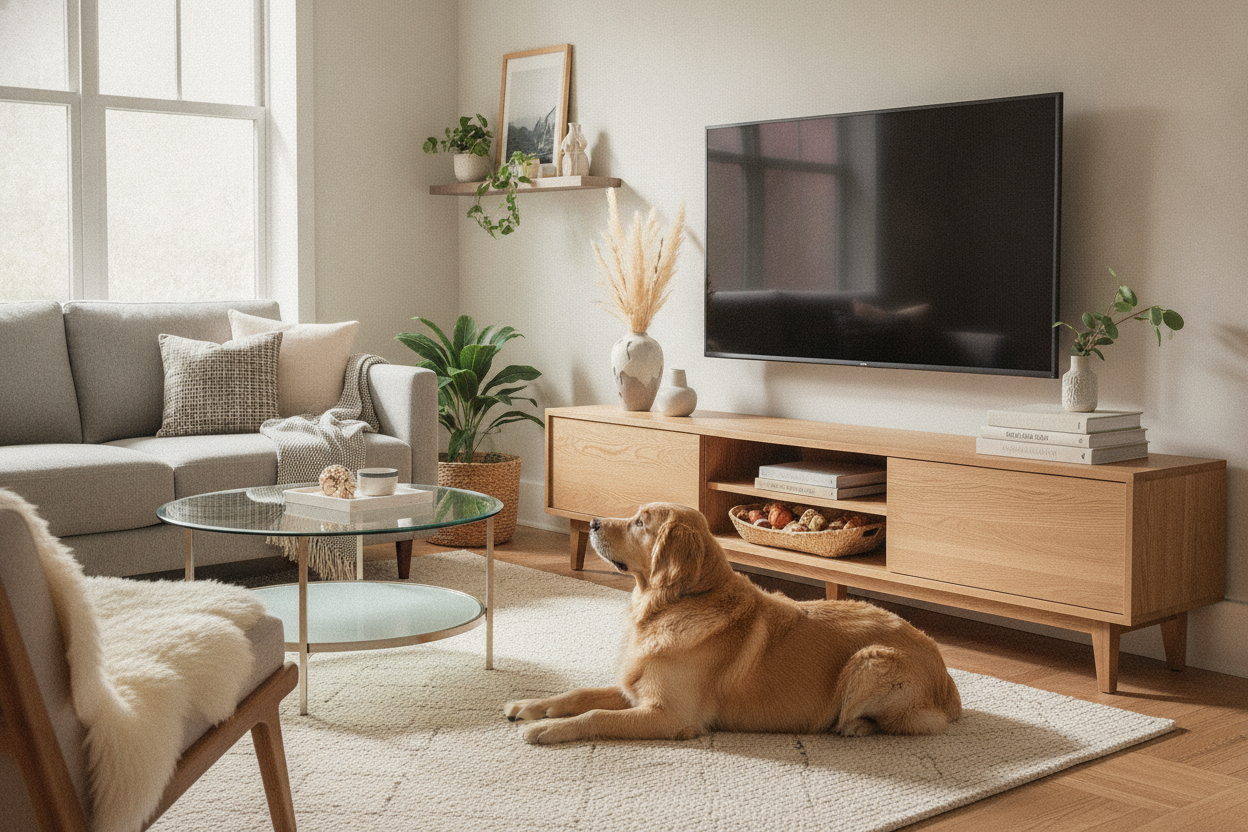
My 80-pound Lab-mix, Barnaby, has a tail that functions like a rhythmic baseball bat. I spent three months staring at my 55-inch OLED, terrified every time the doorbell rang. One 'happy to see you' wag and I was looking at a $1,200 repair bill. I finally bit the bullet and looked for a 40 inch high tv stand to get my tech out of the strike zone.
Quick Takeaways
- A 40-inch height clears the average 'tail-wag' zone for medium and large dogs.
- Taller consoles provide significantly more storage for bins, toys, and tech.
- Verticality saves floor space in small rooms without sacrificing screen size.
- Anti-tip hardware is non-negotiable for furniture this tall.
The 'Happy Tail' Hazard (Why Low Consoles Failed Me)
I used to be a devotee of the 'low and slow' aesthetic. I had a mid-century media unit that sat a cool 18 inches off the floor. It looked great in photos, but in a house with a large dog, it was a liability. Every time Barnaby got excited, his tail would 'thump-thump-thump' against the screen. I lived in a constant state of low-grade anxiety, ready to spring up and block a potential disaster with my own body.
Standard 20-inch consoles are a disaster for pet owners. They place the most fragile, expensive item in your home at exactly the same height as a dog's snout and tail. It’s not just about the tail, either; it’s about the 'zoomies.' When a heavy dog drifts around a corner, a low TV is a sitting duck. I realized that the trendy, low-profile look wasn't worth the risk of a shattered panel. I needed height, and I needed it fast.
Why a 40 Inch High TV Stand Is the Magic Measurement
When I started to browse standard and tall TV stands, I realized that 40 inches is the secret 'Goldilocks' height. Most dining tables are 30 inches, and most bar counters are 42 inches. At 40 inches, your TV sits high enough that even a Great Dane’s tail won't reach the glass, but it’s not so high that you’re straining your neck like you’re in the front row of a movie theater.
The math actually works out perfectly for a standard sofa. If your eye level is roughly 36 to 40 inches when seated, a 40-inch-tall console puts the bottom third of the TV right at eye level. This is a comfortable viewing angle for long-term binging, and it creates a much more commanding presence in the room. It feels intentional, rather than just a place to park your screen.
Getting the Proportions Right for Small Spaces
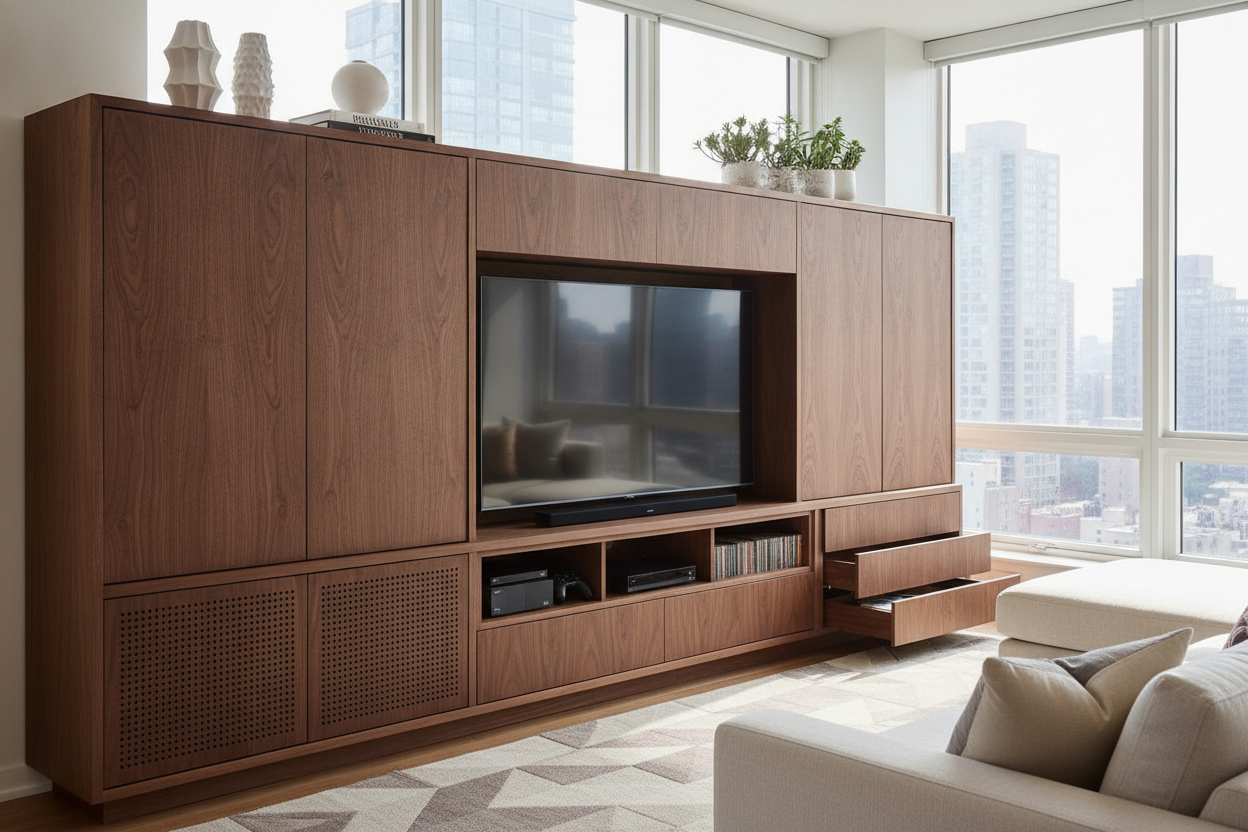
The biggest fear with going tall is that the furniture will look like a hulking wardrobe that eats the room. The trick is to balance that height with a narrower width. I found that a 40 wide tv stand—basically a square silhouette—fits into corners or small wall segments much better than the long, 70-inch sideboards everyone seems to buy. A 40' wide tv stand provides a sturdy base without the massive footprint.
I previously swapped my bulky console for a TV stand 47 inch wide, but I found that the extra few inches of width actually made the room feel more crowded than the height did. When you look for a tv console 40 inches wide, you’re getting a piece that feels like a dedicated piece of cabinetry rather than a sprawling media center. It’s a neat, tidy look that works wonders in apartments.
The Unexpected Storage Perks of Going Vertical
Once I moved to a taller 40 wide tv stand, I suddenly had three tiers of shelving instead of one. In a small living room, that vertical space is prime real estate. I managed to fit two large wicker baskets on the bottom shelf—one for Barnaby's endless supply of tennis balls and one for those cozy blankets that usually end up in a heap on the floor.
The middle shelf became home to the router and the Playstation, which are now safely away from dog hair and dust bunnies that congregate on the floor. Going vertical didn't just protect my TV; it decluttered my entire living area. It turns out that when you stop trying to keep everything low to the ground, you find a lot more room to breathe.
My Quick Checklist for Buying a Taller Unit
If you’re making the jump to a taller console, don't just buy the first thing you see. You need to check the weight capacity and the base stability. A tall, narrow unit can be top-heavy once you put a 50-pound TV on it. Look for solid wood or heavy-duty MDF construction—avoid the super-lightweight hollow-core stuff that wobbles if you sneeze on it.
Always check for an adjustable TV stand for living room use so you can move the internal shelves to fit your specific gear. Most importantly: use the anti-tip kit. Every tall unit should come with one. Screw it into a stud. If Barnaby decides to lean his full weight against the cabinet to look out the window, I know that 40-inch-tall tower isn't going anywhere.
FAQ
Is a 40-inch stand too high for a 65-inch TV?
It depends on your seating distance. If you sit at least 8 feet away, it's perfect. If you're closer, you might feel like you're looking 'up' slightly, but for most living rooms, it's a non-issue.
Will a 40-inch high stand look like a dresser?
Only if it has a solid front with drawers. To keep it looking like a media unit, choose one with open shelving or glass doors to break up the visual weight.
Do I need to buy longer cables?
Yes, this was my one mistake. My standard 3-foot HDMI cables were too short to reach from the bottom shelf to the TV ports once I added the extra height. Grab some 6-foot cables just in case.

Leave a comment
This site is protected by hCaptcha and the hCaptcha Privacy Policy and Terms of Service apply.