

















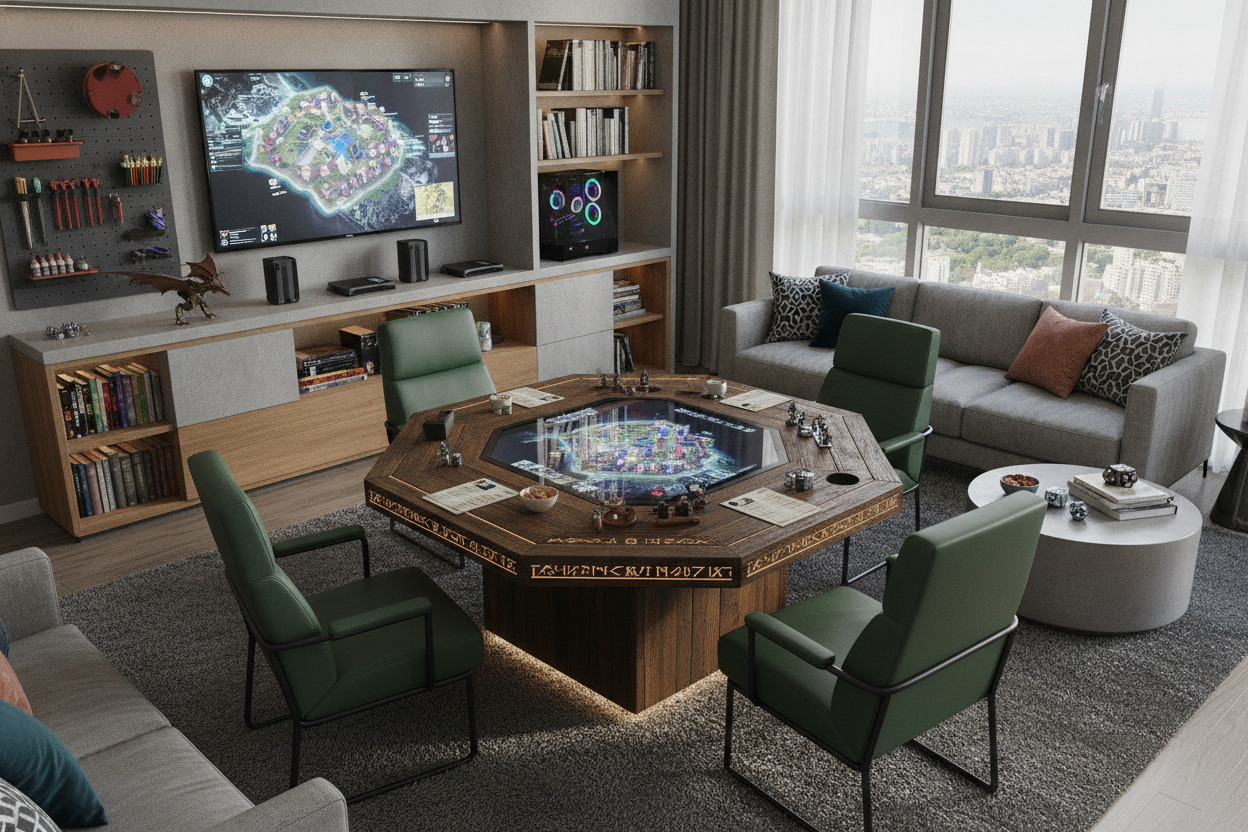
We have all been there: three hours into a session, staring at a smeary wet-erase mat where the 'ancient ruins' now look like a spilled latte. I spent half my week drawing that map, and by the time the initiative was rolled, my players couldn't tell the difference between a stone pillar and a dead goblin. That was the night I sent the group chat a link to a table with tv setup and asked the dangerous question: 'Should we just build one?'
- Immersion boost: Dynamic lighting and animated maps change the energy of the room instantly.
- Cost reality: DIY saves money but costs about 40 hours of your life in sanding and cable management.
- Hardware choice: Viewing angles matter more than 4K resolution; don't buy a cheap TN panel.
- Protection: Never play without a plexiglass or tempered glass overlay unless you want a metal d20 to shatter your screen.
- Storage: You will need a place to hide the extra tech when the session ends.
The Paper Map Fatigue Was Getting Real
The breaking point wasn't just the drawing; it was the limitations. I wanted fog of war. I wanted my players to actually feel the scale of a dragon's lair without me having to say 'imagine this is bigger' for the tenth time. Moving to a ttrpg table with screen seemed like a luxury, but it quickly became a necessity for our sanity. We started looking at a dungeons and dragons tv table not just as a piece of furniture, but as a dedicated tool for our hobby.
The appeal of a dnd table with screen is the dynamic nature of digital maps. Using software like Foundry or Roll20 on a gaming table for tv allows for line-of-sight features that paper just can't touch. When the rogue walks around a corner, I can literally reveal only what they see. It adds a level of tension that a flat, hand-drawn map on a dnd table screen simply lacks. We found ourselves spending less time arguing about distances and more time actually roleplaying, which is the whole point, right?
However, the transition from paper to a tv gaming table isn't just about the software. It is about how the physical space changes. Suddenly, you aren't just sitting around a piece of wood; you are gathered around a glowing portal into another world. The tv game table becomes the centerpiece of the room, and that comes with a whole new set of furniture-buying headaches that I didn't see coming when we were just using a fold-out card table.
To Buy or to Build? The Great TTRPG Dilemma
When you start searching for a dnd tv table for sale, you quickly realize you are looking at prices that rival a used car. High-end custom builds from boutique shops are gorgeous, but they can easily run you $3,000 to $5,000. For most of us, that is a non-starter. This leads many groups down the path of the dnd tv table diy project. We decided to go the DIY route, thinking it would be a fun weekend project. It was actually three weekends, two trips to the ER for splinters, and a lot of swearing.
If you decide to build a diy dnd table with tv, you need to think about the 'vault.' This is the recessed area where the screen sits. Unlike a small TV table IKEA hides in plain sight, which is designed to hold a lightweight monitor on top, a dnd gaming table with screen needs to support the weight of a screen while keeping it flush with the playing surface. We used 3/4-inch kiln-dried oak for the frame because pine is too soft and will dent the first time someone drops a heavy metal dice bag on it.
For those who aren't handy with a circular saw, a dnd table with screen diy can also mean buying a pre-made table and 'dropping' a screen into it. But be warned: standard dining tables aren't built for the heat a screen generates when it's lying flat. You need ventilation. If you go the gaming table with tv built in route, make sure you leave at least an inch of clearance around the edges for airflow, or you will be replacing that screen every six months.
The Heat, Glare, and Spill Warnings Nobody Gives You
Nobody tells you how hot a tv inside table gets after four hours of play. It's basically a space heater for your shins. When choosing the best tv for dnd table, ignore the smart features and focus on the panel type. You want an IPS panel. Why? Because the viewing angles are superior. If the person at the head of the table sees a washed-out, grey mess while the person on the side sees a vibrant map, the immersion is broken. A gaming tv table is only as good as its weakest viewing angle.
Then there is the glare. A tabletop gaming table with tv is a giant mirror for your overhead lights. We had to install a dimmer switch and move our chandelier because the reflection on the table with tv in it made the forest maps look like a JJ Abrams movie. Also, please, for the love of Pelor, get a piece of 1/8-inch plexiglass to cover the screen. One spilled beer or a rogue's metal d20 will end your dnd tabletop screen's life instantly. We opted for a matte-finish acrylic to kill the glare, and it was the best $40 we spent.
You also have to consider the height. A table with built in tv needs to be slightly lower than a standard dining table if you are using a thick monitor. If the screen sits too high, your players will be craning their necks. We found that a 29-inch height for the playing surface (the glass) felt the most natural for long sessions. Anything higher and you feel like you are eating dinner off a kitchen counter.
Where Do All the Wires Go?
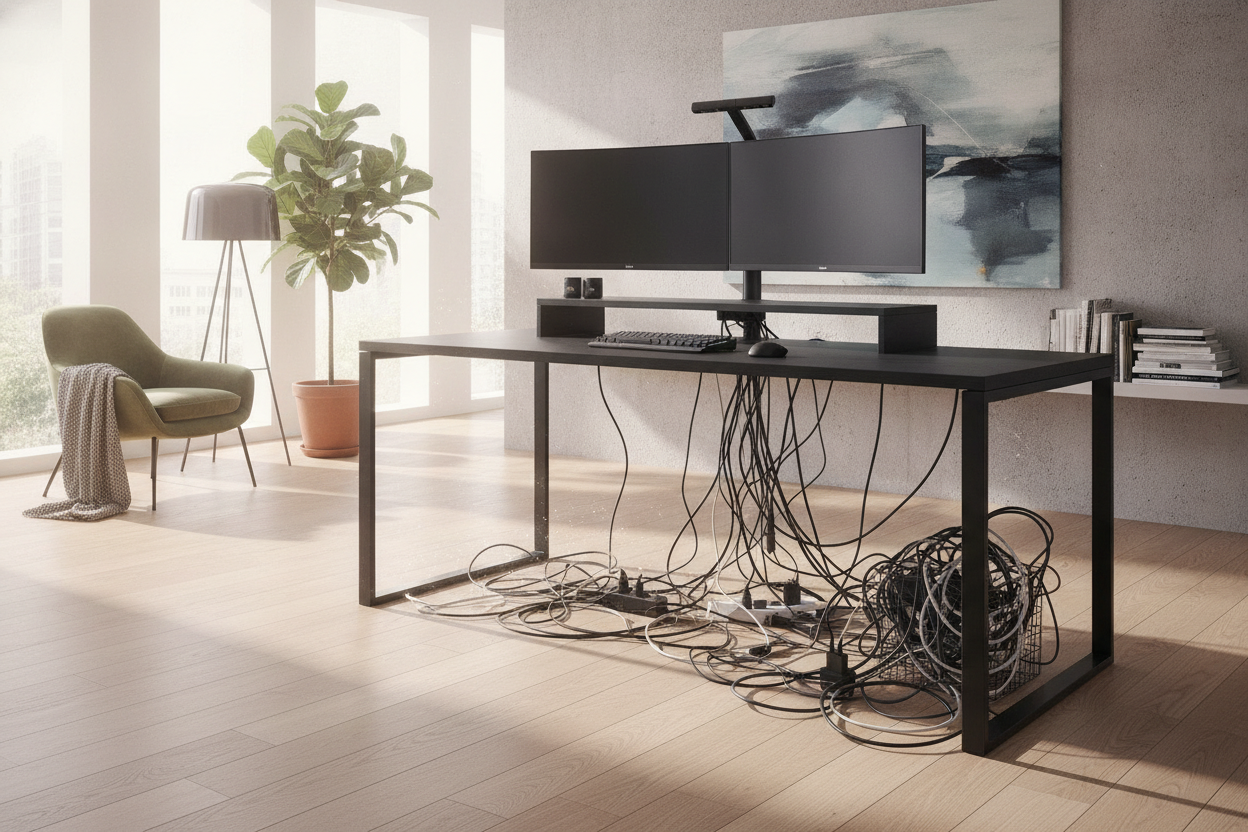
Cable management is the final boss of any dnd gaming table with tv setup. You have the power cable for the TV, the HDMI cable running to the DM's laptop, and usually a power strip for everyone’s phones and tablets. If you don't plan this out, your table with screen built in will look like a literal bird's nest of black plastic. We routed our cables through a hollowed-out table leg and mounted a surge protector to the underside of the vault. It keeps the floor clear so nobody trips during a high-intensity combat round.
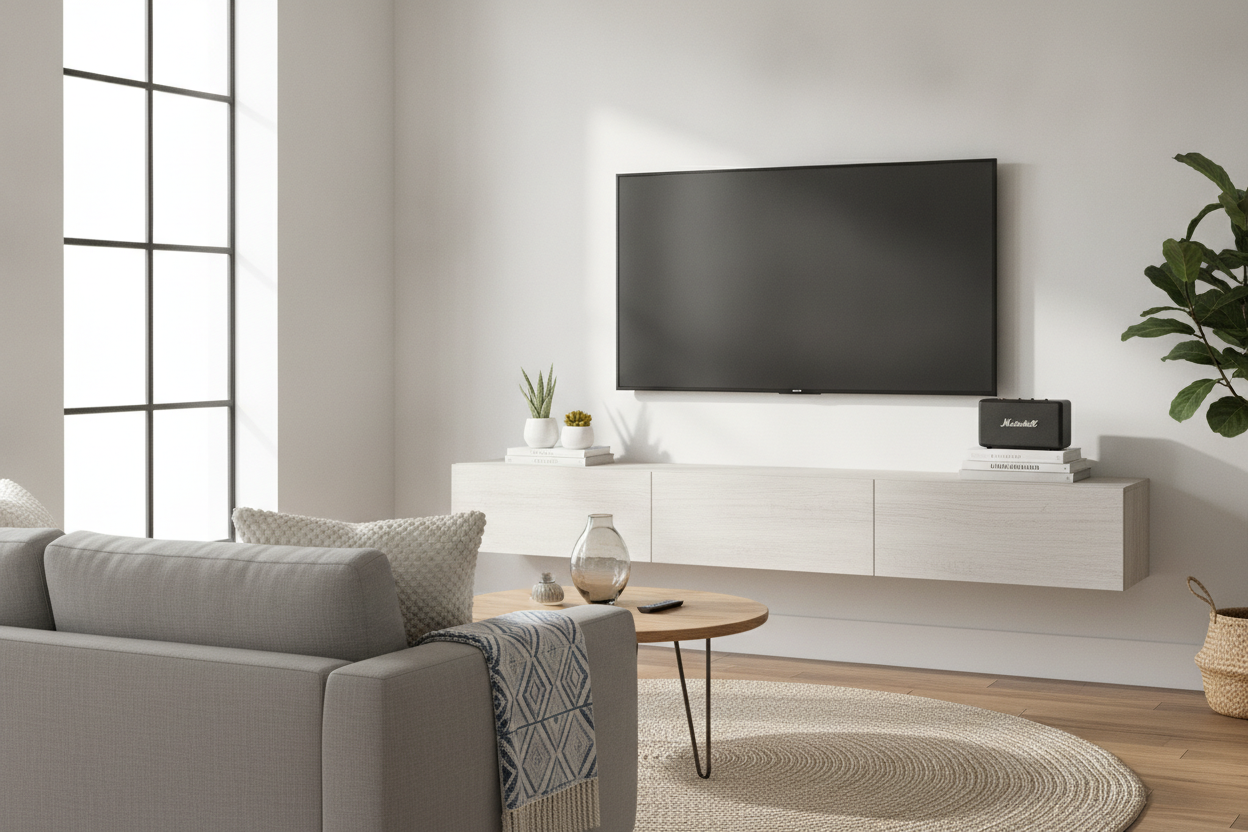
Since the table is now a permanent tech fixture, you lose that 'clean' look in your dining room. To keep the clutter down, I highly recommend having a versatile console table nearby. It is where we stash the bulky sourcebooks, the minis that aren't in use, and the endless tangle of chargers when the game is over. Having a dedicated storage spot for the non-digital parts of the game keeps the tv built into table from becoming a catch-all for junk.
Don't forget the 'DM station.' Your dnd monitor table needs a dedicated ledge or pull-out tray for the DM's laptop. If the DM has to balance their computer on their lap while trying to run a game table with tv, they are going to be miserable. We built a small 12-inch extension on one side specifically for the 'command center,' and it made a world of difference in how smoothly the sessions ran.
The Final Verdict: Does the Digital Upgrade Ruin the Magic?
There is a valid fear that a board game table tv setup ruins the 'theater of the mind.' I'll be honest: it does change the game. You spend more time looking at the screen and less time looking at each other. But the trade-off is worth it for the tactical clarity. A ttrpg tv table doesn't replace the imagination; it provides a shared foundation for it. Instead of arguing about whether a 30-foot fireball hits the cleric, you just see it happen. It speeds up combat significantly.
If you are on the fence, I’d suggest starting with a portable dnd tv table—essentially a wooden box that holds a TV that you can place on top of your existing furniture. It’s a great way to test the waters before committing to a full tv table for dnd build. For our group, the investment in a gaming table with tv was the single best upgrade we’ve made in ten years of playing. It turned our weekly sessions into a cinematic event, and I don't think we could ever go back to the 'smeary latte' maps of the past.
What is the best size TV for a D&D table?
For most groups of 4-6 players, a 40-inch to 43-inch TV is the sweet spot. It provides enough 'real estate' for large maps without making the table so massive that you can't reach the center. Anything larger than 50 inches requires a table so wide that players will have to stand up just to move their miniatures.
Do I need a 4K TV for a gaming table?
Honestly, no. While 4K looks crisp, most digital maps are created at 1080p or 1440p anyway. You are better off spending your money on a screen with high brightness and excellent viewing angles (IPS) rather than chasing a higher resolution that your players won't notice from three feet away.
How do I protect the TV from heavy dice?
The best solution is a sheet of 1/8-inch or 1/4-inch tempered glass or plexiglass. Tempered glass is more scratch-resistant but heavier and harder to cut to size. Plexiglass is easier for DIY projects but will eventually show fine scratches from metal dice. Regardless of which you choose, never roll directly on the screen.

Leave a comment
This site is protected by hCaptcha and the hCaptcha Privacy Policy and Terms of Service apply.