

















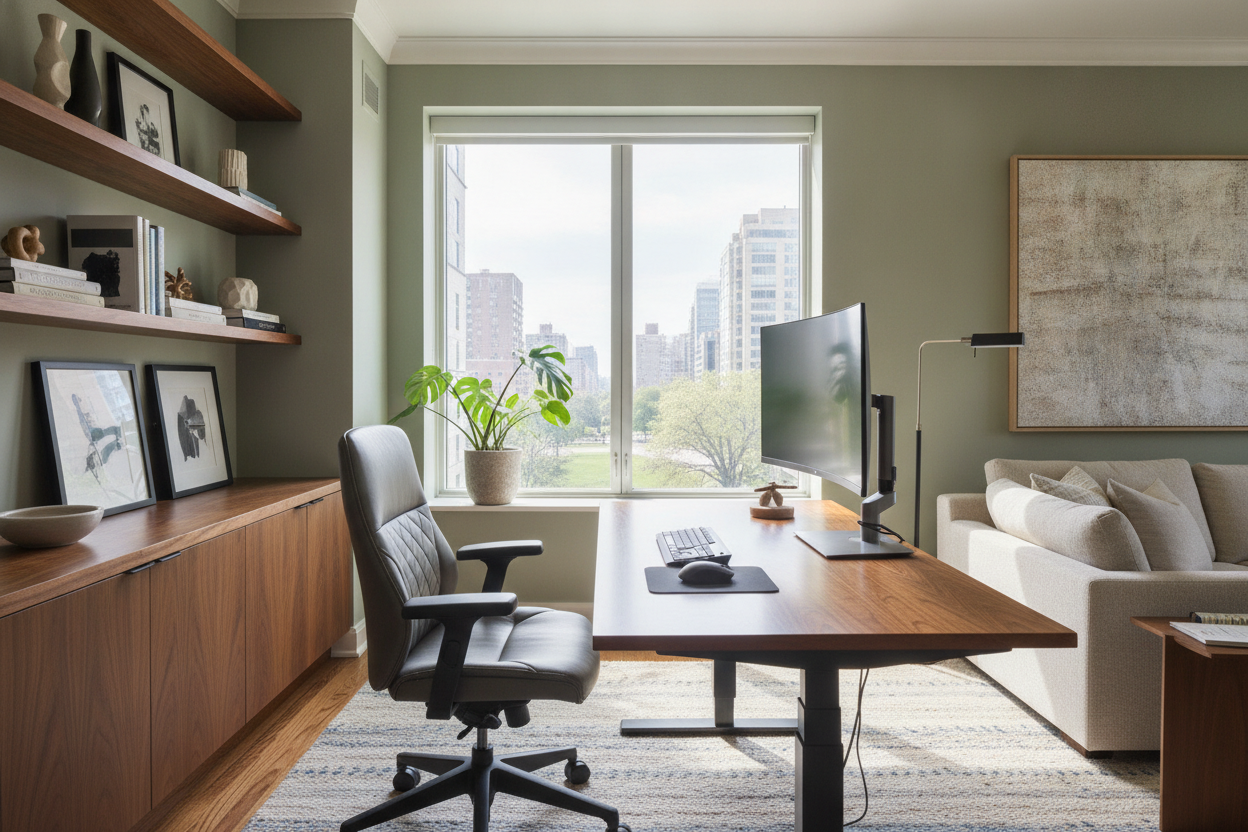
I spent three years hunched over a 1960s teak vanity that I insisted was a proper workstation. It looked incredible in photos, but by 3 PM every Tuesday, my lower back felt like it was being folded into origami. I finally broke down and admitted that my aesthetic stubbornness was causing real physical damage. I needed an adjustable office desk, but I refused to let my guest room look like a corporate insurance office.
- Solid wood tops beat cheap laminate for a high-end look.
- Dual-motor systems are quieter and last longer than single-motor versions.
- Cable management is the difference between a 'workspace' and a 'mess.'
- Oversized, non-office decor helps hide the industrial metal frame.
The Breaking Point: Aesthetics vs. My Spine
I loved that old writing computer desk. It had tapered legs, soul, and exactly zero ergonomic benefits. When I finally started getting tension headaches from leaning forward to see my monitor, I realized that my refusal to buy an adjustable home office desk was just a slow-motion injury disguised as a design choice. I needed a surface that moved, but I wasn't ready to give up my curated vibe.
The transition was hard. Most adjustable height desks for home office use are sold on utility alone, ignoring the fact that many of us work in our bedrooms or living rooms. I didn't want a piece of furniture that felt like a clinical intrusion. I wanted something that felt like home but worked like a machine.
Why Do Most Rising Desks Look So... Tech-Bro?
If you search for a moving table online, you’re usually met with a sea of harsh black metal T-frames and thin, cold laminate tops that feel like a middle school cafeteria tray. It is the 'gamer chair' aesthetic applied to a table. These designs are built for server rooms and cubicle farms, not for a space where you also drink coffee and read books.
The 'tech-bro' look usually comes from a lack of texture. When everything is matte plastic and powder-coated steel, the room loses its warmth. I spent weeks looking for a large adjustable desk that didn't look like it was powered by energy drinks and crypto-mining. The key, I found, is in the materials—specifically the desktop itself.
3 Ways to Soften a Moving Table
First, prioritize the top. I ditched the stock particleboard and went with a 1.5-inch thick slab of solid birch. It’s heavy, it’s sturdy, and it smells like a workshop instead of a factory. If you want a design for a luxury home office, you have to start with materials that have some weight to them. A thick wood top instantly disguises the mechanical nature of the rising desks for home office.
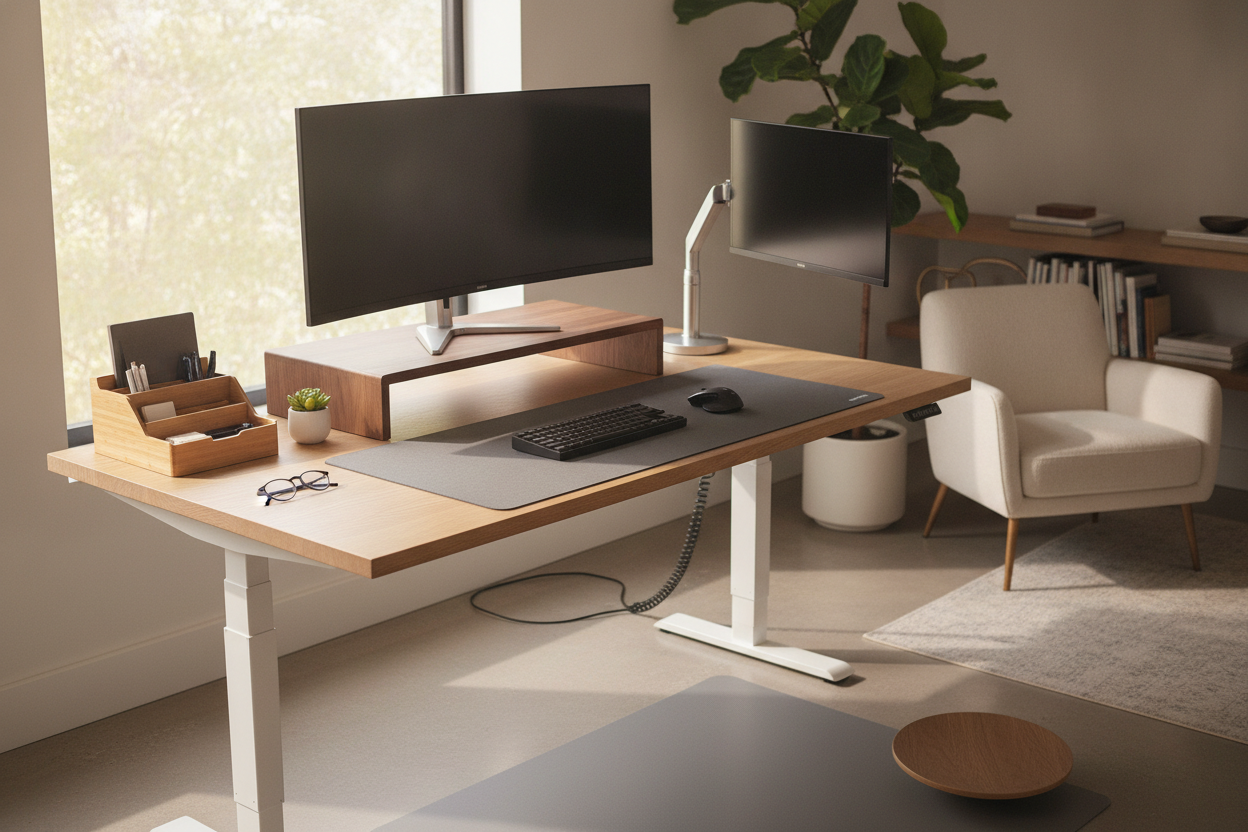
Second, play with scale. I put a massive, ceramic table lamp on my home office adjustable desk. Because the lamp is oversized and 'residential' in style, it draws the eye away from the telescopic legs. Third, use textiles. A thick wool rug under the desk acts as an anchor, making the metal frame feel grounded rather than like it's just hovering in the middle of the room.
Hiding the Wires on a Telescopic Desk
The biggest design crime with a home office desk that raises and lowers is the 'dangling wire' syndrome. When the desk goes up, your cables stretch; when it goes down, they bunch up on the floor. It’s a visual nightmare. On a telescopic desk, you have to be aggressive with cable management or the whole aesthetic falls apart.
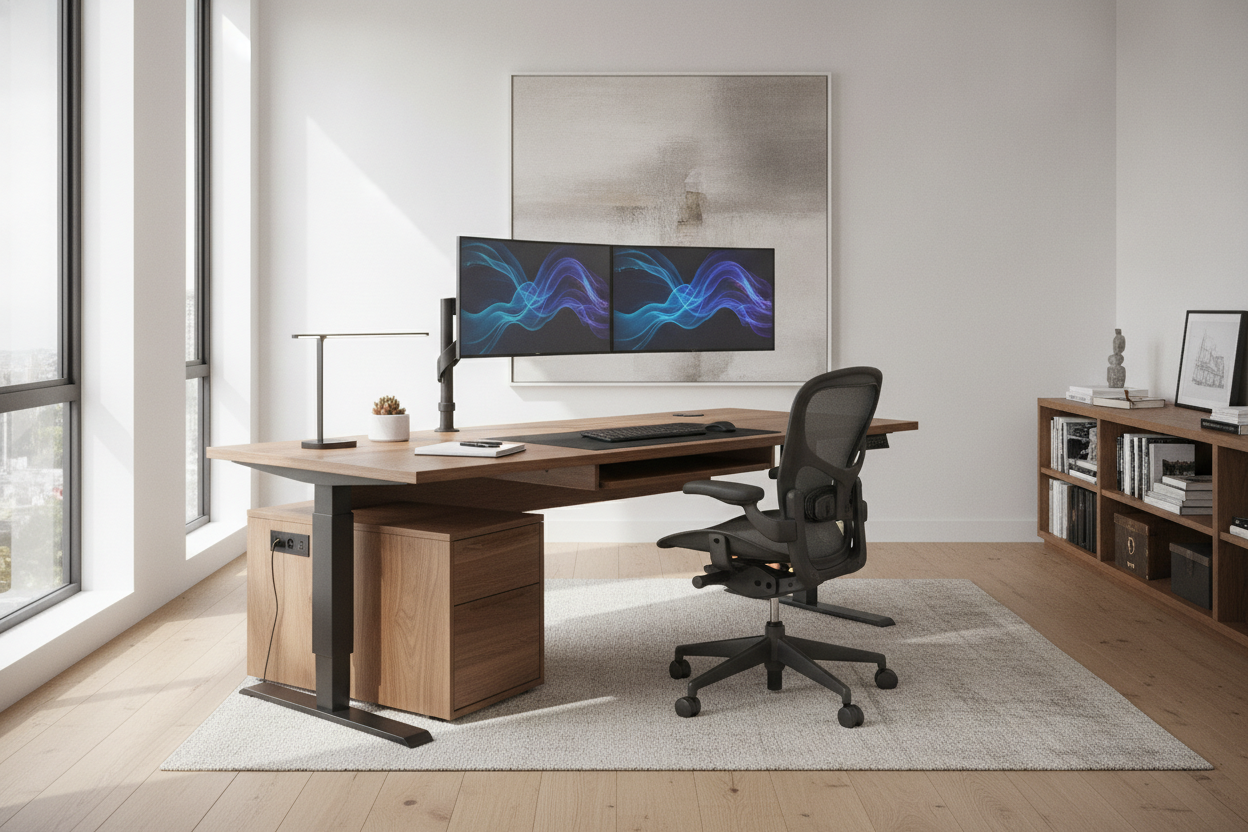
I used a snake-style cable organizer that attaches to the underside of the desk and routes everything down a single leg. I also mounted a heavy-duty power strip to the bottom of the wood slab. To maintain a streamlined home office, I used felt cable trays to tuck away the bulky power bricks. If you can see a single cord hanging when the desk is at standing height, you aren't finished yet.
Was the Compromise Worth It?
I’ll be honest: I still miss the delicate legs of my vintage vanity. But an adjustable work desk for home has changed how I feel at 5 PM. I’m no longer a walking knot of muscle tension. By choosing a desk with a substantial wood top and taking the time to hide the 'robot' parts, I kept my room’s personality intact.
You don't have to choose between a beautiful room and a functional body. You just have to be willing to do a little extra styling to make the technology blend in. My desk now moves with me, and most people don't even realize it's electric until they see it in motion.
Do standing desks wobble?
Cheap ones do. If you get a desk with a single motor or thin legs, it will shake when you type at max height. Look for a dual-motor frame with a weight capacity of at least 200 lbs to ensure it stays rock solid.
Can I use my own desktop with an adjustable frame?
Absolutely, and you should. Most high-quality frames are sold separately. Just make sure your wood slab is at least 1 inch thick so the mounting screws don't poke through the top side.
How often should I actually stand?
The 'sweet spot' for most people is a 3:1 ratio. Stand for 15-20 minutes for every hour you sit. Don't try to stand for eight hours straight on day one, or your feet will hate you more than your back used to.

Leave a comment
This site is protected by hCaptcha and the hCaptcha Privacy Policy and Terms of Service apply.