




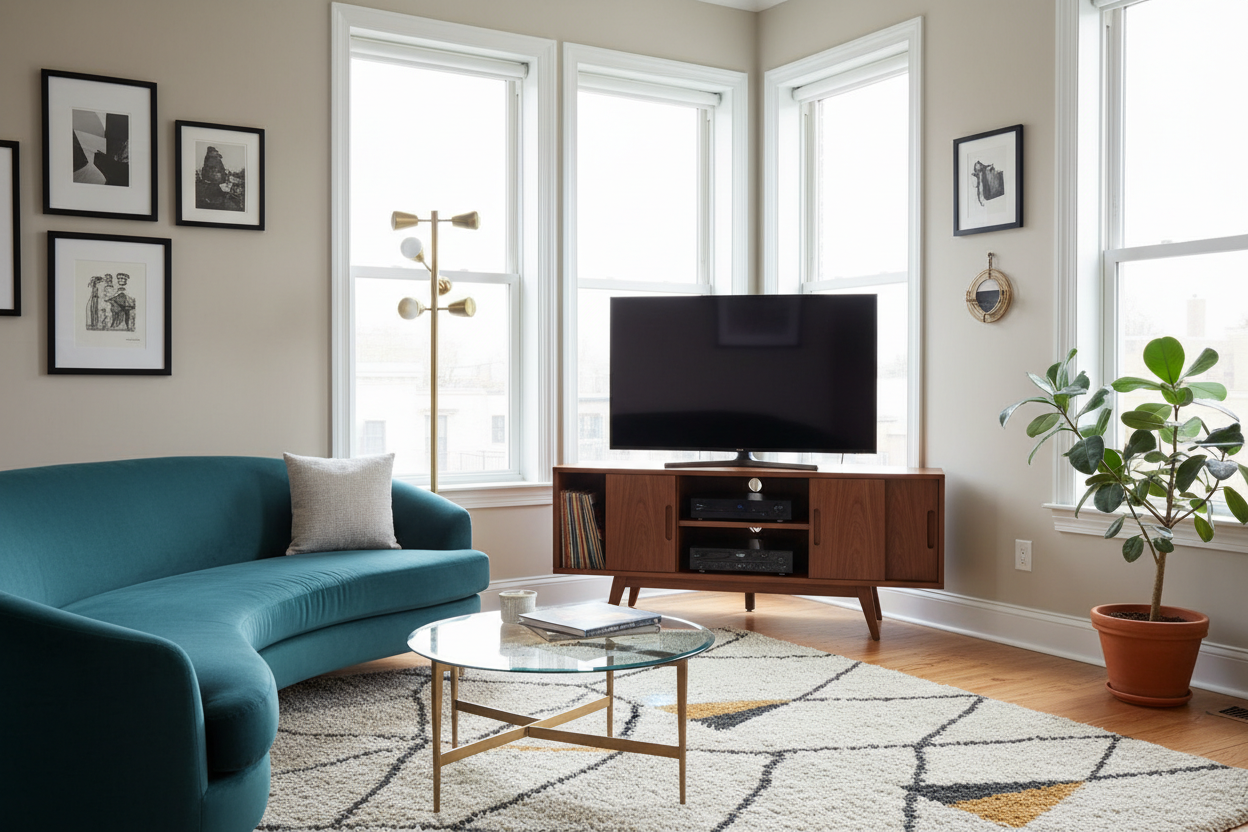
We have all stared at that one awkward dead zone in the living room. Maybe your apartment has an open-concept layout with zero usable wall space, or a massive fireplace dominates the only logical focal point. Forcing a media console flat against a wall in these situations can instantly disrupt the room's traffic flow and visual balance. This is exactly where a mid century corner tv stand proves its worth. By tucking your screen into an unused angle, you reclaim your floor plan and soften the harsh lines of the room. In this guide, I will walk you through how to properly size, style, and select a corner unit that actually looks intentional rather than like an afterthought.
Quick Decision Guide
- Measure the diagonal: Ensure your TV width does not exceed the widest point of the stand, or it will visually overwhelm the corner.
- Check the viewing angle: Position the stand so the center of the screen sits at eye level from your primary sofa (typically 42 inches from the floor).
- Prioritize cord management: Corners notoriously trap cables. Look for units with generous, pre-drilled rear cutouts.
- Match the wood tone: Walnut and teak are classic mid-century choices; ensure they echo at least one other wood finish in your room to create cohesion.
Conquering the Awkward Corner
Space Planning and Clearances
In typical North American suburban homes and snug urban apartments alike, the architecture often dictates the furniture arrangement, not the other way around. A mid century modern corner tv stand is a brilliant structural workaround. It softens the hard 90-degree angles of a room and creates a cozy, conversational layout. When planning your space, leave at least 36 inches of clearance between the front of the stand and your coffee table or seating. This negative space keeps the room from feeling cramped and ensures comfortable foot traffic.
Nailing the Retro Aesthetic
Wood Tones and Silhouette
The beauty of mid-century design lies in its clean lines, tapered legs, and warm wood tones. When selecting a mid century modern corner tv cabinet, pay close attention to the silhouette. A piece that sits entirely flush to the floor feels heavy and anchors the corner too aggressively. Instead, opt for a stand with peg or hairpin legs. Lifting the piece off the ground allows light to pass underneath, reducing its visual weight and making your living room feel slightly larger and more airy.
Texture and Hardware
To avoid a room that looks like a vintage movie set, mix your materials. If your corner tv stand mid century modern features rich walnut veneer, contrast it with matte brass hardware or slatted wood doors. Slatted fronts not only add beautiful texture but also allow remote signals to reach your hidden media boxes without requiring you to keep the doors open.
Designer's Honest Take
Over the last 15 years, I have used corner consoles in everything from sprawling mid-century ranches to tight pre-war condos. One project that stands out was a 1920s bungalow in Portland. The only wall long enough for a sofa faced a massive brick fireplace, leaving the TV to sit awkwardly in a tight corner. We sourced a beautiful vintage-inspired teak corner unit, and visually, it solved the room perfectly.
But here is the honest downside: cable management in a tight corner is incredibly frustrating. Because the back of the unit tapers directly into the wall, we had almost no physical room to plug in the bulky power strip and multiple HDMI cords. I learned the hard way that you must plug everything in and bind the cords together before pushing the heavy stand entirely into the corner. Also, be warned that cheaper engineered wood units with poorly applied veneer tend to chip exactly at those sharp, angled back edges when you slide them against baseboards.
Frequently Asked Questions
What size TV fits on a corner stand?
Your TV should never be wider than the front edge of the stand. If you have a 55-inch TV (which is roughly 49 inches wide), the front face of your corner stand needs to be at least 50 inches across to maintain proper visual proportion.
Does a corner TV stand save space?
Yes, but it depends on the room's footprint. It utilizes dead space and frees up flat walls for larger pieces like sofas or bookshelves, making the overall room feel more open and easier to navigate.
How do I hide cords in a corner setup?
Use zip ties or velcro straps to bundle your cables into a single trunk before routing them through the back of the console. If your stand lacks a back panel, attach adhesive cable clips to the back legs to guide the wires discreetly down to the baseboard.


Leave a comment
This site is protected by hCaptcha and the hCaptcha Privacy Policy and Terms of Service apply.